




Winter Gardening Jobs
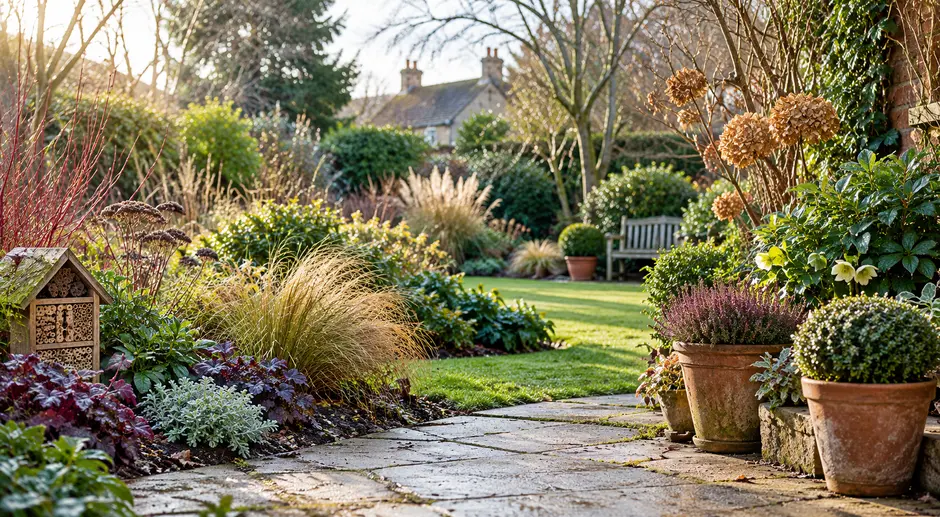
Winter gardening jobs include protecting vulnerable plants, caring for lawns and containers, harvesting hardy vegetables, clearing paths and drainage, maintaining greenhouses and helping wildlife. Gardeners can also use this quieter period to clean tools, plant suitable dormant trees and shrubs, and prepare for spring.
The work required will depend on your location and the weather. Gardens in exposed and northern areas may experience frost and snow earlier, while sheltered urban and coastal gardens can remain relatively mild.
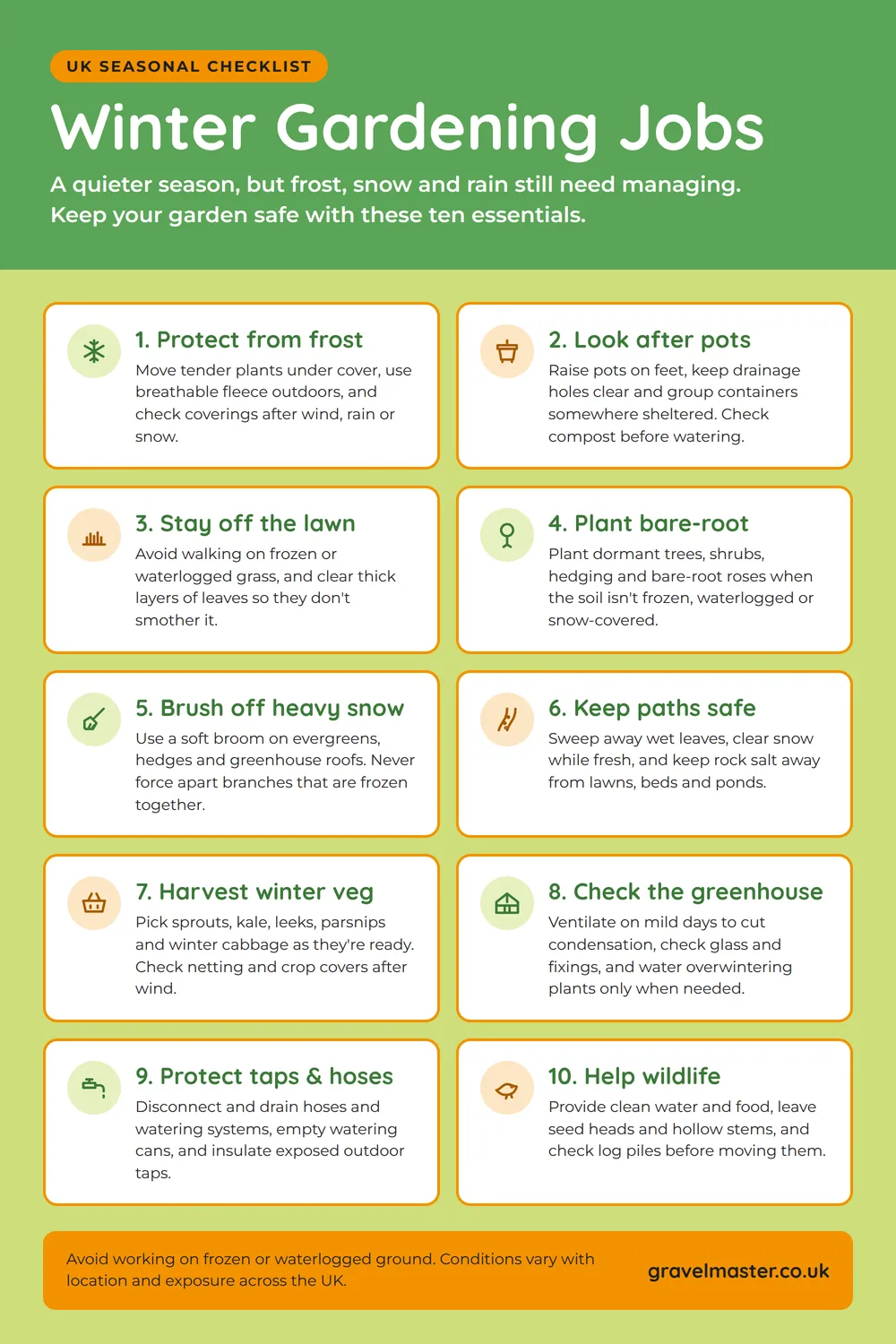
Essential winter gardening checklist
Use this checklist to keep your garden safe and healthy throughout winter:
- Check vulnerable plants before frost.
- Move or insulate exposed containers.
- Remove heavy snow from vulnerable branches and structures.
- Avoid walking on frozen or waterlogged lawns.
- Harvest winter vegetables.
- Remove thick layers of leaves from grass and paths.
- Clear gutters and drainage channels.
- Protect outdoor taps and watering equipment.
- Check tree stakes, plant ties, fences and greenhouse panels.
- Ventilate greenhouses during suitable mild weather.
- Provide clean food and water for wildlife.
- Clean, sharpen and store garden tools.
- Check stored fruit, vegetables, bulbs and tubers.
- Order seeds and begin planning for spring.
Winter gardening at a glance
This guide covers the broad principles of gardening in winter. For jobs tied to a particular part of the season, use the appropriate monthly guide.
| Period | Main focus | Detailed guide |
|---|---|---|
| Early winter | Protect plants, clear drainage and prepare for frost | December gardening jobs |
| Midwinter | Monitor frost, snow, waterlogging and wildlife | January gardening jobs |
| Late winter | Begin preparing soil, containers and growing areas for spring | February gardening jobs |
When does winter begin in the UK garden?
Meteorological winter runs from 1 December to the end of February. Astronomical winter usually begins around 21 December and ends at the spring equinox in March.
Garden conditions do not always follow these dates. Frost, snowfall, rain and temperature vary between different parts of the UK. Altitude, exposure, nearby buildings and the direction a garden faces can also create local differences.
Use the condition of your plants and soil alongside local weather forecasts. Avoid gardening on frozen or waterlogged ground, even when a job would normally be suitable for the time of year.
Protect plants from frost
Frost can damage tender leaves, stems, roots and crowns. Newly planted specimens and plants growing in containers can also be more vulnerable because their root systems have less protection.
Prioritise:
- Tender perennials
- Recently planted trees and shrubs
- Young plants
- Tree ferns
- Bananas
- Dahlias and cannas
- Pelargoniums and tender fuchsias
- Succulents and other frost-sensitive plants
- Exposed container plants
Move suitable pots into a greenhouse, garage, porch or another sheltered location. A protected space does not always need to be warm, but it should meet the needs of the plant and offer protection from severe frost, cold winds and excessive winter rain.
Plants that remain outside may benefit from horticultural fleece or another breathable covering. Secure the material carefully, but allow enough ventilation to prevent damp air becoming trapped around the plant.
A suitable mulch can help insulate the soil around vulnerable roots and crowns. Apply it over weed-free ground and leave space around stems and trunks.
Check all plant protection after strong winds, heavy rain and snow. Wet, damaged or displaced coverings may no longer provide effective protection.
For more detailed instructions, read our guide to protecting plants from frost.
Look after pots and containers
Container plants face greater temperature changes than plants growing in open ground. Their roots are surrounded by a relatively small amount of compost, while the pot itself remains exposed to frost and cold wind.
During winter:
- Raise vulnerable pots onto feet to improve drainage.
- Check that drainage holes are clear.
- Move tender plants into shelter.
- Group suitable pots in a protected position.
- Insulate containers that cannot be moved.
- Check compost before watering.
- Reduce watering as plant growth slows.
- Remove saucers where standing water could become a problem.
- Check pots for cracks after freezing conditions.
Do not allow protected plants to dry out completely. Plants in greenhouses, beneath roof overhangs or beside walls may receive very little natural rain.
Avoid leaving pots permanently waterlogged. Frozen, saturated compost can damage roots and may cause some containers to split.
GravelMaster supplies a range of topsoil, compost and mulch for future planting and container projects.
Care for the lawn during winter
Winter lawn care is mainly about preventing avoidable damage.
Remove thick layers of fallen leaves so they do not block light, trap moisture or smother the grass. Wait until the lawn is reasonably dry before walking across it or raking.
Avoid walking on frozen grass. Frozen blades can be crushed underfoot, leaving dark footprints and damaged areas that remain visible after the frost has cleared.
You should also avoid regular foot traffic over saturated ground. Walking on a waterlogged lawn can compact the soil and damage its structure.
Grass may continue growing during mild periods. If mowing is necessary:
- Wait for a dry day.
- Make sure the ground is firm enough.
- Use a higher cutting setting.
- Remove only a small amount of growth.
- Avoid mowing frosted grass.
Do not apply lawn feed simply because the calendar says it is winter. Feed only when the grass is actively growing and the product is suitable for the conditions.
Read our autumn and winter lawn-care guide for more detailed advice.
What can you plant during winter?
Winter can be suitable for planting dormant trees, shrubs, hedging and bare-root roses, provided the soil is not frozen, waterlogged or covered by snow.
Bare-root plants are lifted and supplied without a container of compost. They should be planted promptly and their roots must not be allowed to dry out.
When planting during winter:
- Check that the ground is workable.
- Keep bare roots moist before planting.
- Dig a hole wide enough to spread the roots naturally.
- Plant at the appropriate depth.
- Firm the soil gently.
- Water after planting if the soil is dry.
- Add a stake where the plant requires support.
- Check the plant after severe wind or frost.
Continue monitoring newly planted trees and shrubs during dry spells. Cold weather does not always mean that the soil contains enough moisture.
Some spring-flowering bulbs can also be planted during the earlier part of winter if the ground remains workable and the variety is suitable. Follow the instructions supplied with each bulb rather than applying one planting date to every type.
See our spring bulb planting guide and browse GravelMaster’s bulb range.
Add colour to the winter garden
A winter garden does not need to be empty. Evergreen foliage, colourful stems, berries and seasonal flowers can provide interest during the colder months.
Plants that may contribute winter colour include:
- Pansies
- Violas
- Cyclamen
- Hellebores
- Winter heather
- Snowdrops
- Skimmia
- Holly
- Dogwood
- Evergreen grasses
- Berry-producing shrubs
Choose plants according to the light, soil, drainage and exposure in your garden. A variety suited to a sheltered container may not perform equally well in an exposed border.
Winter bedding plants may stop flowering during severe frost and resume when conditions improve. Remove damaged flowers and leaves when the weather is suitable, but do not expect continuous flowering through every period of snow or freezing weather.
Position winter containers where they can be seen from windows, paths and entrances. This can make smaller displays more effective during a season when the garden is often viewed from indoors.
Prune selected trees and shrubs
Winter is suitable for pruning some dormant trees and shrubs, but it is not the correct time to cut back every plant.
Begin by removing clearly dead, damaged or diseased growth where it is safe to do so. Use clean, sharp tools and make appropriate cuts without leaving torn or crushed stems.
Dormant apples and pears can often be pruned during winter. However, stone fruit such as cherries and plums should generally be treated differently because winter pruning can increase the risk of disease.
Before pruning:
- Identify the plant correctly.
- Check when it flowers or fruits.
- Confirm whether it flowers on old or new growth.
- Look for signs of disease.
- Avoid pruning during severe frost.
- Clean tools between affected plants.
- Do not remove more growth than necessary.
Large, damaged or dangerous branches should be assessed by an appropriately qualified tree professional.
Manage snow safely
A light covering of snow can insulate some low-growing plants, but heavy snow can bend or break branches and damage greenhouses or lightweight structures.
Use a soft broom to remove loose snow from vulnerable evergreen branches, hedges, greenhouse roofs and netting. Brush upwards or support branches carefully rather than striking frozen growth.
Do not force apart branches that are frozen together. Wait for temperatures to rise and allow the ice to thaw naturally.
Check:
- Evergreen trees and shrubs
- Topiary
- Hedges
- Greenhouse roofs
- Fruit cages
- Pergolas
- Netting
- Lightweight sheds
- Temporary plant covers
After snow melts, inspect the garden for broken branches, displaced coverings and areas of standing water.
Keep paths and driveways safe
Wet leaves, frost, snow and ice can make paths and driveways hazardous.
Sweep away leaves and loose material before freezing weather arrives. Clear snow while it is fresh where practical, paying particular attention to steps, slopes and frequently used paths.
Rock salt can help make appropriate hard surfaces safer, but it should be used carefully. Avoid spreading it onto lawns, beds or around vulnerable plants. Meltwater containing salt should not be allowed to flow into ponds or planted areas.
Store salt somewhere dry and secure so it is available when needed. GravelMaster supplies winter salt, grit bins and snow-clearing products for domestic and commercial surfaces.
Maintain gravel paths and landscaped areas
Winter weather can move gravel, expose thin areas and deposit leaves and soil on the surface.
Regular maintenance should include:
- Sweeping away wet leaves
- Removing surface weeds
- Raking displaced aggregate back into place
- Checking edging
- Clearing drainage channels
- Repairing unsafe or uneven areas
- Monitoring standing water
- Removing organic debris before it breaks down
A weed-control membrane can reduce weeds growing from the soil beneath an aggregate surface. It cannot prevent seeds from landing and germinating in material collected on top.
If an existing gravel area needs topping up, explore GravelMaster’s gravels and chippings and use the gravel calculator to estimate the quantity required.
Look after winter vegetables
Many vegetables harvested during winter were planted or sown earlier in the year. The main jobs during winter are harvesting, protecting and monitoring these established crops.
Depending on the variety and conditions, winter crops may include:
- Brussels sprouts
- Kale
- Leeks
- Parsnips
- Purple-sprouting broccoli
- Winter cabbage
- Chard
- Spinach
Harvest crops when they are ready and check them regularly for damage. Remove yellowing or diseased leaves and prevent plant debris from accumulating around stems.
Brassicas may require protection from pigeons. Check that netting remains secure and does not trap birds or other wildlife.
Inspect cloches, fleece and crop covers after strong winds or snowfall. Ventilate protected crops when conditions allow to reduce trapped moisture.
Avoid repeatedly walking across saturated vegetable beds. Use permanent paths or boards where access is essential.
Winter is also a good time to review crop rotation, plan next season’s layout and check stored seed.
Check stored fruit and vegetables
Stored produce should be inspected throughout winter rather than left until it is needed.
Remove anything showing mould, soft rot or other deterioration before it affects nearby produce. Maintain suitable ventilation and avoid storing fruit and vegetables in conditions that are too warm or damp.
Keep different produce separate where necessary. Some fruits release gases as they ripen that can shorten the storage life of neighbouring crops.
Check stored potatoes for rot and exposure to light. Inspect onions and garlic for soft areas and remove damaged bulbs.
Protect and improve the soil
Avoid digging or walking on frozen, saturated or snow-covered soil. Working wet ground can compact it and damage its structure.
Where conditions are suitable, winter soil care may include:
- Removing perennial weeds
- Applying an appropriate mulch
- Covering empty vegetable beds
- Adding organic matter to suitable areas
- Checking erosion around slopes and raised beds
- Protecting exposed roots
- Planning future soil improvements
Mulch can protect the soil surface from erosion and rapid temperature changes. Apply it over weed-free ground and keep it away from trunks, crowns and plant stems.
An organic product such as ornamental bark mulch can protect the surface and gradually break down. Decorative gravel can provide a tidy, low-maintenance surface but will not add organic matter in the same way.
Browse GravelMaster’s range of topsoil, compost and mulch when planning future beds and landscaping projects.
Check the greenhouse
A greenhouse still requires attention during winter, even when little is actively growing.
Use suitable mild days to:
- Remove dead and diseased plant material.
- Clean empty pots and staging.
- Sweep the floor.
- Check glass and fixings.
- Clear gutters and water channels.
- Ventilate to reduce condensation.
- Inspect overwintering plants.
- Check for pests and mould.
- Water only when needed.
- Organise seeds, labels and equipment.
If the greenhouse is heated, inspect the equipment regularly and follow the manufacturer’s safety instructions. Make sure electrical equipment is suitable for the environment and remains protected from water.
Remove heavy snow from the roof carefully. Do not strike frozen glass or climb onto an unsafe structure.
Look after ponds and water features
Remove excessive dead leaves and plant material before they decay in the water. Retain some vegetation and shelter in wildlife ponds rather than clearing everything.
During freezing weather, it can be helpful to maintain a small area of open water for gas exchange. Do not smash the ice because the shock and vibration can harm pond life. Do not pour boiling water over the surface.
Use an appropriate pond heater, aerator or floating device if required, following the product instructions.
Check pumps and filters according to the manufacturer’s winter guidance. Keep salt and salt-contaminated runoff away from ponds and water features.
Help garden wildlife during winter
Food, water and shelter can become harder for wildlife to find during cold weather.
You can help by:
- Providing clean drinking water
- Keeping bird feeders hygienic
- Offering suitable bird food consistently
- Retaining selected seed heads
- Leaving hollow stems for overwintering insects
- Keeping a log or leaf pile in a quiet area
- Avoiding unnecessary pesticide use
- Leaving some evergreen cover
- Checking stored materials before moving them
- Avoiding disturbance around hibernating animals
Break and replace frozen drinking water when necessary. Position water where birds can approach safely and clean containers regularly.
Do not disturb compost heaps, log piles or dense vegetation without checking for hedgehogs and other sheltered wildlife.
Check for storm damage
Strong winds and prolonged rain can damage plants and garden structures.
After severe weather, inspect:
- Tree stakes and ties
- Newly planted trees
- Loose or damaged branches
- Fences and gates
- Trellises and arches
- Greenhouse panels
- Shed roofing
- Plant supports
- Outdoor furniture
- Drainage channels
- Plant coverings
Replace ties that have become tight or damaged, but avoid attaching trees so rigidly that natural movement is prevented.
Secure loose containers and furniture before storms where possible. Deal with hanging branches only when they can be reached safely.
Protect outdoor taps and watering equipment
Frozen water can damage taps, hoses and irrigation equipment.
Before severe frost:
- Disconnect hoses.
- Drain watering systems.
- Empty watering cans.
- Protect exposed taps where necessary.
- Store hose fittings under cover.
- Check water butts and connecting pipes.
- Follow the manufacturer’s winter instructions for pumps.
Do not assume that equipment has drained completely. Water trapped in low points, connectors and spray heads can freeze and expand.
Clean and maintain garden tools
Cleaning tools during winter makes them easier to use when growth resumes.
Tool maintenance may include:
- Removing dried soil
- Washing suitable tools
- Drying metal surfaces
- Sharpening cutting edges
- Oiling moving parts
- Treating wooden handles
- Cleaning pots and seed trays
- Checking electrical cables
- Storing tools somewhere dry
- Servicing machinery according to its instructions
Clean cutting tools after working with diseased plants and before using them elsewhere.
Do not attempt repairs to electrical or fuel-powered equipment unless you have the appropriate knowledge. Use a qualified servicing provider where necessary.
Plan for spring
Winter offers time to review the previous growing season and organise future projects.
You can:
- Decide which plants and crops performed well.
- Plan crop rotation.
- Order seeds and bulbs.
- Check seed packets and expiry dates.
- Clean labels, pots and trays.
- Inspect stored dahlias and other tubers.
- Plan new beds and landscaping areas.
- Measure spaces requiring soil, compost or aggregate.
- Review drainage problems.
- Prepare a realistic list of spring priorities.
Do not rush to sow tender plants simply because the days are beginning to lengthen. Light levels, temperatures and frost risk remain important.
Our February gardening jobs guide covers the transition from late winter into spring. You can then continue with the planned spring guide at:
spring gardening jobs guide
Frequently asked questions
What gardening jobs can I do in winter?
Winter jobs include protecting plants from frost, checking containers, clearing paths and drains, caring for lawns, harvesting vegetables, maintaining greenhouses and helping wildlife. You can also plant suitable dormant trees and shrubs when the soil is workable.
What do gardeners do during winter?
Gardeners monitor frost and waterlogging, repair storm damage, prune suitable plants, maintain tools and protect vulnerable specimens. They also use winter to inspect stored crops, plan planting and prepare equipment for spring.
Can I plant trees and shrubs during winter?
Bare-root trees, shrubs, hedging and roses can often be planted during dormancy. Do not plant when the soil is frozen, waterlogged or covered by snow. Keep bare roots moist and continue checking newly planted specimens during dry or windy weather.
Should I water plants during winter?
Plants generally need less water during winter, but they should not be allowed to dry out completely. Check containers, newly planted trees and plants kept under cover because they may receive little natural rainfall.
Can I mow the lawn in winter?
Grass may be mown during a mild, dry period if it is actively growing and the ground is firm. Use a higher cutting setting and avoid mowing frosted, frozen or waterlogged grass.
Should I cover plants every night during winter?
Only plants vulnerable to the forecast conditions need protection. Some hardy plants do not require covering. Use breathable materials, secure them properly and check that moisture is not becoming trapped around the plant.
What vegetables can be harvested during winter?
Depending on the variety and planting time, winter harvests can include Brussels sprouts, kale, leeks, parsnips, winter cabbage and purple-sprouting broccoli. Many of these crops need to be established before winter begins.
Can I dig the garden during winter?
Dig only when the soil is workable. Avoid digging or walking over frozen, waterlogged or saturated soil because this can damage its structure and create compaction.
How do I protect pots from frost?
Move vulnerable pots into shelter, group containers together, raise them onto feet and insulate pots that cannot be moved. Keep drainage holes open and check the compost before watering.
Should snow be removed from plants?
Heavy snow should be brushed carefully from vulnerable evergreen branches, hedges and lightweight structures. Use a soft broom and avoid striking branches that are frozen or bending them forcefully.
How can I help garden wildlife during winter?
Provide clean water, suitable food and undisturbed shelter. Retain selected seed heads, hollow stems, leaf piles and logs. Keep feeders hygienic and check sheltered areas before moving garden material.
How do I prepare the garden for spring?
Clean tools, order seeds, plan crop rotation, check stored bulbs and tubers, inspect drainage and measure future projects. Wait for suitable soil and weather conditions before beginning major outdoor work.