




Scottish Pebbles and Cobbles Size Guide: Which Size Do You Need?
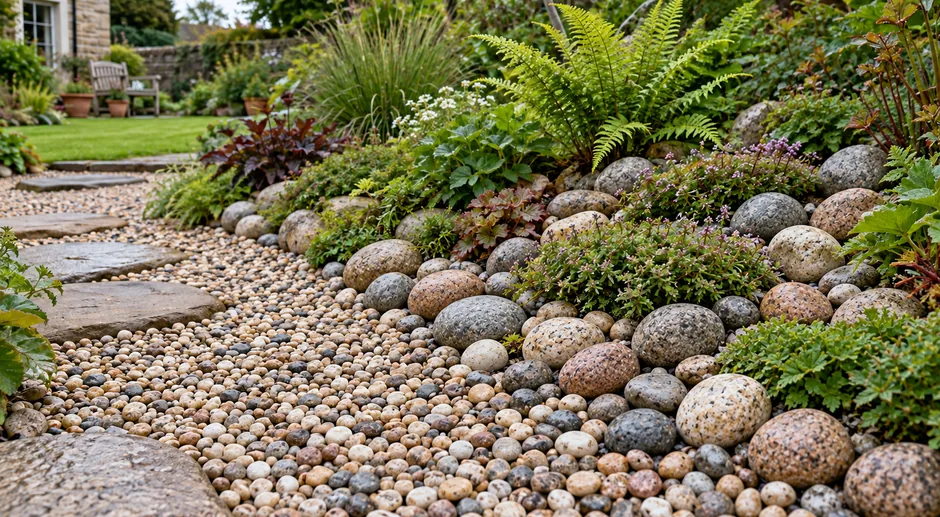
Choosing a size is easier when you start with what the stones need to do. Smaller Scottish pebbles give paths and containers a finer finish, while larger pebbles stand out in borders and around water features. Scottish cobbles make more of a feature in rockeries and decorative areas, but larger sizes are less comfortable to walk on. Use the guide below to match a size to your project.
Scottish pebble and cobble sizes at a glance
These six sizes cover different jobs, from a surface you can walk over to a decorative feature you can admire from the patio.
| Size | Best suited to | Consider before choosing | Product |
|---|---|---|---|
| 8–14mm pebbles | Containers, smaller decorative areas and garden paths | The finer stones may move underfoot and are more likely to catch in shoe or tyre treads. | Scottish Pebbles 8–14mm |
| 14–20mm pebbles | Garden paths, landscaping and decorative ground cover | A useful middle size, although rounded pebbles can still move on frequently used surfaces. | Scottish Pebbles 14–20mm |
| 20–30mm pebbles | Borders, water features, rockeries and lightly used paths | The stones are more noticeable underfoot than smaller pebbles. | Scottish Pebbles 20–30mm |
| 30–50mm cobbles | Rockeries, water features and decorative edges | Better as a feature than as the main surface of a path. | Scottish Cobbles 30–50mm |
| 50–80mm cobbles | Planting borders, patio features and rockeries | Too large for a comfortable everyday walking surface. | Scottish Cobbles 50–80mm |
| 80–120mm cobbles | Larger rockeries, water features and statement borders | Use where the stones can be seen without needing to walk over them. | Coastal Scottish Cobbles 80–120mm |
What do pebble and cobble sizes actually mean?
The measurements are given in millimetres and refer to the width of the stone. A bag labelled 30–50mm, for example, contains stones within that general size range rather than identical 40mm pieces. Scottish pebbles and cobbles are natural products, so some will be longer, flatter or rounder than others.
It can be hard to judge the difference between sizes from separate product photos. If you are choosing between two ranges, compare samples or look at images that show the stones beside a familiar object for scale.
Which size is best for your garden project?
Garden paths
For a path you use regularly, start by looking at the 8–14mm and 14–20mm Scottish pebbles. Both create a finer surface than cobbles. The 14–20mm size gives each stone a little more presence; the 8–14mm size gives a smaller-scale finish. Rounded stones can shift underfoot, so consider how often people will use the path and whether a firmer walking surface would suit it better.
If you are planning the layout as well as choosing a stone, see our garden-path design guide.
Driveways
Choose driveway pebbles with the amount of traffic and the finished surface in mind. Scottish Pebbles 14–20mm are listed for driveway use, but smaller stones may catch in tyre treads, and smooth, rounded stones can move when vehicles turn or brake. Check the product guidance and consider whether this finish will work for your particular driveway. A pebble that looks right in a border will not necessarily feel right under a car.
Borders and containers
For containers or a narrow border, 8–14mm pebbles give a neat, fine-textured finish. In a wider planting bed, 20–30mm pebbles are easier to see among established plants. If you want the stones themselves to become a feature, place a few 30–50mm or 50–80mm cobbles where they will be visible.
Rockeries
Start with 30–50mm cobbles for a modest rockery. They are large enough to show their shape and colour without overwhelming a small space. For a larger feature, mix in some 50–80mm cobbles, or use 80–120mm stones as focal points. Choosing more than one size usually looks more natural than laying every stone evenly.
Water features
For a decorative water feature, 20–30mm pebbles can cover smaller areas, while 30–50mm cobbles work well around an edge. Larger cobbles can anchor the look of a wider feature. Scottish stones often show stronger colour when wet, but check the product's suitability before putting any stone into a pond or feature containing fish or other aquatic life.
Can you mix Scottish pebble and cobble sizes?
Yes. One simple approach is to use smaller pebbles as a background and place a few larger cobbles around a pond, planting area or rockery. The change in size draws the eye without making the whole space difficult to walk across. Try arranging a small section first so you can see how the colours and proportions work together.
How much do you need?
Measure the length and width of the area, then decide on a suitable depth for the stone and its intended use. The quantity you need will change with the area, depth and size selected, so one coverage figure will not suit every pebble and cobble. Use the GravelMaster calculator for an estimate, and check the relevant product details before ordering.
Frequently asked questions
What is the difference between Scottish pebbles and Scottish cobbles?
In this range, the smaller stones are sold as Scottish pebbles and the larger stones as Scottish cobbles. Compare their stated millimetre sizes when choosing; the name alone will not tell you how a stone will look in your garden.
What size Scottish pebbles should I use on a garden path?
The 8–14mm and 14–20mm sizes are the most practical starting points in this range. Think about walking comfort and how much movement you are willing to manage, especially on a path used every day.
What size cobbles work best in a rockery?
Scottish Cobbles 30–50mm suit many smaller rockeries. Add some 50–80mm cobbles for contrast, or choose a few 80–120mm stones if the feature has enough space for larger focal points.
Can I use Scottish pebbles on a driveway?
Scottish Pebbles 14–20mm are listed for driveway use, but suitability depends on your driveway and traffic. Smaller stones can catch in tyres, and rounded pebbles may move under vehicles, so check the product information before deciding.
Do Scottish pebbles look different when wet?
Yes. Moisture can make their mix of creams, browns, pinks and greys look more pronounced. Natural colour and shape vary between stones, so use a sample if matching an existing area matters to you.
Ready to compare the options? Browse GravelMaster’s Scottish Cobbles & Pebbles range and check the product pages for the sizes that suit your project.