




June Gardening Jobs: Monthly Checklist
The main gardening jobs for June include watering during dry weather, controlling weeds, planting summer bedding and tender vegetables, caring for lawns, supporting growing plants and harvesting early crops. Gardeners should also deadhead flowers, ventilate greenhouses and check fruit, vegetables and ornamental plants regularly for pests.
June brings some of the longest and warmest days of the year. Plants grow quickly, flowers begin to fill borders and the vegetable garden starts producing regular harvests. This increased growth also means that watering, feeding, weeding and general maintenance become increasingly important.
Use this June gardening checklist to keep your garden healthy and prepare it for the warmer summer months ahead.
June gardening jobs checklist
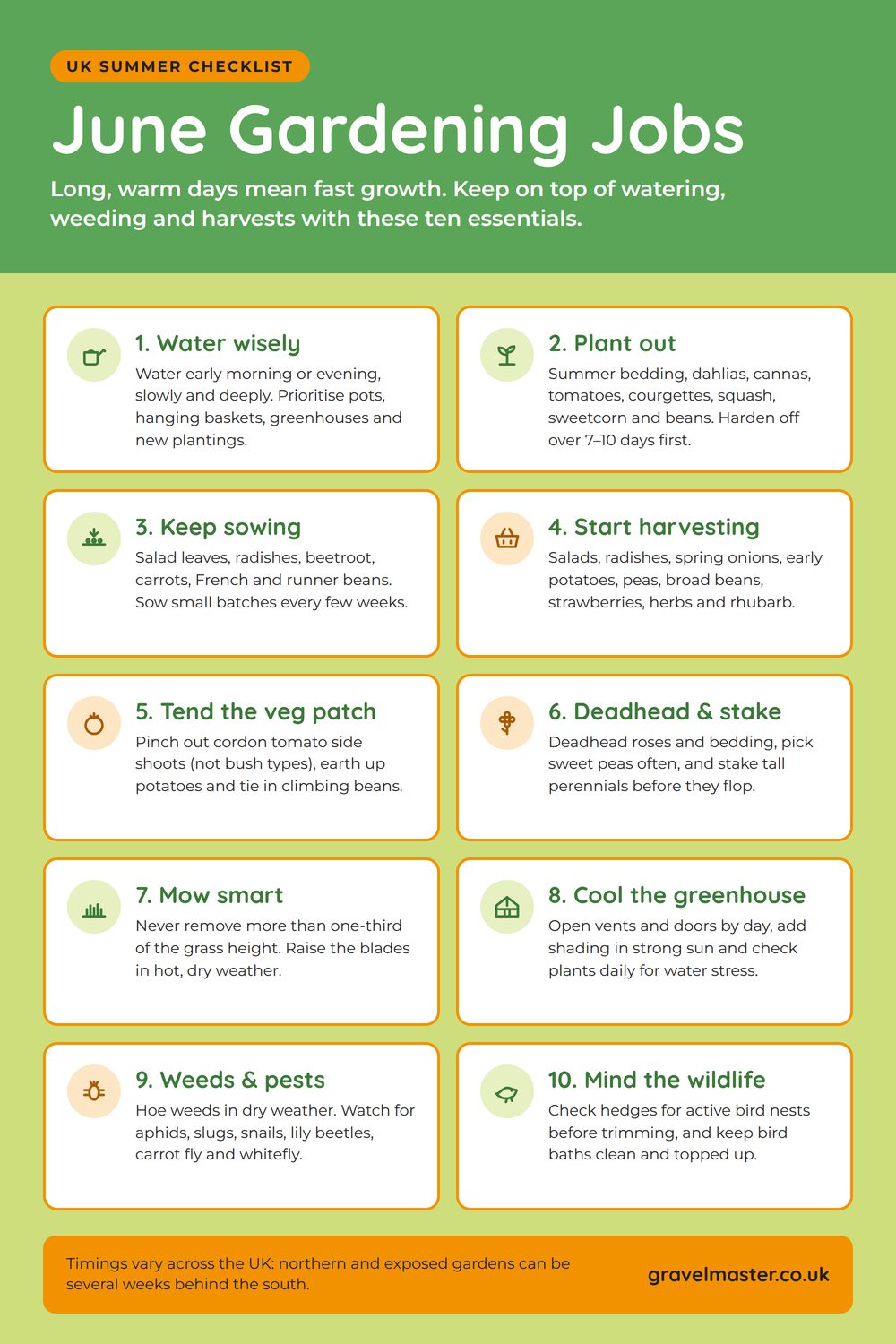
The most important jobs to do in the garden in June are:
- Water containers, hanging baskets and newly planted areas
- Plant out tender vegetables and summer bedding
- Sow quick-growing vegetables for later harvests
- Pinch out side shoots from cordon tomatoes
- Earth up potatoes as their shoots grow
- Harvest salads, strawberries and early potatoes
- Deadhead roses, sweet peas and bedding plants
- Stake tall perennials and tie in climbing plants
- Mow lawns regularly, adjusting the cutting height during dry weather
- Shade and ventilate greenhouses
- Hoe weeds before they flower or set seed
- Check plants regularly for pests
- Inspect hedges for active bird nests before cutting
- Maintain gravel paths, borders and landscaped areas
The exact timing of each task will depend on the weather and where you live in the UK. Gardens in northern and exposed areas may be several weeks behind those in warmer southern locations.
Water the garden efficiently
Watering is one of the most important gardening jobs for June, particularly during prolonged periods of warm or dry weather.
Water early in the morning or during the evening, when temperatures are lower and less moisture will be lost through evaporation. Apply water slowly and deeply so it reaches the plant’s root system. Frequent light watering encourages roots to remain close to the surface, where the soil dries more quickly.
Give priority to:
- Hanging baskets and containers
- Greenhouse plants
- Recently planted flowers, shrubs and vegetables
- Young vegetable crops
- Fruit grown in containers
- Newly laid turf or newly sown lawns
Established lawns and mature plants generally require less frequent watering. Established grass may turn brown during dry weather, but it can usually recover once rain returns.
Adding organic matter or mulch around plants can help the soil retain moisture and suppress weeds. Gravel can also be used as a decorative mulch around suitable plants, helping to protect the soil surface while creating a tidy finish.
Explore GravelMaster’s range of topsoil, compost and mulches or improve existing soil with Soil Improver.
Finish planting summer bedding and tender plants
By June, the risk of frost has passed in most parts of the UK. Summer bedding and frost-tender plants can normally be moved outside, although gardeners in colder or exposed areas should continue to check their local forecast.
Plants that can be planted outside during June include:
- Summer bedding plants
- Dahlias
- Cannas
- Tomatoes
- Courgettes
- Squash
- Sweetcorn
- Runner beans
- French beans
Plants raised indoors or in a greenhouse should be hardened off before being planted outside. Place them outdoors for increasingly long periods over seven to ten days, bringing them back under cover at night until they have adjusted to outdoor conditions.
Before planting, remove weeds and improve the ground with good-quality soil or organic matter. Water each plant thoroughly after planting and continue to monitor it while its roots become established.
For container displays, follow our guide to planting flowers in pots and containers. GravelMaster also supplies Beds and Borders Topsoil and Multi-Purpose Soil for suitable garden projects.
What can you sow and plant in June?
June is not too late to start growing vegetables or adding flowers to the garden. Warm soil helps many seeds germinate quickly, although young plants will require dependable watering during dry spells.
| Crop or plant | What to do in June |
|---|---|
| Salad leaves | Sow small batches every few weeks for continuous harvests |
| Radishes | Continue succession sowing outdoors |
| Beetroot | Sow directly into prepared soil |
| Carrots | Sow suitable varieties outdoors |
| French beans | Sow directly or plant out established young plants |
| Runner beans | Sow or plant outside and provide supports |
| Courgettes and squash | Plant outside after the risk of frost has passed |
| Sweetcorn | Plant in blocks to improve pollination |
| Summer bedding | Plant in borders, containers and hanging baskets |
| Dahlias and cannas | Plant outside in warm, sheltered positions |
Check individual seed packets for variety-specific sowing dates and spacing instructions. Conditions vary across the UK, so local weather and soil temperature are more useful than the calendar alone.
June allotment and vegetable-garden jobs
Vegetable plants grow rapidly during June and need regular attention to maintain healthy development.
Care for tomato plants
Tie cordon tomatoes to their supports as they grow. Remove the small side shoots that appear between the main stem and leaf joints so the plant can direct more energy towards fruit production.
Bush tomato varieties have a naturally branching habit and should not usually have their side shoots removed. Always check the variety before pruning.
Once the first truss of fruit has formed, begin feeding plants according to the instructions supplied with a suitable tomato feed. Water consistently to reduce the risk of problems caused by irregular moisture levels.
Earth up potatoes
Draw soil around emerging potato stems as they grow. Earthing up helps protect developing tubers from sunlight, which can cause them to turn green, and provides additional support for the plants.
Potatoes grown in containers can be topped up gradually with soil or compost until the container is nearly full.
Support beans and climbing plants
Tie runner beans, climbing French beans and other vigorous climbers to their supports. Check ties regularly and loosen or replace any that are beginning to restrict the stems.
Protect vulnerable crops
Use suitable netting to protect brassicas from birds and butterflies, making sure wildlife cannot become trapped. Carrots may require protection from carrot fly, particularly when seedlings are thinned.
Continue hoeing between crops during dry weather. Removing young weeds now prevents them from competing for water, light and nutrients.
For raised beds, allotments and productive garden areas, see Fruit and Vegetable Soil.
What can you harvest in June?
The crops available to harvest in June depend on the varieties grown, local weather and when they were sown.
Possible June harvests include:
- Salad leaves
- Radishes
- Spring onions
- Early potatoes
- Peas
- Broad beans
- Strawberries
- Herbs
- Rhubarb
- Early summer vegetables
Harvest salad leaves and herbs regularly to encourage further growth. Pick strawberries as soon as they ripen and remove damaged fruit before it begins to rot.
Rhubarb can still be harvested during June, but avoid removing too many stems late in the season. Leaving healthy foliage allows the plant to replenish its energy for the following year.
Look after strawberries and other fruit
Place clean straw beneath developing strawberries to keep the fruit away from damp soil. Netting may be needed to protect ripening fruit from birds, but it should be secured and inspected regularly so animals cannot become trapped.
Water fruit trees and bushes planted during the current growing season. Container-grown fruit will dry out more quickly and may need frequent watering in warm weather.
Some fruit trees naturally shed part of their developing crop during June. This process is known as June drop. After the natural drop has finished, crowded fruit can be thinned where appropriate to give the remaining fruit more room to develop.
Stone fruit such as cherries and plums is generally pruned during the growing season rather than in winter. Only prune when necessary, use clean tools and choose a spell of dry weather.
Care for flowers and borders
Regular maintenance during June can prolong flowering and prevent borders from becoming overcrowded.
Important flower-garden jobs include:
- Deadheading roses and summer bedding
- Picking sweet peas regularly
- Cutting back oriental poppies after flowering
- Staking tall perennials before they collapse
- Tying climbing plants to their supports
- Removing weeds before they set seed
- Watering recently planted flowers
- Feeding containers and hanging baskets
- Removing faded bulb foliage once it has yellowed naturally
Avoid cutting off green bulb foliage immediately after flowering. The leaves continue to produce energy that is stored in the bulb for next year’s display.
Our deadheading guide explains which flowers benefit from deadheading and how to remove spent blooms correctly.
Look after hanging baskets and containers
Containers and hanging baskets can dry out rapidly during June. Check them daily during warm weather and water when the upper layer of compost begins to feel dry.
Water slowly until moisture begins to drain from the bottom of the container. Avoid allowing pots to sit permanently in water unless the plants have specific moisture requirements.
Regularly remove faded flowers and damaged foliage. Many summer bedding plants also benefit from a suitable liquid feed during the flowering season.
Poor drainage can cause roots to become waterlogged. Make sure containers have drainage holes and consider adding Horticultural Grit to suitable growing mixes where improved drainage is required.
Lawn-care jobs for June
Grass grows quickly during early summer, so most lawns will require regular mowing.
During normal growing conditions, mow frequently enough that no more than one-third of the grass height is removed at a time. During hot or dry weather, raise the mower blades and allow the grass to remain slightly longer. Longer grass shades the soil and is better able to withstand dry conditions.
Other June lawn jobs include:
- Tidying lawn edges
- Removing obvious weeds
- Watering newly laid turf
- Watering newly sown grass
- Avoiding heavy use of newly established lawns
- Cleaning mowing equipment
- Leaving selected areas longer for wildlife
Established lawns do not usually need frequent watering. Newly laid turf and germinating grass seed are much more vulnerable and must not be allowed to dry out.
June can be a challenging month for starting a new lawn if the weather is hot and dry. Our guides explain how to sow a lawn and how to lay turf. You can also explore GravelMaster’s turf and lawn seed products.
Greenhouse jobs for June
Greenhouses can become extremely warm during sunny June weather. Open doors and vents during the day to increase airflow, and use suitable shading where plants are exposed to intense sunlight.
Check greenhouse plants daily because containers can dry out quickly. Water according to each plant’s needs rather than following a fixed schedule.
Other greenhouse jobs for June include:
- Supporting tomatoes and cucumbers
- Removing cordon tomato side shoots
- Feeding fruiting plants when appropriate
- Maintaining good ventilation
- Removing dead or diseased foliage
- Checking for aphids, whitefly and other pests
- Avoiding excessive humidity
- Cleaning water containers and equipment
Adequate spacing and ventilation can reduce the risk of fungal problems developing in warm, humid conditions.
Control weeds and watch for pests
Warm soil and longer days encourage weeds to grow rapidly. Hoe annual weeds during dry weather so the exposed plants wilt before they can re-establish. Perennial weeds should be removed carefully, including as much of the root system as possible.
Adding mulch to beds can slow weed growth and help the ground retain moisture. Weed-control membrane may be useful beneath gravel paths and suitable landscaped areas, but it should not be treated as a substitute for proper ground preparation.
Read our guide to laying weed-control membrane or view the available weed-control membrane products.
Pests to watch for in June include:
- Aphids
- Slugs and snails
- Lily beetles
- Vine weevils
- Carrot fly
- Cabbage white butterfly caterpillars
- Greenhouse whitefly
Inspect plants regularly, including the undersides of leaves. Early action can prevent a small problem from becoming a serious infestation.
Can you cut hedges in June?
Hedges may contain active bird nests during June. Inspect the entire hedge carefully before carrying out any trimming and postpone the work if nesting birds are present.
Never damage or disturb an active nest. If light trimming is necessary and no active nests are present, use clean, sharp tools and avoid removing excessive growth during hot, dry weather.
Formal hedges may require occasional maintenance, but wildlife and nesting activity should always be considered first.
Help wildlife during warm weather
Gardens provide important sources of food, water and shelter throughout summer.
Simple ways to help wildlife in June include:
- Keeping bird baths clean and topped up
- Providing shallow water for insects and smaller animals
- Leaving part of the lawn longer
- Growing nectar-rich flowers
- Avoiding unnecessary pesticide use
- Checking ponds during warm weather
- Leaving access routes beneath suitable boundaries
- Retaining sheltered areas for insects and other wildlife
Water sources should be cleaned regularly, particularly during warm weather when algae and bacteria can develop more quickly.
Maintain gravel paths and landscaped areas
Weeds are easier to remove when they are young, so inspect gravel paths, driveways and decorative areas regularly. Hand-pull isolated weeds or hoe suitable areas carefully without damaging the membrane beneath.
Rake displaced gravel back into place and check for thin patches, exposed membrane and untidy edges. Additional material may be required in areas affected by regular foot or vehicle traffic.
Browse the range of gravels and chippings or use the Gravel Calculator to estimate the quantity required for a new area or top-up.
Prepare the garden for July
Completing essential June gardening tasks will make the garden easier to manage as summer progresses.
Before July arrives:
- Make sure plants are properly supported
- Establish a reliable watering routine
- Remove weeds before they set seed
- Continue succession sowing
- Check fruit and vegetables regularly for harvests
- Deadhead flowering plants
- Monitor greenhouse temperatures
- Inspect plants for pests and disease
- Clean and store tools after use
For more seasonal guidance, read our May gardening jobs and continue with the July gardening jobs. You can also visit the Gardening by Season hub for advice throughout the year.
Frequently asked questions
What are the main gardening jobs for June?
The main June gardening jobs are watering, controlling weeds, planting summer bedding and tender vegetables, supporting growing plants, harvesting early crops, mowing lawns, deadheading flowers and managing greenhouse temperatures.
What vegetables can I sow in June?
Vegetables that can be sown during June include salad leaves, radishes, beetroot, carrots, French beans and runner beans. Suitable crops depend on the variety, local weather and expected harvesting period.
Is June too late to start a vegetable garden?
June is not too late to start a vegetable garden. Warm soil can help seeds germinate quickly, and fast-growing vegetables such as salad leaves, radishes, beetroot and beans can still produce useful crops. New plants will need consistent watering during dry weather.
What flowers can I plant in June?
Summer bedding, dahlias, cannas and many container plants can be planted during June once the local risk of frost has passed. Plants raised under cover should be hardened off before being moved outside permanently.
How often should I water the garden in June?
There is no single watering schedule for every garden. Check the soil and water when plants need it, prioritising containers, hanging baskets, greenhouses, vegetables and newly planted areas. Deep, less frequent watering is generally better than applying a small amount every day.
How often should I mow the lawn in June?
Actively growing lawns may require mowing once a week, although growth rate and weather conditions will affect the frequency. Raise the cutting height during hot or dry weather and avoid removing more than one-third of the grass height at one time.
Can I sow grass seed or lay turf in June?
Grass seed and turf can be established in June, but warm and dry conditions increase the amount of watering required. Avoid starting a new lawn during very hot weather unless you can keep the soil consistently moist.
Should tomato side shoots be removed in June?
Side shoots should usually be removed from cordon tomatoes to maintain a single main stem. They should not normally be removed from bush tomato varieties because branching is part of their natural growth habit.
What fruit and vegetables can be harvested in June?
Possible June harvests include salad leaves, radishes, spring onions, early potatoes, peas, broad beans, strawberries, herbs and rhubarb. Availability will vary according to location, variety and sowing date.
Should roses be deadheaded in June?
Repeat-flowering roses generally benefit from regular deadheading because it prevents energy being directed into seed production and encourages further flowers. Roses grown for decorative hips should not be deadheaded in the same way.
Can I cut my hedge in June?
Only trim a hedge after checking thoroughly for active bird nests. If a nest is present, postpone work around that area and do not disturb it. Wildlife should take priority over routine hedge maintenance.
What should I prune in June?
June pruning can include spring-flowering shrubs that have finished flowering, trained stone fruit and selected vigorous climbers. Pruning requirements differ between plants, so identify the species and use the appropriate method before cutting.
How should I look after a greenhouse in June?
Ventilate the greenhouse during warm weather, add shading if required and check plants regularly for water stress and pests. Support growing tomatoes and cucumbers, remove damaged foliage and prevent excessive heat or humidity from building up.