




July Gardening Jobs: What to Do in Your Garden
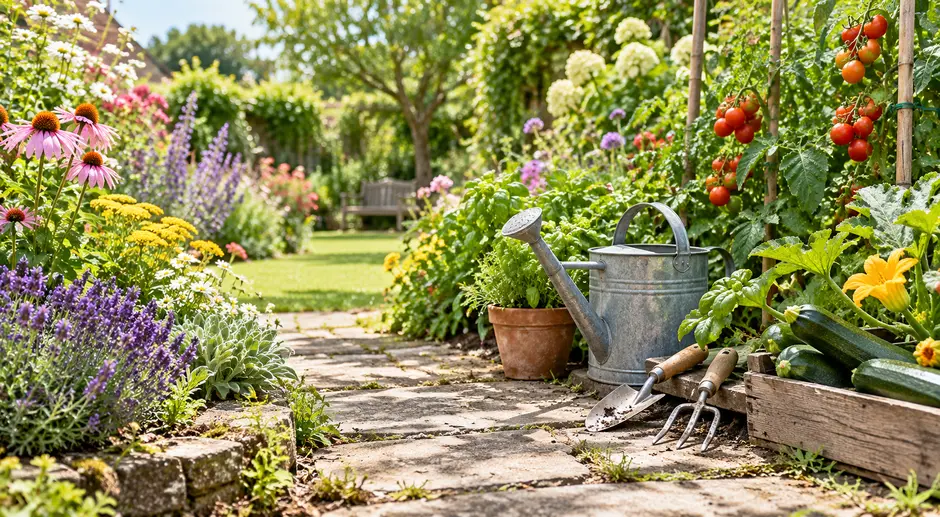
The main gardening jobs for July include watering during dry weather, harvesting fruit and vegetables, deadheading flowers, feeding containers and caring for lawns. Gardeners should also sow crops for autumn, ventilate greenhouses, control weeds and check plants regularly for pests and diseases.
July is often one of the warmest and driest months in the UK gardening calendar. Borders are full of colour, vegetable plots are becoming productive and hanging baskets are reaching their peak. However, plants can quickly become stressed by heat and a lack of water.
Use this July gardening checklist to keep your garden healthy, productive and attractive throughout midsummer.
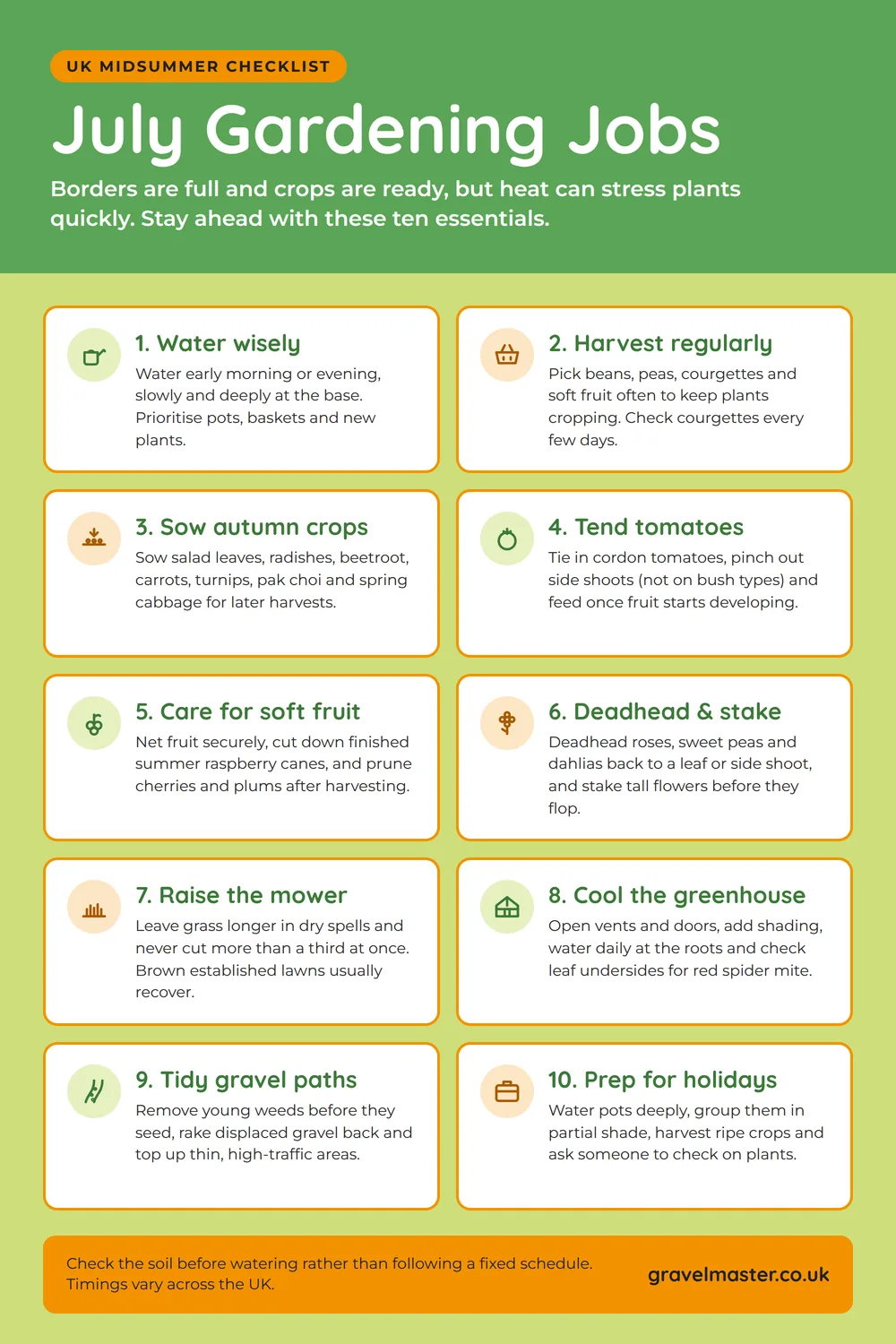
July gardening jobs checklist
The most important jobs to do in the garden in July are:
- Water containers, hanging baskets and newly planted areas
- Harvest vegetables and soft fruit regularly
- Sow vegetables for autumn harvests
- Feed tomatoes and container plants
- Pinch out side shoots from cordon tomatoes
- Pick courgettes, beans and peas regularly
- Deadhead roses, sweet peas and bedding plants
- Stake tall flowers and support climbing plants
- Raise the lawnmower blades during dry weather
- Shade and ventilate greenhouses
- Hoe young weeds before they set seed
- Check plants for pests and diseases
- Inspect hedges for active bird nests before trimming
- Keep ponds and wildlife water sources topped up
- Prepare vulnerable plants before going on holiday
The timing of individual tasks will vary according to local weather, location and the plants grown. Gardens in northern and exposed areas may develop several weeks later than sheltered gardens in southern England.
Water the garden efficiently
Watering is one of the most important July gardening jobs. Containers, hanging baskets, vegetables and recently planted areas can dry out quickly during warm weather.
Water early in the morning or during the evening, when temperatures are lower and less moisture will be lost through evaporation. Apply water slowly and deeply around the base of each plant rather than spraying the foliage.
Prioritise:
- Hanging baskets and containers
- Recently planted flowers, shrubs and vegetables
- Greenhouse plants
- Vegetable beds
- Fruit grown in containers
- Newly laid turf
- Newly sown lawns
Check the soil before watering rather than following a fixed daily schedule. Established plants may benefit more from a thorough soaking every few days than from small amounts of water applied frequently.
Mulching suitable beds and borders can help the soil retain moisture while reducing weed growth. Adding organic matter can also improve the water-holding capacity of light or poor-quality soil.
Explore GravelMaster’s range of topsoil, compost and mulches or improve existing ground with Soil Improver.
What can you sow and plant in July?
July is not too late to sow vegetables or introduce container-grown plants. Warm soil can produce fast germination, although seedlings need dependable watering and protection from extreme heat.
| Crop or plant | What to do in July |
|---|---|
| Salad leaves | Sow small batches for continuous harvests |
| Radishes | Continue succession sowing |
| Beetroot | Sow suitable varieties for later crops |
| Carrots | Sow fast-growing or suitable late varieties |
| Turnips | Sow for autumn harvesting |
| Pak choi | Sow later in the month to reduce the risk of bolting |
| Spring cabbage | Sow for transplanting later |
| Winter salads | Begin sowing suitable varieties |
| French beans | Make final outdoor sowings early in the month |
| Container-grown perennials | Plant if they can be watered consistently |
| Autumn-flowering bulbs | Plant suitable varieties according to their instructions |
Always check the seed packet or plant label for variety-specific sowing dates and growing requirements.
Is July too late to start a garden?
July is not too late to start a garden. Fast-growing vegetables, container-grown plants and crops intended for autumn harvesting can still be planted. New plants will need regular watering because their root systems have not yet become established.
Gardeners starting a vegetable plot in July can begin with salad leaves, radishes, beetroot, turnips and suitable carrot varieties. Buying established vegetable or flowering plants can provide quicker results than growing everything from seed.
Prepare beds with suitable soil before planting. GravelMaster’s Fruit and Vegetable Soil, Beds and Borders Topsoil and Multi-Purpose Soil can support a range of appropriate gardening projects.
July vegetable-garden and allotment jobs
Vegetable plots are highly productive during July, but consistent watering, feeding and harvesting are essential.
Care for tomato plants
Tie cordon tomatoes to their supports as they grow. Remove side shoots that develop between the main stem and the leaf joints so the plant can concentrate on producing fruit.
Bush tomatoes have a naturally branching habit and should not normally have their side shoots removed. Check the variety before pruning.
Feed tomato plants according to the instructions supplied with a suitable tomato fertiliser once the fruit begins developing. Water consistently because sudden changes in soil moisture can affect the fruit.
Remove damaged or diseased foliage and maintain good airflow around greenhouse plants.
Pick beans, peas and courgettes regularly
Harvest runner beans, French beans and peas while they are young and tender. Regular picking encourages the plants to continue producing.
Courgettes also need frequent harvesting. They can develop into large marrows surprisingly quickly during warm weather, so check plants every few days.
Harvest or earth up potatoes
Early and second-early potatoes may be ready to harvest during July, depending on when they were planted. Gently check beneath one plant before lifting the whole crop.
Continue earthing up later potatoes where needed. Drawing soil around the stems helps to protect developing tubers from sunlight.
Check onions and garlic
Onions and garlic may begin to mature as their foliage yellows and falls over naturally. Lift them during a spell of dry weather and allow them to dry before storage.
Do not bend healthy foliage down artificially. Allow the plant to complete its natural growing process.
Keep vegetable beds free from weeds
Hoe annual weeds during dry weather, taking care not to damage shallow crop roots. Remove perennial weeds by hand, including as much of the root system as possible.
Weeds compete with crops for water, light and nutrients. Removing them while they are young is easier and prevents them from flowering and setting seed.
What can you harvest in July?
July can provide one of the widest selections of home-grown produce. The exact harvest will depend on the variety, sowing date and local growing conditions.
Possible July harvests include:
- Salad leaves
- Radishes
- Beetroot
- Carrots
- Early and second-early potatoes
- Peas
- Broad beans
- French beans
- Runner beans
- Courgettes
- Tomatoes
- Spring onions
- Strawberries
- Raspberries
- Currants
- Cherries
- Herbs
Pick crops regularly and remove damaged or overripe produce. Regular harvesting encourages beans, courgettes and peas to continue cropping and prevents surplus produce from placing unnecessary strain on the plant.
Harvest herbs before flowering where possible if they are being grown primarily for their leaves. Regular picking can encourage fresh growth.
Look after soft fruit and fruit trees
Soft fruit ripens quickly during July. Pick strawberries, raspberries and currants regularly, preferably during dry weather.
Use suitable netting to protect crops from birds, making sure it is properly secured and checked frequently so wildlife cannot become trapped.
Other fruit-garden jobs for July include:
- Removing damaged or mouldy fruit
- Watering container-grown fruit
- Pegging healthy strawberry runners into pots or prepared soil
- Tying new blackberry and raspberry canes to their supports
- Removing old summer-fruiting raspberry canes after harvesting
- Thinning overcrowded apples and pears
- Checking fruit trees for damaged branches
- Pruning cherries and plums after harvesting where appropriate
Summer-fruiting raspberry canes that have completed cropping can be cut down to ground level. Leave the new green canes because these will carry next year’s crop.
Stone fruit such as cherries and plums is generally pruned during the growing season rather than in winter. Prune only when necessary, use clean tools and choose a dry day.
Care for flowers and borders
Regular deadheading and maintenance can keep borders flowering throughout July.
Important flower-garden jobs include:
- Deadheading roses and bedding plants
- Picking sweet peas regularly
- Removing faded dahlia flowers
- Cutting back finished herbaceous perennials
- Staking tall plants
- Tying climbing plants to their supports
- Removing weeds before they set seed
- Watering recently planted borders
- Removing damaged or diseased foliage
- Collecting seed from healthy plants when ripe
Many repeat-flowering plants produce more blooms when faded flowers are removed. Cut each spent flower back to a healthy leaf or side shoot rather than removing only the petals.
Some plants are grown for decorative seed heads or to provide food and shelter for wildlife. Leave these in place rather than deadheading every plant in the garden.
Our deadheading guide explains which plants benefit and how to remove faded flowers correctly.
Look after containers and hanging baskets
Containers and hanging baskets can dry out rapidly during July. Check them daily during hot weather and water when the compost begins to feel dry.
Apply water slowly until moisture begins to drain from the base. If the compost has become completely dry, water may run down the sides without reaching the root ball. Apply a small amount first, allow it to soak in and then water thoroughly.
Regularly:
- Remove faded flowers
- Pick off yellow or damaged leaves
- Check for aphids and other pests
- Feed flowering plants with a suitable fertiliser
- Turn containers if plants are growing unevenly towards the light
- Make sure drainage holes remain clear
- Move vulnerable pots into temporary shade during extreme heat
For new displays, follow our guide to planting flowers in pots and containers.
Good drainage is essential for many container plants. Horticultural Grit can be added to suitable growing mixes or used for appropriate garden applications where improved drainage is required.
Lawn-care jobs for July
Grass growth may begin to slow during hot or dry weather. Adjust your mowing routine according to the condition of the lawn rather than following a fixed schedule.
Raise the mower blades during dry periods and leave the grass slightly longer. Longer grass shades the soil and is more resistant to drought. Avoid cutting away more than one-third of the grass height in one session.
Other lawn jobs for July include:
- Tidying lawn edges
- Removing obvious weeds
- Watering newly laid turf
- Watering newly sown grass
- Avoiding heavy use of new lawns
- Cleaning mower blades and equipment
- Leaving selected areas longer for wildlife
Established lawns do not normally need regular watering. Grass may turn brown during prolonged dry weather, but it will often recover once rainfall returns.
Newly laid turf and germinating grass seed are more vulnerable and must not be allowed to dry out. However, July can be a difficult month to establish a lawn during hot weather.
Read our guides explaining how to sow a lawn and how to lay turf. You can also view GravelMaster’s turf and lawn seed products.
Greenhouse jobs for July
Greenhouses can become extremely hot during July. Open doors and vents to improve airflow and use suitable shading when sunlight is intense.
Check greenhouse plants every day because containers and grow bags can dry out quickly. Water around the roots rather than wetting the foliage unnecessarily.
Other greenhouse jobs include:
- Supporting tomatoes and cucumbers
- Removing cordon tomato side shoots
- Feeding fruiting plants
- Harvesting ripe crops
- Removing damaged or diseased foliage
- Maintaining space between plants
- Checking for aphids and whitefly
- Monitoring for red spider mites
- Avoiding excessive humidity
Red spider mites thrive in hot, dry greenhouse conditions. Common signs include pale or mottled leaves and fine webbing around the plant. Inspect the undersides of leaves regularly so problems can be identified early.
Control weeds, pests and diseases
Warm weather encourages weeds and pests to develop quickly. Inspect plants regularly so problems can be dealt with before they become established.
Pests to watch for include:
- Aphids
- Slugs and snails
- Vine weevils
- Lily beetles
- Cabbage white butterfly caterpillars
- Carrot fly
- Greenhouse whitefly
- Red spider mites
Check leaves, stems and developing fruit for damage. Encourage natural predators and use physical controls where appropriate before considering treatments.
Diseases that may become noticeable in July include powdery mildew and tomato or potato blight. Good airflow, suitable spacing and watering around the roots can reduce the conditions in which some diseases spread.
Remove clearly affected material and follow current guidance for the specific disease. Avoid placing diseased plants in a garden compost heap if the material is unlikely to be composted at a sufficiently high temperature.
Applying mulch can suppress weeds and reduce moisture loss. Weed-control membrane can also be used beneath suitable gravel paths and landscaped areas.
Read our guide to laying weed-control membrane or view the available weed-control membrane products.
Can you cut hedges in July?
Hedges can contain active bird nests during July. Check the entire hedge carefully before starting any work and postpone cutting if a nest is occupied.
Never damage or disturb an active nest. If light trimming is necessary and no nests are present, use clean, sharp tools and avoid removing excessive growth during very hot or dry weather.
Wildlife and nesting activity should take priority over routine hedge maintenance.
Help wildlife during hot weather
Water can become scarce for wildlife during prolonged dry periods. Keep bird baths clean and topped up, and provide shallow water that insects and smaller animals can access safely.
Other ways to help garden wildlife include:
- Leaving part of the lawn longer
- Growing nectar-rich flowers
- Avoiding unnecessary pesticide use
- Maintaining ponds during dry weather
- Adding stones or ramps to deep water containers
- Checking fruit netting frequently
- Leaving sheltered areas for insects
- Retaining selected seed heads
Small ponds can lose water quickly through evaporation. Top them up gradually where needed and avoid sudden changes that may disturb wildlife.
Maintain gravel paths and landscaped areas
Warm weather encourages weeds to appear in gravel paths, driveways and decorative areas. Remove young weeds before their root systems become established or they begin producing seed.
Rake displaced gravel back into place and inspect the area for:
- Thin or bare patches
- Exposed membrane
- Loose or damaged edging
- Gravel spreading onto lawns
- Blocked drainage areas
- Uneven surfaces
Additional aggregate may be required in areas affected by frequent foot or vehicle traffic.
Browse GravelMaster’s range of gravels and chippings or use the Gravel Calculator to estimate how much material is needed for a new area or top-up.
Prepare the garden before going on holiday
Plants can deteriorate quickly during hot weather, so prepare the garden carefully before leaving home.
Before going away:
- Water containers and vulnerable plants deeply
- Move suitable pots into partial shade
- Group containers together to reduce water loss
- Ask someone to check plants during prolonged absences
- Harvest ripe fruit and vegetables
- Pick courgettes, beans and peas
- Deadhead flowering plants
- Remove diseased foliage
- Make sure the greenhouse can remain safely ventilated
- Top up ponds and wildlife water sources
- Avoid cutting the lawn extremely short
- Test irrigation equipment before relying on it
Do not leave plants standing permanently in deep water unless their growing requirements make this appropriate.
Prepare the garden for August
Regular maintenance in July will help the garden remain productive into late summer.
Before August arrives:
- Establish a dependable watering routine
- Continue succession sowing
- Harvest crops regularly
- Support heavily laden fruit and vegetable plants
- Remove weeds before they set seed
- Continue deadheading
- Monitor greenhouse temperatures
- Check plants for pests and diseases
- Collect ripe seed where appropriate
- Identify gaps that can be filled with late-summer plants
For more seasonal guidance, read our June Gardening Jobs and continue with the August Gardening Jobs. You can also visit the Gardening by Season hub for advice throughout the year.
Frequently asked questions
What are the main gardening jobs for July?
The main July gardening jobs are watering, harvesting fruit and vegetables, sowing crops for autumn, deadheading flowers, feeding container plants, mowing lawns, controlling weeds and checking plants for pests and diseases.
What can I plant in July in the UK?
Container-grown perennials can be planted in July if they can be watered consistently. Gardeners can also sow salad leaves, radishes, beetroot, carrots, turnips, pak choi, spring cabbage and suitable winter salads.
Is July too late to start a garden?
July is not too late to start a garden. Choose fast-growing vegetables, container-grown plants and crops intended for autumn harvesting. Newly planted areas will need regular watering during warm or dry weather.
Which vegetables can I sow in July?
Vegetables that can be sown in July include salad leaves, radishes, beetroot, carrots, turnips, pak choi and spring cabbage. Final sowings of some French bean varieties may also be possible early in the month.
What can I harvest in July?
July harvests may include potatoes, peas, beans, courgettes, salad leaves, beetroot, carrots, tomatoes, strawberries, raspberries, currants, cherries and herbs. Availability depends on location, variety and sowing date.
How often should I water the garden in July?
There is no fixed watering schedule for every garden. Check the soil and water when required, prioritising containers, hanging baskets, vegetables, greenhouses and newly planted areas. Water deeply around the roots during the morning or evening.
How often should I mow the lawn in July?
Mow according to the grass’s growth rate. Lawns may need weekly mowing during warm, damp conditions but considerably less during drought. Raise the cutting height in dry weather and avoid removing more than one-third of the grass height.
Can I sow grass seed or lay turf in July?
Grass seed and turf can be established in July, but hot and dry weather increases the risk of failure. Newly sown seed and turf must remain consistently moist, so delay the work during extreme heat unless reliable watering is available.
Should tomato side shoots be removed in July?
Remove side shoots from cordon tomatoes to maintain a single main stem. Do not normally remove them from bush tomato varieties because branching is part of their natural growing habit.
Which flowers should be deadheaded in July?
Roses, sweet peas, dahlias, bedding plants and many repeat-flowering perennials benefit from regular deadheading. Leave flowers that are being grown for decorative seed heads or to provide food for wildlife.
Which plants can be pruned in July?
July pruning may include cherries, plums, trained fruit trees and shrubs that have finished flowering. Pruning requirements vary considerably, so identify the plant and appropriate method before cutting.
Can I cut my hedge in July?
Only cut a hedge after checking thoroughly for active bird nests. Postpone work if an occupied nest is present and do not damage or disturb it.
How do I keep a greenhouse cool in July?
Open doors and vents, apply suitable shading and maintain good airflow. Check watering needs daily and leave adequate space between plants. Monitor temperatures closely during periods of intense sunlight.
How should I prepare my garden before going on holiday?
Water vulnerable plants, group containers together, move suitable pots into partial shade and harvest ripe crops. Deadhead flowers, ventilate the greenhouse and arrange for someone to check plants if you will be away for an extended period.