




Autumn Gardening Jobs: A Complete UK Checklist
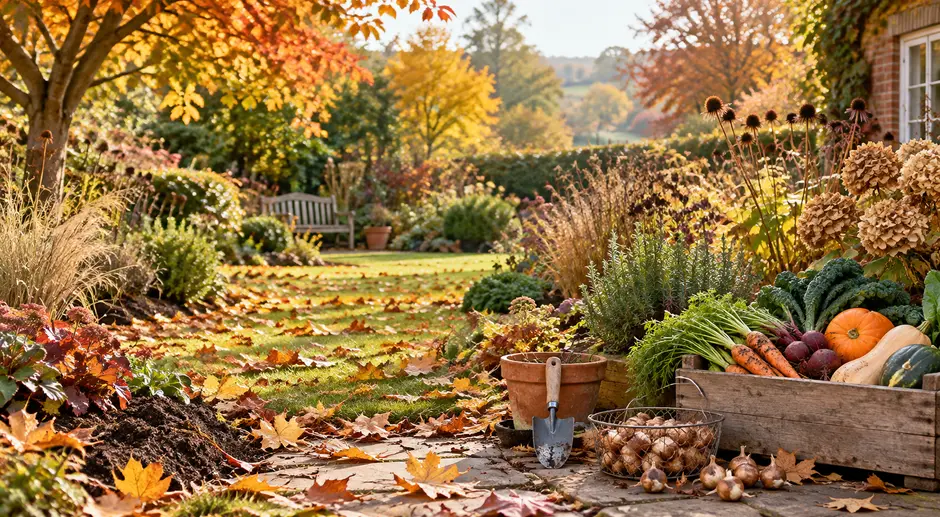
The main autumn gardening jobs are collecting fallen leaves, repairing lawns, planting spring-flowering bulbs, harvesting crops, improving the soil and protecting vulnerable plants. It is also the time to clear drainage, check paths and gradually prepare the garden for colder winter weather.
Conditions vary across the UK, so use the weather, soil and condition of your plants to decide when each task needs completing.
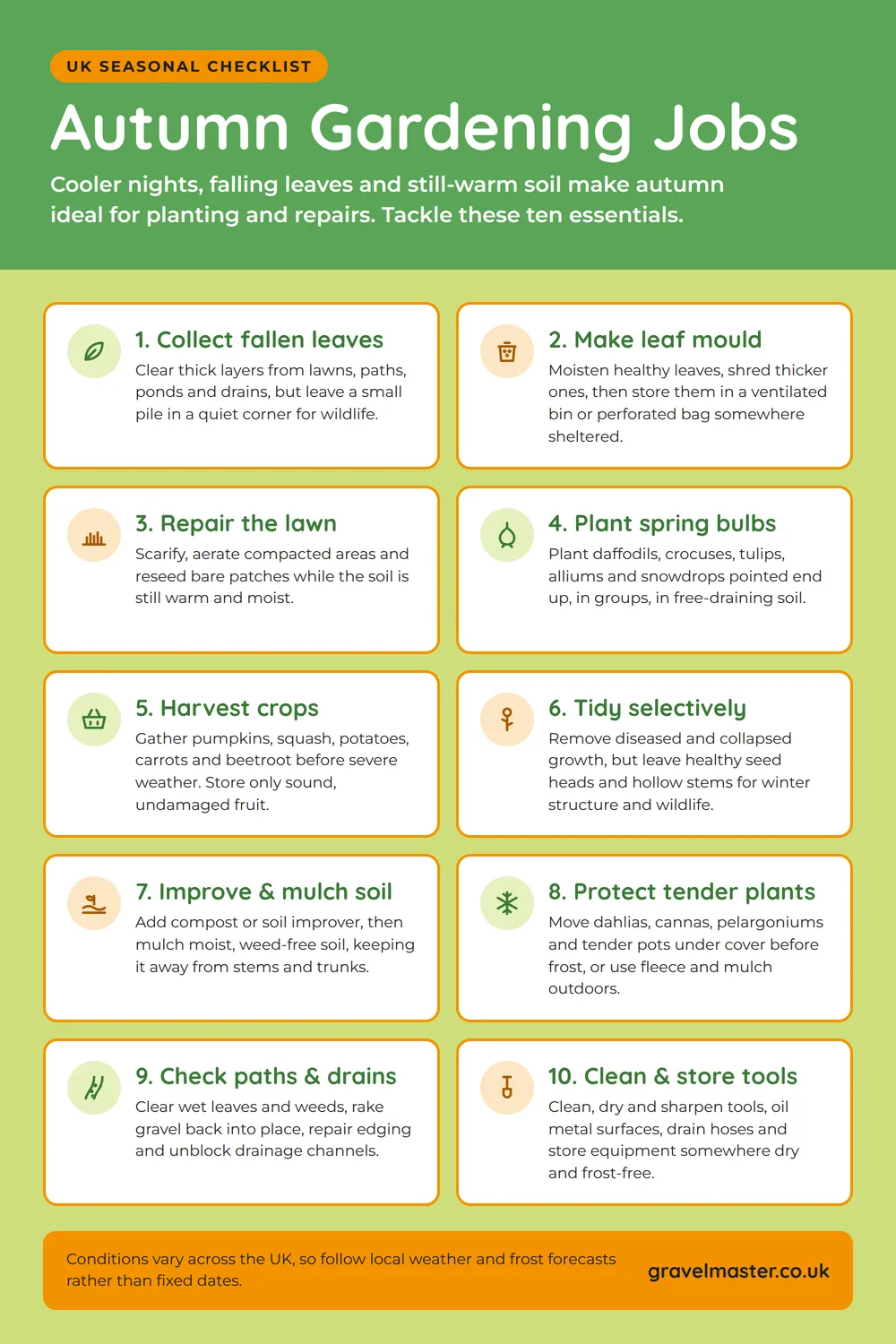
Essential autumn gardening checklist
Use this quick checklist to keep your garden healthy throughout autumn:
- Collect leaves from lawns, paths, ponds and drainage channels.
- Turn suitable fallen leaves into leaf mould.
- Scarify, aerate and repair lawns when conditions are suitable.
- Plant spring-flowering bulbs.
- Harvest remaining fruit and vegetables.
- Remove diseased plant material.
- Leave selected stems and seed heads for wildlife.
- Improve beds with compost or soil improver.
- Apply mulch over moist, weed-free soil.
- Protect tender and newly planted specimens.
- Raise vulnerable containers to improve drainage.
- Clean garden tools and store equipment under cover.
- Check gutters, paths and drainage before wetter weather.
- Begin preparing the garden for frost and winter.
When does autumn gardening begin in the UK?
Meteorological autumn runs from 1 September to 30 November. Astronomical autumn normally begins around 22 or 23 September and finishes at the winter solstice.
For gardeners, however, autumn is better recognised by changing conditions. Growth begins to slow, nights become cooler, leaves start to fall and rainfall usually increases. Soil can remain warm well into the season, making autumn a useful time for planting and lawn repairs.
Conditions differ between northern and southern areas, coastal and inland gardens, and exposed and sheltered locations. Follow the weather and local frost forecasts rather than completing every job on a fixed date.
Autumn gardening at a glance
This guide covers the main principles of gardening in autumn. For more detailed planting, harvesting and maintenance lists, use the appropriate monthly guide.
| Period | Main focus | Detailed guide |
|---|---|---|
| Early autumn | Harvest crops, repair lawns and plant while the soil remains warm | September gardening jobs |
| Mid-autumn | Collect leaves, plant bulbs and begin frost preparation | October gardening jobs |
| Late autumn | Protect vulnerable plants and complete final winter preparations | November gardening jobs |
Collect fallen leaves
Fallen leaves can be valuable in the right place, but they may cause problems when they accumulate on lawns, paths, ponds and drains.
Remove thick layers of leaves from lawns because they can block light and trap moisture around the grass. Wet leaves can also make paths slippery, while leaves left in ponds or drainage channels may decay and restrict water flow.
Not every leaf needs to be removed. A small pile beneath a hedge or in a quiet corner can provide shelter for insects and other wildlife. Healthy leaves can also be collected and turned into leaf mould.
Leaves affected by persistent plant diseases should be kept separate from material intended for reuse. Dispose of them according to local guidance rather than adding them to a general leaf pile.
Make leaf mould
Leaf mould is created by allowing fallen leaves to break down gradually. The finished material can improve soil structure, support moisture retention and provide a useful surface mulch.
Leaves from oak, beech and hornbeam generally break down relatively easily. Thicker leaves, including sycamore and horse chestnut, can take longer and may benefit from being shredded first.
To start making leaf mould:
- Collect healthy fallen leaves.
- Shred thicker leaves with a mower or suitable shredder.
- Moisten dry leaves.
- Place them in a ventilated leaf bin or perforated bag.
- Store them in a sheltered location.
- Check occasionally and add a little water if the leaves become completely dry.
The process is covered in more detail in our guide to making leaf mould.
Look after the lawn after summer
Autumn provides cooler temperatures, increased rainfall and soil that may still be warm enough for grass growth. These conditions can make it a useful season for repairing damage caused by summer heat, drought and foot traffic.
Remove leaves and debris
Regularly remove thick layers of leaves from the lawn. Grass left beneath wet leaves can become weak, discoloured and more susceptible to disease.
Scarify when conditions are suitable
Scarifying removes excess thatch and moss from the surface of the lawn. Avoid aggressive scarifying when grass is dry, weak, waterlogged or unlikely to recover before cold weather arrives.
Aerate compacted areas
Areas that receive frequent foot traffic can become compacted. Aeration creates channels through which air, water and nutrients can reach the roots.
A garden fork may be sufficient for a small area. Larger or heavily compacted lawns may require a dedicated aerator.
Repair bare patches
Where the soil remains warm and moist, autumn can be suitable for reseeding thin or bare areas. Prepare the surface, select an appropriate seed mixture and keep the area moist while the new grass establishes.
Feed appropriately
Use a lawn feed formulated for autumn rather than a high-nitrogen spring product. Follow the manufacturer’s instructions and avoid treating frozen, waterlogged or drought-stressed grass.
Adjust mowing
Continue mowing while the grass is actively growing, but reduce the frequency as growth slows. Avoid cutting the lawn extremely short before winter.
For more detailed advice, read our autumn and winter lawn-care guide.
If you are creating or repairing a lawn, see our guides to laying turf and sowing a lawn. GravelMaster also supplies a range of turf and lawn seed.
Plant spring-flowering bulbs
Autumn is the main planting season for many spring-flowering bulbs. The soil is often still workable, while cooler conditions allow the bulbs to establish before winter.
Popular bulbs for autumn planting include:
- Daffodils
- Crocuses
- Tulips
- Alliums
- Hyacinths
- Snowdrops
- Grape hyacinths
Choose a position with suitable light and free-draining soil. Bulbs left in persistently wet ground can rot, so improve drainage where necessary or plant them in containers.
As a general principle, bulbs are planted with their pointed end facing upwards and covered to the depth recommended for the variety. Planting depth and spacing differ, so always follow the instructions supplied with the bulbs.
Bulbs can be planted in borders, containers and lawns. Grouping several bulbs together usually creates a stronger display than spacing individual bulbs widely across an area.
For a UK planting calendar and practical instructions, see our guide to when to plant spring bulbs. You can also explore GravelMaster’s bulb range.
Tidy beds and borders selectively
Autumn tidying should not mean removing every stem, leaf and seed head from the garden.
Remove exhausted annuals and growth that is diseased, damaged or likely to collapse into a wet mass. Healthy stems and seed heads can provide food and shelter for wildlife while adding structure to the winter garden.
Plants such as echinacea, rudbeckia, sedum and ornamental grasses can often be left standing. Cut back material that is diseased or unsuitable for winter retention.
Autumn may also provide an opportunity to divide or move suitable perennials while the soil remains warm and workable. Water newly moved plants if conditions are dry and continue monitoring them until they establish.
Remove perennial weeds before applying compost or mulch. Avoid working on beds when the soil is saturated because this can damage its structure.
Improve and protect the soil
Autumn is a useful time to replenish garden soil after the main growing season.
Adding organic matter can improve soil structure and prepare beds for future planting. GravelMaster’s soil improver can be incorporated into suitable existing garden soils.
Do not dig or walk over very wet soil. Wait until it is workable and breaks apart rather than forming a sticky mass.
Apply a suitable mulch
Mulching can:
- Reduce weed growth
- Protect the soil surface
- Limit erosion
- Reduce rapid temperature changes
- Help retain moisture
- Add organic matter when biodegradable materials decompose
Remove weeds and water dry ground before applying mulch. Keep the material away from plant stems, tree trunks and shrub bases to reduce the risk of trapped moisture and decay.
An organic product such as ornamental bark mulch can protect the surface and gradually break down. Decorative gravel can provide a low-maintenance surface and reduce soil splash, but it does not add organic matter in the same way.
Browse GravelMaster’s range of topsoil, compost and mulch when preparing beds, borders and growing areas.
Autumn jobs in the vegetable garden
The main autumn vegetable-garden jobs are harvesting remaining crops, clearing unhealthy material and protecting the soil through winter.
Harvest remaining crops
Harvest pumpkins, squash, potatoes, carrots and beetroot according to the requirements of each crop and before severe weather causes damage.
Pick pumpkins and winter squash once they have matured, then cure and store suitable fruits in dry conditions. Our guide explains how to harvest pumpkins.
Leeks, kale and some other hardy crops may remain in the ground, but their tolerance depends on the variety and local conditions.
Remove spent and diseased plants
Healthy annual plant material can be composted. Remove material affected by persistent disease and dispose of it appropriately.
Clearing finished crops also prevents old material from providing unnecessary shelter for some pests.
Protect empty soil
Avoid leaving large areas of soil bare throughout winter. Depending on the bed and future planting plans, you could:
- Sow an appropriate green manure.
- Add a layer of compost or well-rotted organic matter.
- Cover the surface with mulch.
- Use a suitable temporary cover.
- Leave healthy crop roots in place to support soil structure.
Plant overwintering crops
Garlic, broad beans, spinach, spring cabbage and some onion varieties may be planted or sown during autumn. Suitable timing depends on the variety, location and weather, so use the seed or plant instructions and the relevant monthly guide.
For new raised beds, allotments and growing areas, Fruit and Vegetable Soil provides a growing medium containing organic matter and nutrients for crop establishment.
Harvest and store autumn fruit
Apples, pears, blackberries, autumn-fruiting raspberries and other crops may continue producing during the season.
Pick fruit carefully to avoid bruising. Store only sound, undamaged fruit and check it regularly, removing anything that begins to rot.
Gather windfalls and remove diseased fruit from trees and the ground. Fruit left to decay can attract pests and may allow some diseases to persist.
Pruning requirements vary considerably between fruit types. Identify the plant and confirm the correct timing before cutting. A task that benefits one fruit tree can reduce flowering or fruiting in another.
Protect tender plants from frost
Check local forecasts as temperatures begin to fall. Frost can arrive much earlier in exposed or northern gardens than in sheltered urban locations.
Plants that may require protection include:
- Cannas
- Dahlias
- Pelargoniums
- Tender fuchsias
- Bananas
- Young or recently planted trees
- Tender container plants
Move suitable containers into a greenhouse, conservatory or another protected area. Plants that remain outdoors may benefit from horticultural fleece or a protective mulch around their roots.
Keep protective coverings secure but allow airflow. Material wrapped too tightly around a plant can trap moisture and encourage decay.
Reduce watering as growth slows, but do not allow overwintering plants to dry out completely. Check protected and stored plants periodically throughout winter.
Prepare containers for colder and wetter weather
Containers can become waterlogged during prolonged autumn rain. Check that drainage holes remain open and raise vulnerable pots onto feet where necessary.
Remove exhausted summer bedding and replace it with plants suited to cooler conditions. Autumn and winter container plants can include pansies, violas, cyclamen, heucheras and compact evergreen shrubs.
Water less frequently as temperatures fall and growth slows. Check the compost rather than following a fixed watering schedule.
Move frost-sensitive pots to shelter before cold weather arrives. Large containers that cannot be moved may require insulation around the pot and protection for the plant above it.
Check gravel paths and landscaped areas
Wet leaves, weeds and displaced aggregate can make paths untidy and may create slippery or uneven surfaces.
Autumn maintenance should include:
- Removing wet leaves from paths and driveways
- Pulling surface weeds before they produce seed
- Raking displaced gravel back into place
- Checking and repairing edging
- Clearing drainage channels
- Topping up thin areas
- Removing soil and organic matter from the surface
A weed-control membrane can reduce weeds growing from the soil beneath an aggregate surface, although it cannot prevent seeds from landing and germinating on accumulated surface material.
Read our guide to laying weed-control membrane and browse the available weed-control membranes and accessories.
If an existing area needs topping up, explore GravelMaster’s gravels and chippings and use the gravel calculator to estimate the quantity required.
Prepare ponds and water features
Remove excessive fallen leaves from pond surfaces before they sink and decay. Temporary netting can help where large quantities of leaves fall, but it must be installed securely and checked so wildlife cannot become trapped.
Avoid completely clearing every plant and hiding place from a wildlife pond. Retain some habitat while controlling the accumulation of decaying material.
Check pumps and filters, remove blockages and follow the manufacturer’s winter-care instructions. Maintain safe access to water for wildlife during dry periods.
Help wildlife through autumn
A balanced autumn clear-up protects plants and paths without removing every source of food and shelter.
You can help garden wildlife by:
- Leaving selected seed heads for birds.
- Retaining some hollow plant stems for insects.
- Creating a small log or leaf pile in a quiet location.
- Growing berry-bearing shrubs.
- Providing clean water.
- Cleaning bird feeders regularly.
- Avoiding unnecessary pesticide use.
- Checking piles of leaves and garden material before moving them.
- Inspecting bonfire material carefully before lighting it.
Hedgehogs, amphibians, solitary bees and other animals may use undisturbed garden areas for shelter. Leave some suitable habitat away from busy paths and working areas.
Clean and store garden tools
Cleaning tools before winter helps prevent corrosion and reduces the chance of carrying soil or plant disease into future work.
Autumn tool maintenance can include:
- Removing soil and plant material
- Washing and drying suitable tools
- Sharpening cutting edges
- Oiling metal surfaces
- Treating dry wooden handles
- Emptying and storing hoses
- Protecting watering equipment from frost
- Cleaning pots and seed trays
- Storing tools somewhere dry and secure
Clean cutting tools after working with diseased plants and before moving between vulnerable specimens.
Check gutters and drainage
Autumn rain can reveal drainage problems around paths, lawns and planted areas.
Remove leaves and debris from channels, grids and accessible gutters. Check that water flows away from buildings and does not collect around vulnerable plants.
Compacted soil, blocked drainage and inappropriate surface levels can all contribute to standing water. Identify the cause before adding materials or carrying out major work.
Avoid walking over or working heavy soil when it is saturated because this can make compaction worse.
Prepare the garden for winter
Use the end of autumn to make a gradual transition into winter maintenance.
Before colder weather becomes established:
- Finish protecting vulnerable plants.
- Secure lightweight garden furniture and structures.
- Store frost-sensitive equipment.
- Clear remaining drainage blockages.
- Check greenhouse glazing and fixings.
- Move suitable containers into shelter.
- Review stored fruit, bulbs and plants.
- Avoid walking on frozen lawns.
- Keep paths safe during wet or icy conditions.
Continue planning with our complete winter gardening jobs guide.
Frequently asked questions
What gardening jobs should I do in autumn?
The main autumn gardening jobs are collecting leaves, repairing lawns, planting spring bulbs, harvesting crops, tidying unhealthy growth, improving the soil and protecting tender plants. You should also check paths, drainage, containers, ponds and garden equipment before winter.
When should I start preparing my garden for autumn?
Begin when growth starts to slow, nights become cooler and leaves begin to fall. This often happens during September, but timing varies across the UK. Use local temperatures, rainfall and frost forecasts rather than relying entirely on a fixed date.
What should I cut back in autumn?
Remove diseased, damaged or collapsed growth and clear annual plants that have finished. Healthy seed heads, ornamental grasses and hollow stems can often remain through winter to provide structure, food and shelter for wildlife.
Should I clear all fallen leaves from my garden?
No. Remove leaves from lawns, paths, ponds and drainage channels, but retain some healthy leaves beneath hedges or in quiet areas for wildlife. Suitable leaves can also be collected and turned into leaf mould.
What bulbs can I plant in autumn?
Daffodils, crocuses, tulips, alliums, hyacinths, snowdrops and grape hyacinths are commonly planted during autumn. Exact planting times, depths and conditions vary, so follow the instructions supplied with each variety.
Is autumn a good time to plant?
Autumn can be an excellent time to plant trees, shrubs and suitable perennials because the soil may remain warm while rainfall increases. Avoid planting into frozen or waterlogged soil and continue watering new plants during dry periods.
Should I feed my lawn in autumn?
An appropriate autumn lawn feed can support root development, but it should only be applied when conditions and the product instructions are suitable. Do not apply fertiliser to frozen, waterlogged or drought-stressed grass.
What vegetables can I plant during autumn?
Depending on the variety and local conditions, autumn planting can include garlic, broad beans, spinach, spring cabbage and overwintering onions. Check the instructions for the crop and use the monthly guide for more precise timing.
When should I protect plants from frost?
Prepare protection before frost is forecast. Tender plants in exposed or northern locations may require attention earlier than plants in sheltered urban gardens. Monitor local forecasts rather than waiting for a national date.
Should garden beds be dug over in autumn?
Some soils and planting areas benefit from the addition of organic matter during autumn. Do not dig waterlogged ground, as this can damage the soil structure. No-dig methods and surface mulching may be more appropriate for some beds.
How can I help wildlife during autumn?
Retain selected seed heads and hollow stems, leave a small log or leaf pile, provide clean water and avoid unnecessary pesticide use. Clear leaves where they create hazards, but leave some suitable undisturbed habitat in quieter areas.
How do I prepare my garden for winter?
Protect tender plants, clear drainage, secure outdoor furniture, store vulnerable equipment, raise containers and check greenhouse glazing. Remove thick leaf layers from lawns and paths, but retain some natural habitat for wildlife.