




How to Lay Turf: Ground Preparation, Installation and Aftercare
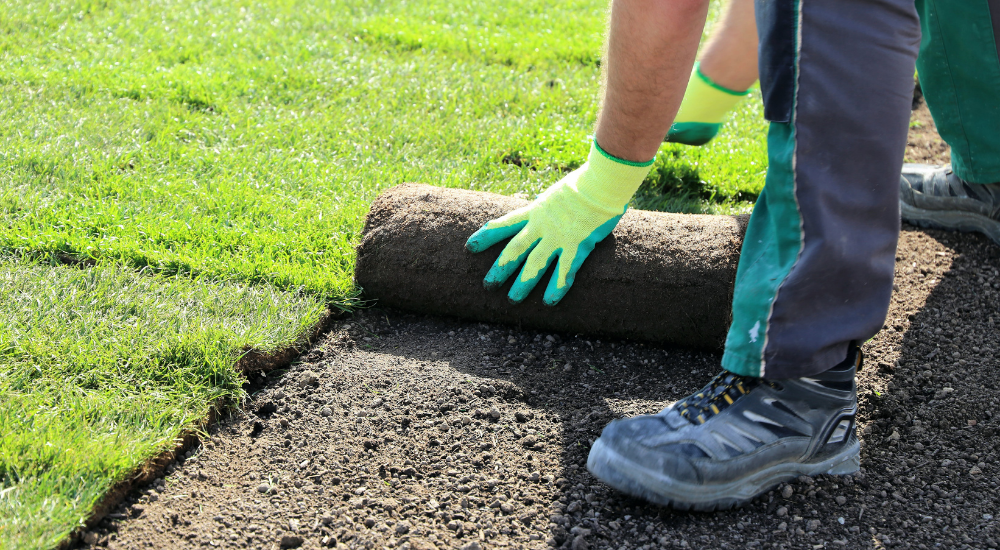
To lay turf successfully, clear and level the ground, prepare a firm soil surface, then lay fresh rolls in staggered rows with their edges fitting closely together. Water through the turf into the soil beneath and keep the lawn protected while its roots establish.
Most of the work happens before the first roll goes down. Finish your ground preparation before arranging delivery so you can get straight to laying while the turf is fresh.
In this guide
- When to lay turf
- Tools and quantities
- Preparing the ground
- Delivery-day advice
- Laying turf step by step
- Watering and aftercare
- Common problems
- Frequently asked questions
When Is the Best Time to Lay Turf in the UK?
Mid-autumn is generally a good time to lay turf: the ground usually retains some warmth, rainfall helps with watering and the grass has time to establish before summer. Suitable conditions can continue into early spring.
Check the ground rather than relying on the date. Postpone laying if it is frozen, waterlogged or extremely dry. Working wet soil can damage its structure, while dry ground makes it harder to keep new roots supplied with moisture.
Warmer-weather turfing needs more attention to delivery timing and watering. If you cannot lay promptly or keep the root zone moist, wait for more suitable conditions.
What You Need Before Laying Turf
Tools and materials
Have these ready:
- Fresh turf and suitable topsoil where needed.
- A measuring tape, string line and straight board.
- A spade, garden fork, rake and wheelbarrow.
- Boards to kneel or stand on.
- A sharp knife or suitable turf-cutting tool.
- A hose or sprinkler that reaches the whole lawn.
A hired turf cutter can help with removing a larger old lawn. A rotavator may help loosen ground, but neither is essential for every garden.
How much turf should you order?
Measure the lawn in metres and multiply length by width to find its area. A rectangular lawn measuring 5m by 4m covers 20m².
For irregular shapes, divide the space into smaller sections and add their areas together. Include an allowance for trimming and shaping, particularly around curves. Check the allowance with your supplier before ordering.
Gravelmaster’s Pro Hard Wearing Turf is supplied in rolls covering approximately 1m². Turf is ordered by area; any additional soil is calculated by volume.
How to Prepare the Ground for Turf
1. Remove old grass, weeds and debris
If replacing a lawn, lift the old turf with a spade or turf cutter to expose the soil. Remove stones, builders’ rubble and remaining vegetation.
Pay particular attention to perennial weeds such as couch grass and bindweed. Fork out their roots before cultivation rather than chopping them into smaller pieces and spreading them around.
If using weedkiller, follow its label, including any interval before laying turf. Do not use a product whose residual action could affect the new grass.
2. Check the soil and drainage
Dig a few inspection holes across the area. Look for usable soil, compacted layers, buried rubble and places that remain wet after rain.
Loosen compacted ground before laying. Persistent standing water may need drainage work; covering it with a thin layer of new soil will not solve the underlying problem.
Clay and sandy soils need different attention. Avoid working clay while it is sticky and wet. Well-rotted organic matter can help improve soil structure and moisture retention, particularly in sandy ground. Avoid undecomposed material that could leave hollows as it breaks down.
3. Check topsoil depth and calculate any extra soil needed
Aim for around 100–150mm of suitable topsoil for turf to root into, checking the requirements of the turf supplied. This means the total usable soil beneath the lawn, including suitable soil already in your garden. It does not mean every lawn needs another 150mm added.
If the existing soil is suitable and deep enough, concentrate on preparation. Where extra soil is needed, choose a suitable turfing soil and establish how much depth you need to add.
Calculate volume using:
Area in m² × additional depth in metres = volume in m³.
For example, adding 50mm across 20m² requires 20 × 0.05 = 1m³, or 1,000 litres, before allowing for settlement.
Our guide to laying topsoil covers spreading it. You can also select the Topsoil option on our quantity calculator to estimate requirements.
4. How to level soil before laying turf
Rake the surface to break up clumps, remove remaining debris and redistribute soil from high spots into hollows. Use a straight board to help reveal bumps and dips that are difficult to judge by eye.
An even lawn does not have to be completely horizontal. Retain an appropriate fall for drainage and avoid creating depressions where water can collect.
Check the planned finished height beside paths and existing grass. Allow for the thickness of the turf so the completed lawn meets adjacent surfaces as intended. Keep existing building clearances and drainage features unobstructed.
5. Firm the ground and rake the surface
Let disturbed soil settle before final preparation. Then tread across it methodically with small, overlapping steps, working in different directions.
Fill any soft spots or hollows that appear, rake and check again. The aim is a firm base that supports you without deep footprints, rather than soil compressed into a hard surface.
Finish by lightly raking a fine tilth: a loose surface of small, crumbly soil particles. If the ground is dry, moisten it before laying without leaving puddles.
Use a pre-turf fertiliser only where appropriate, following its application rate and the turf supplier’s instructions.
What to Do When Your Turf Arrives
How long does turf last rolled up?
Plan to lay turf on delivery day. Gravelmaster recommends laying its turf within 24 hours of receipt, but warm conditions can make prompt laying even more important. That period is not a guarantee that rolls will remain healthy regardless of storage conditions.
Check several rolls on arrival. They should hold together, have reasonably consistent thickness and show healthy grass. Contact the supplier promptly if the turf appears badly deteriorated.
If laying is delayed, follow the supplier’s handling instructions. Unrolling turf temporarily on a suitable surface exposes the grass to air and light; keep it moist if necessary. Watering turf once it is unrolled is different from soaking rolls stacked on a pallet, where heat and poor airflow can cause problems.
How to Lay Turf Step by Step
1. Start along a straight edge
Use a path, border or taut string line to guide the first row. Unroll the first piece slowly and check its position before continuing.
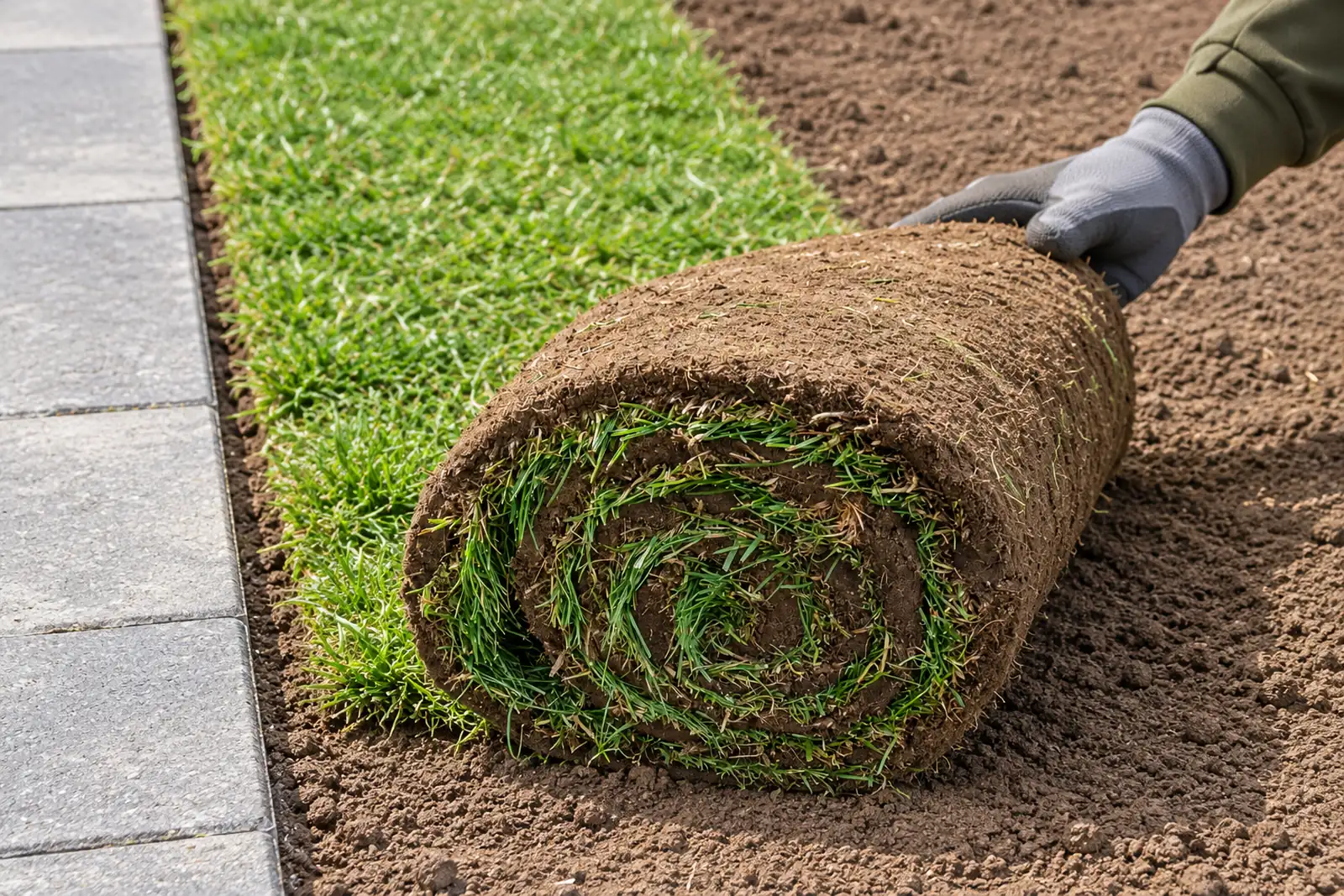
2. Position each roll flat against the soil
The underside should sit against the prepared ground throughout. If a piece bridges a hollow, lift it and correct the soil beneath. Avoid pressing it into a dip and leaving an uneven lawn surface.
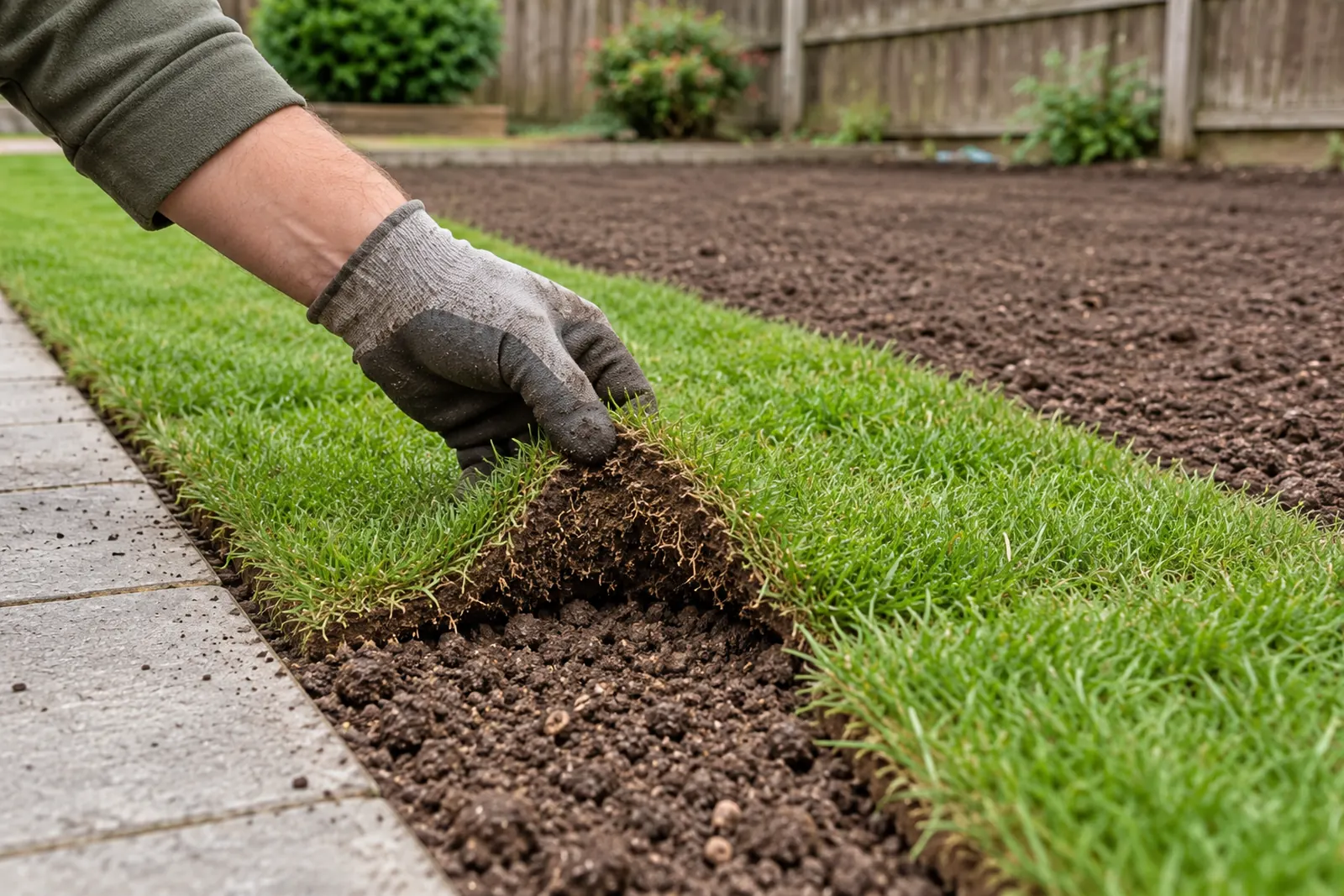
3. Stagger the joints
Start the next row with a suitably sized piece so the short joins are offset, like brickwork. Avoid four corners meeting together and try not to leave tiny offcuts at exposed edges, where they can dry out quickly.
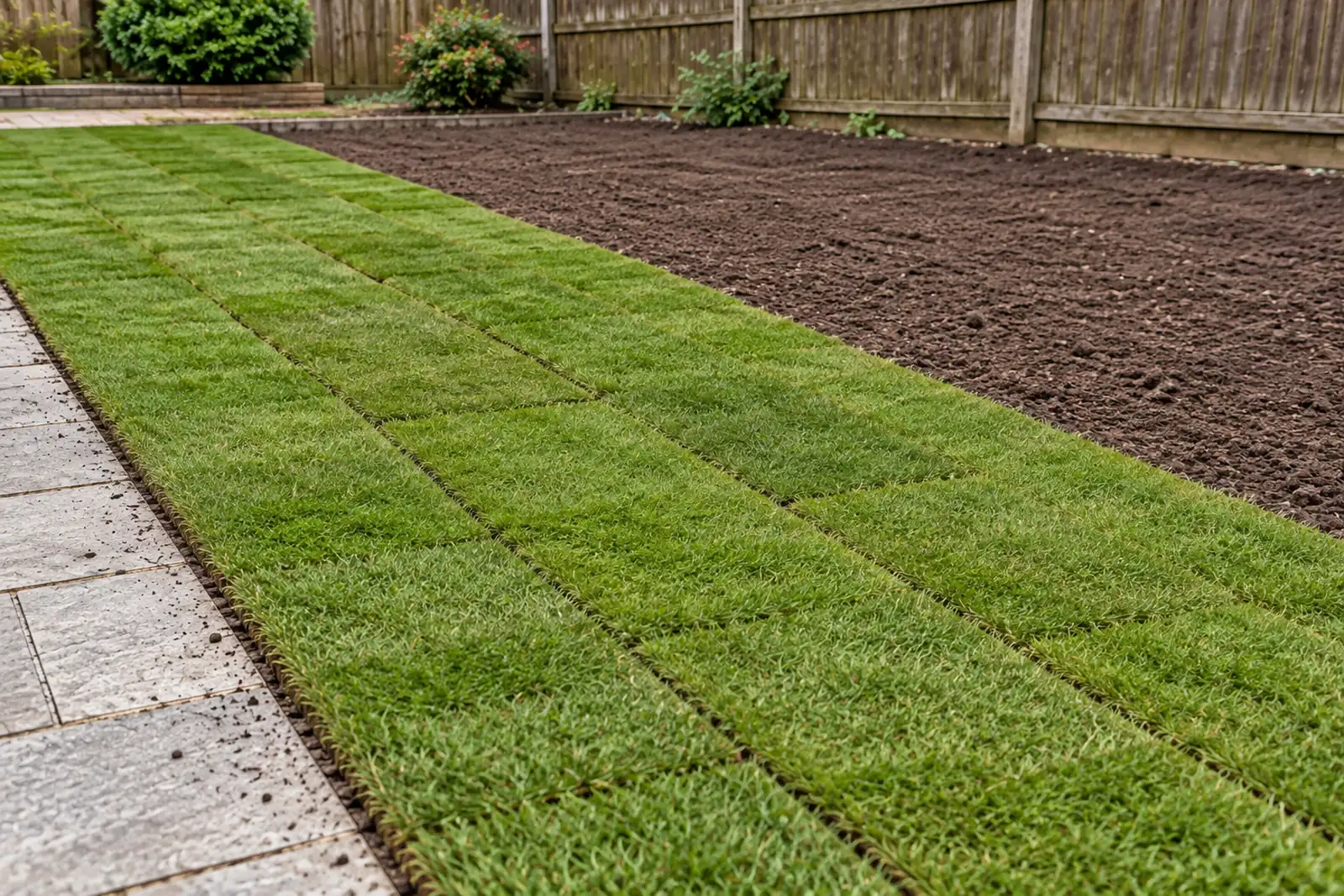
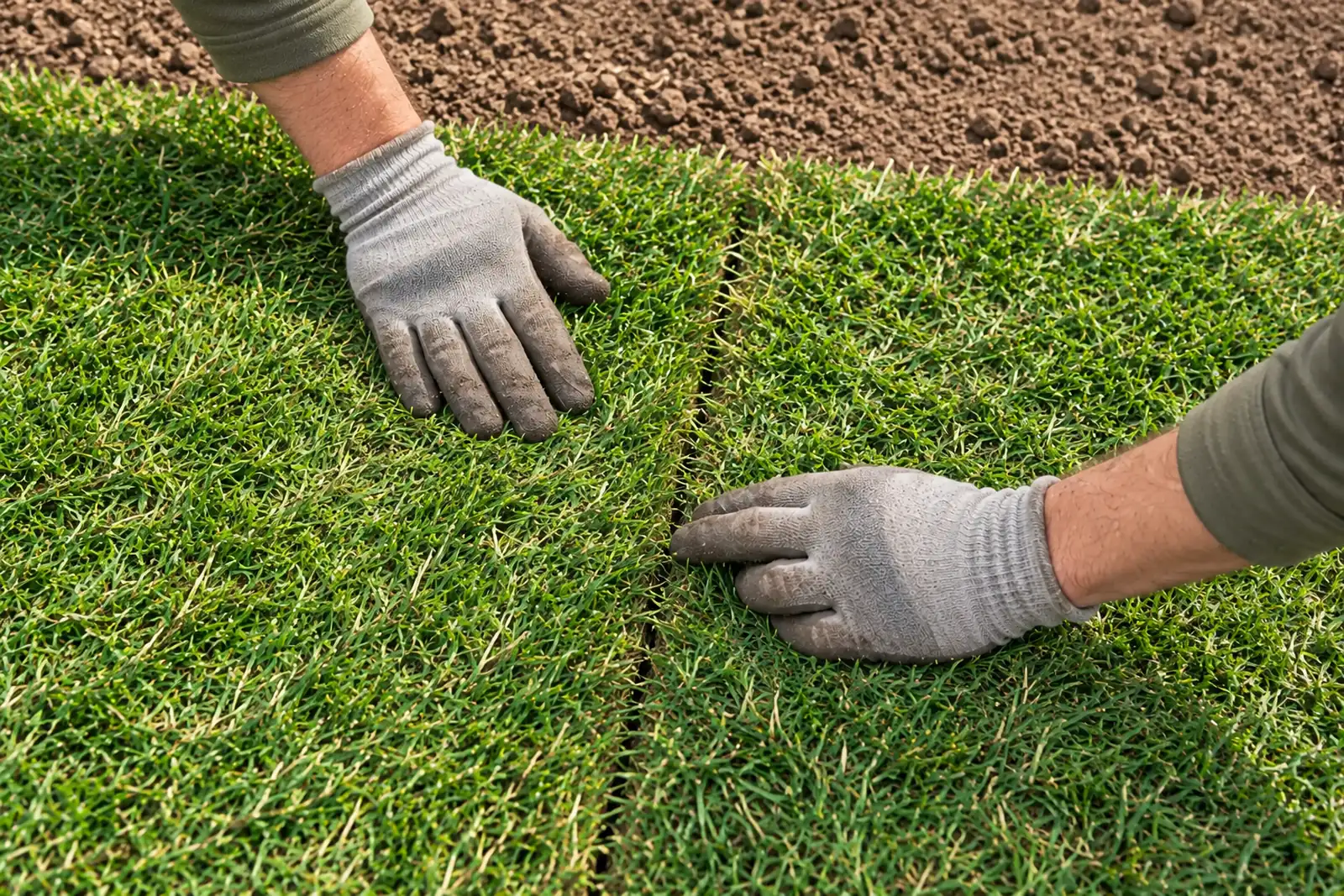
4. Bring edges together without stretching
Fit neighbouring rolls closely together, with edges touching but not overlapping. Reposition the roll if necessary rather than pulling it longer. Stretched turf can shrink back and open gaps.
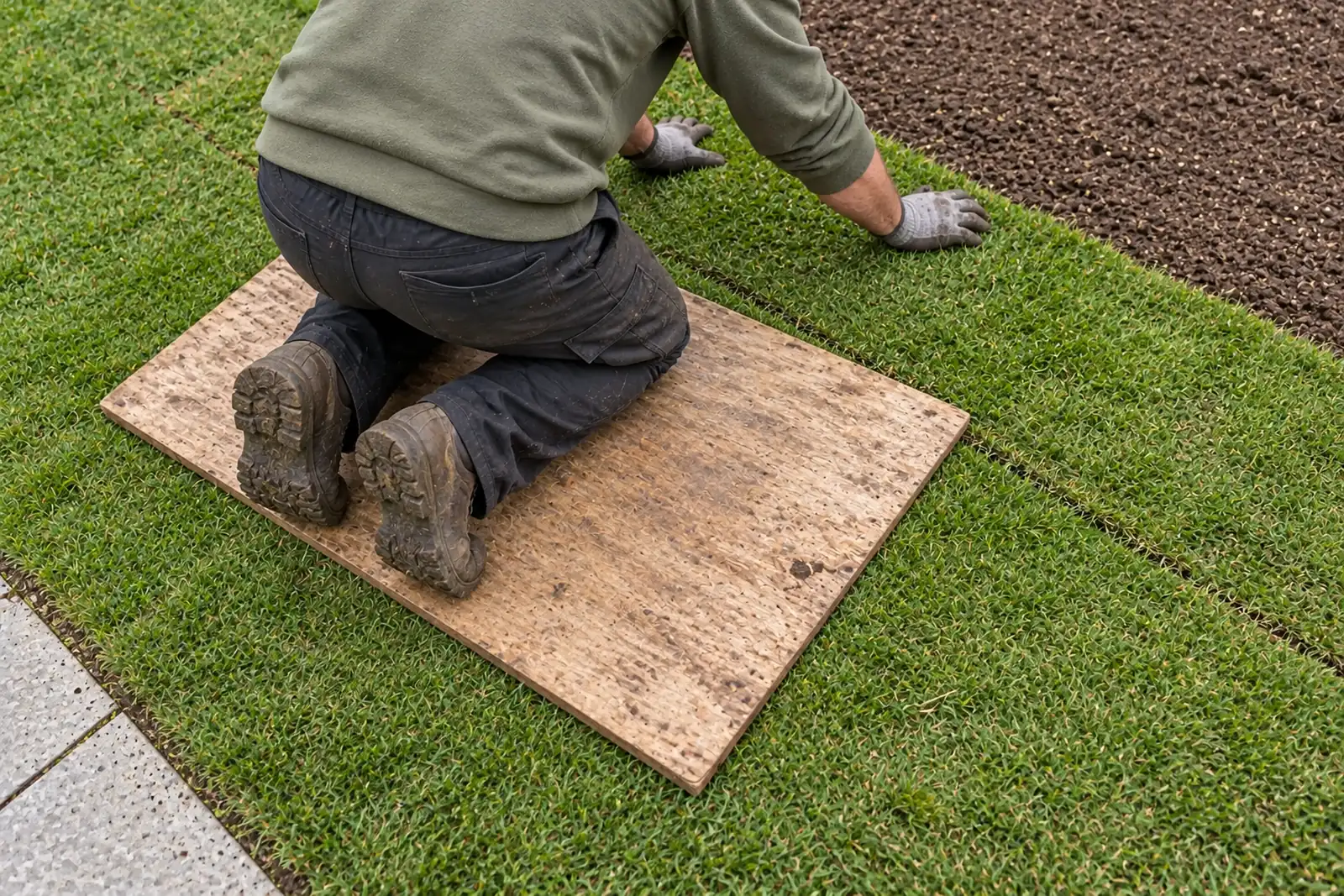
5. Work from boards
Use boards to spread your weight while kneeling or standing on newly laid turf. Move them as you work so you avoid direct footprints in the turf or prepared soil.
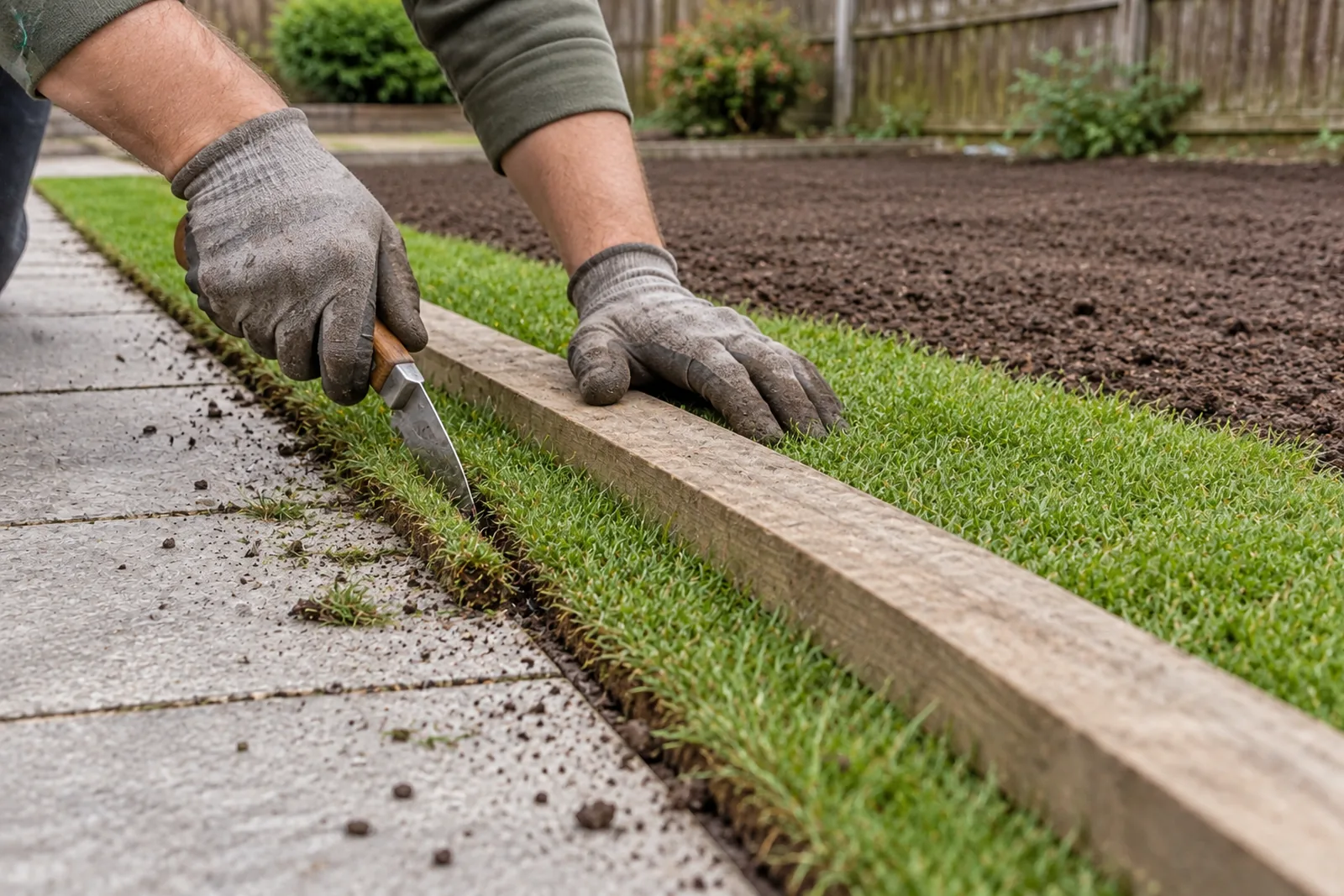
6. Trim around paths, beds and curves
Lay turf slightly beyond the intended edge, then cut it neatly with a sharp tool. A straight board can guide a straight cut. For curves, mark the desired shape before trimming rather than guessing separately at each roll.
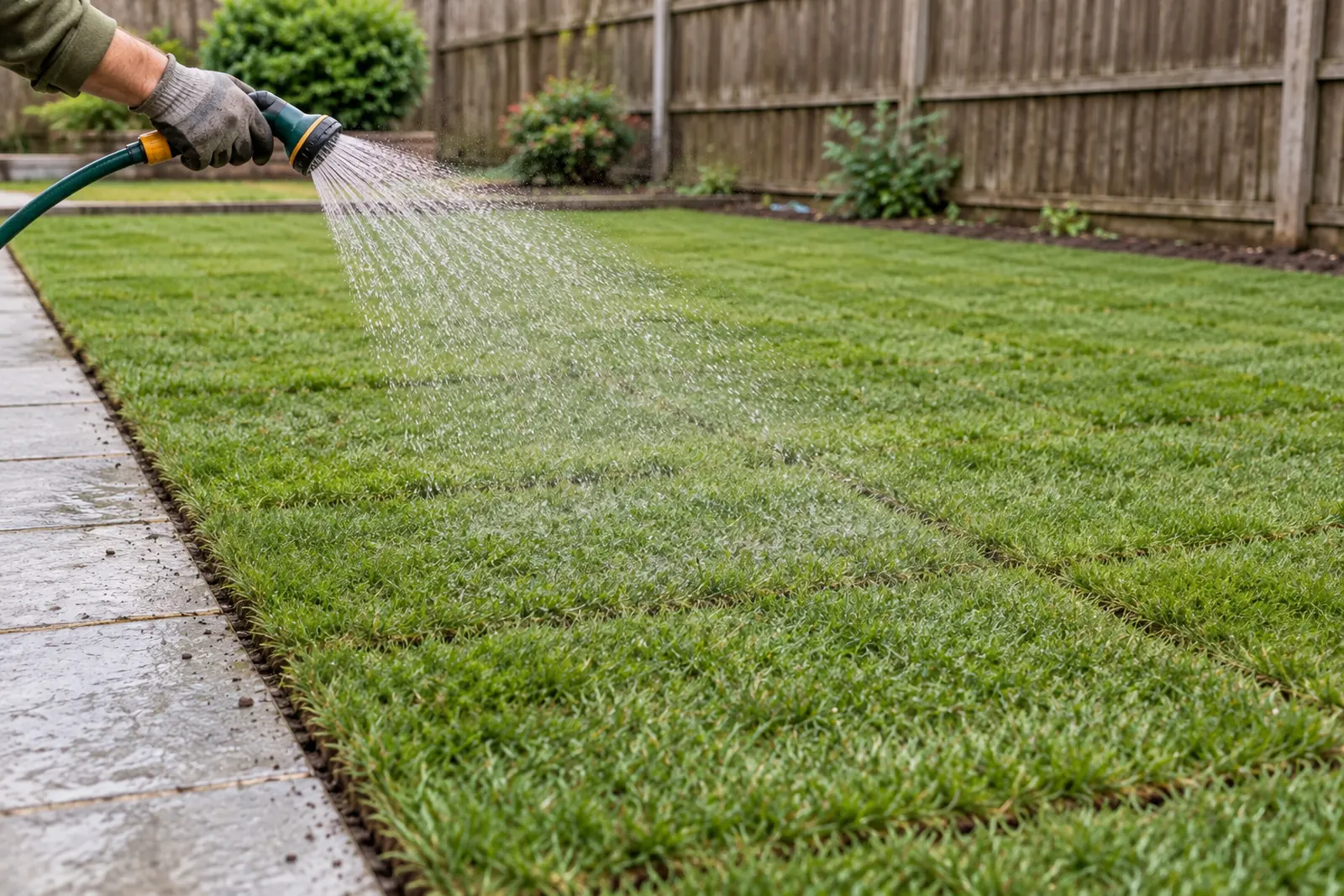
7. Check the joins and water promptly
Look for raised edges, overlaps and areas without good soil contact. Correct them before watering, following the supplier’s guidance on gentle firming.
Start watering completed sections promptly, especially in drying weather. Do not leave the first rows drying out while finishing a large lawn.
What changes when laying turf on a slope?
Lay rows across the slope rather than running them downhill, working from the bottom upwards. Check that rolls remain in place while establishing. Steep banks or slopes with erosion and drainage problems may need specialist preparation and securing advice before turf is ordered.
Watering and Looking After Newly Laid Turf
Watering during establishment
Water thoroughly enough to moisten the soil beneath the turf. Gently lift a corner shortly after watering to check that moisture has reached through, then replace it.
Inspect the lawn regularly during establishment, including edges and joins. Hot weather, wind and limited rainfall can increase drying; cool, wet conditions reduce watering needs.
Adjust to what you find beneath the turf. A wet-looking grass surface does not prove the underlying soil is moist. Equally, avoid watering ground that is already saturated.
How long does turf take to root?
Initial rooting often develops over roughly two to three weeks in suitable growing conditions, but colder weather or poor conditions can make it slower. Rooting into the soil is only the beginning; the lawn needs longer to withstand normal use.
Test gently at a corner. Resistance to lifting indicates attachment, while a section that lifts freely needs more time and checking of its growing conditions.
If you are wondering how long turf takes to settle, remember that soil settlement and root growth are different processes. Preparation helps prevent sinking, while moisture, temperature and soil contact influence rooting.
When can you walk on new turf?
Wait until roots have attached and the ground is firm enough not to mark. Limit essential access during establishment and use boards where needed.
Introduce light use gradually. Children playing, repeated pet traffic and garden furniture place greater demands on the lawn than an occasional careful step. Wait until it is more firmly established before returning to those activities.
When should you mow new turf?
Mow when the turf has rooted sufficiently and needs cutting, following the supplied turf’s guidance. Check root attachment and avoid mowing on soft, wet ground.
Use sharp blades and a high setting for a light first cut. Remove only a small amount, generally no more than one-third of the grass height, and avoid sharp turns that could disturb the rolls. Do not delay solely to reach an arbitrary calendar date.
Common Problems After Laying Turf
| Problem | What to check | What to do next |
|---|---|---|
| Edges lifting or curling | Moisture beneath edges and contact with soil | Correct drying or contact problems promptly; avoid stretching the turf |
| Gaps between rolls | Drying, joint placement and whether turf was stretched | Restore suitable moisture and ask the supplier about repairing persistent gaps |
| Yellow or brown patches | Moisture, delivery condition and root attachment | Check the soil before changing watering; contact the supplier if deterioration continues |
| Uneven settlement | Soft ground and hollows beneath the turf | Avoid heavy use and seek advice before lifting established sections |
| Turf lifting easily | Time since laying, temperature and soil contact | Allow suitable rooting time and investigate areas that fail to attach |
Frequently Asked Questions About Laying Turf
Can you lay turf over existing grass?
Remove the existing grass and prepare the soil before laying new turf. An old lawn can leave an uneven layer between the new rolls and the ground they need to root into. Address the reason the old lawn struggled before covering the area again.
Can you lay turf on clay soil?
Yes, provided the ground is suitably prepared and drainage problems are addressed. Clay is not automatically unsuitable, but compacted or waterlogged clay needs attention first. Work it when conditions allow and assess whether soil improvement or drainage work is needed before arranging delivery.
How long does it take to lay turf?
The laying itself may be relatively quick once the ground is ready, but removing an old lawn, improving soil and allowing settlement can take much longer. Area, access, curves, slopes and available help all affect timing. Allow enough time to lay promptly after delivery.
Can you lay turf in summer or winter?
It can be possible in suitable conditions, but neither season guarantees an easy job. Avoid frozen or waterlogged ground in winter and hot, drying conditions in summer. Check that you can provide the necessary aftercare and follow the supplier’s advice before ordering.
Get Ready for Your New Lawn
Prepare the ground first, measure carefully and arrange delivery when you can lay promptly. Check whether your existing soil is suitable or whether you need additional turfing soil.
If you decide to grow from seed instead, our guide to sowing a lawn explains that process. For turf, a well-prepared base and attentive early care give the new lawn the best start.