




Gravel Edging Guide: Borders for Lawns, Paths and Driveways
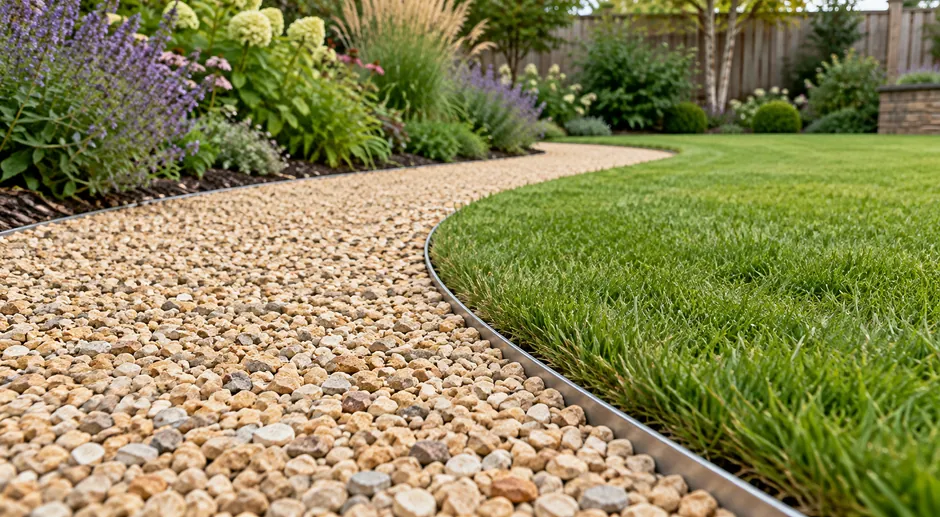
A good edge gives gravel a clear boundary. It helps keep stones off the lawn, makes a path or border look finished and can make routine maintenance easier. The right choice depends on what sits beside the gravel and whether the area is walked on, mown alongside or used by cars.
Do you need edging around gravel?
If gravel meets a lawn or a frequently used path, an edge is usually helpful. Loose stones can gradually spread onto the grass or surrounding soil, especially where people walk across the boundary or the gravel is regularly raked.
An informal gravel area within a planting bed may not need a visible border. But if you want a crisp line, a curved shape or an easier place to stop the mower, it is worth planning the edge before laying the gravel.
Think about the whole area rather than the edging alone. The prepared ground, any membrane, the gravel and the finished levels all affect how well the boundary works.
What is the best edging between gravel and grass?
The best edging between gravel and grass is one that holds the gravel in place and still lets you maintain the lawn comfortably. A slim metal or composite strip can create a neat line, while brick, block or stone can make a more visible feature. The choice depends on the shape of the border and the look you want.
For a straight lawn edge, set out the line before you start digging. For a curve, use a hose or rope laid on the ground so you can judge the shape from different parts of the garden. Gentle curves are generally easier to install and mow around than a series of tight bends.
Pay particular attention to the finished height. An edge that barely contains the gravel may allow stones onto the grass. An edge that stands too proud may make mowing awkward. Check the chosen edging system’s installation guidance and picture where the lawn and gravel surfaces will sit once the job is finished.
Which material should you use for gravel edging?
There is no single edging material that suits every garden. These are the main options to consider:
| Material | Where it can work well | What to consider |
|---|---|---|
| Aluminium | Neat lawn edges and some curved garden borders | Check the profile, fixings and recommended use. A light garden edge should not be assumed suitable for a driveway. |
| Steel | Crisp straight lines or curves, depending on the product | Check the finish, fixing method and whether the edge suits the conditions where it will be installed. |
| Plastic or composite | Garden borders and paths where a discreet edge is wanted | Products vary considerably in strength and flexibility, so check the intended application. |
| Timber | Informal garden paths and borders | It creates a more visible edge and will need maintenance as it weathers. |
| Brick or block paving | Defined paths and more substantial borders | Allow for the wider edge and follow an installation method suited to the ground and expected use. |
| Stone or concrete | Prominent borders and areas needing a substantial boundary | These materials are less discreet and usually involve more ground preparation. |
Aluminium lawn edging, including products such as Rite-Edge, can be useful when you want a narrow border. There is no need to use that particular brand to create a tidy gravel edge. Choose a product based on its stated application and installation requirements.
How do you edge a gravel path or garden border?
Plan the boundary before spreading any gravel. It is much easier to set a straight line or smooth curve while you can still see and work on the ground.
- Mark the route. Use a line for straight sections or a hose or rope for curves. Check the width along the full path or border.
- Prepare the ground. Remove vegetation and make the area ready for the path or border you are building.
- Fit the chosen edge. Follow the manufacturer’s instructions for its position, supports and fixings. Check the line and finished level as you go.
- Plan the membrane. If you are using weed control membrane, make sure it will sit beneath the gravel and remain covered at the edge.
- Add the gravel. Spread it evenly, then check that the finished surface meets the edging as intended.
The exact ground preparation will differ between a decorative border and a regularly used path. If you are planning the route as well as the edge, our garden path design guide is a useful starting point.
What about edging a gravel driveway?
A gravel driveway needs an edge suited to vehicle use and the way the driveway has been built. Cars can place much greater demands on a boundary than foot traffic, particularly where tyres pass close to the edge. Check the edging manufacturer’s stated application and fixing requirements before choosing a product.
The edge is only one part of the driveway. The prepared base, levels and gravel also matter. For the wider project, see our guide to laying a gravel driveway.
How should membrane meet a gravel edge?
If you are laying membrane beneath the gravel, plan where it will finish before securing the edge. Keep the membrane covered by the gravel rather than leaving it exposed along the boundary. Follow the membrane and edging manufacturers’ instructions where the two meet.
Our weed control membrane installation guide covers the detailed laying process.
Common gravel edging problems
- Gravel spills onto the lawn. Check whether the finished gravel level is too high for the edge, and rake displaced stones back before mowing.
- The edging moves out of line. Check that it was fitted and secured as the manufacturer recommends and that it suits the area’s use.
- Mowing is awkward. An edge standing above the lawn may leave a strip that needs trimming by hand. Consider the mower and finished levels while planning.
- Grass grows across the border. Trim the lawn edge as part of routine maintenance before growth hides the line.
- A driveway edge becomes damaged. Check whether the chosen product and its installation are suitable for vehicle traffic, especially where tyres cross or run alongside it.
Frequently asked questions
What is the best edging for gravel and grass?
Choose an edge that contains the gravel, suits the shape of the border and leaves a lawn edge you can maintain. Slim metal or composite edging can be discreet; brick or stone creates a more visible boundary.
How do you stop gravel spreading onto a lawn?
Install a suitable physical edge, keep the finished gravel level in line with its design and rake back stones that move across the boundary. Avoid mowing over loose gravel.
Can you use aluminium edging with gravel?
Yes, some aluminium edging products are designed for gravel paths and garden borders. Check the particular product’s recommended applications and fixing instructions, especially if the gravel area will carry vehicles.
Does a gravel driveway need edging?
Edging can help define a driveway and contain gravel at its sides. If you use it, choose a system suited to the driveway construction and expected vehicle use.
Can you make a curved gravel border?
Yes. Mark the curve on the ground first, then choose an edging product that its manufacturer says can form the shape you want. Gentle curves are usually easier to fit and maintain.
Plan the gravel for your finished border
Once you have planned the edge and measured the area, you can choose a gravel that suits the path, border or driveway. Explore GravelMaster’s gravels and chippings and use the gravel calculator to estimate how much you need. GravelMaster does not currently sell edging materials, so check the chosen edging supplier’s guidance before installation.