




December Gardening Jobs
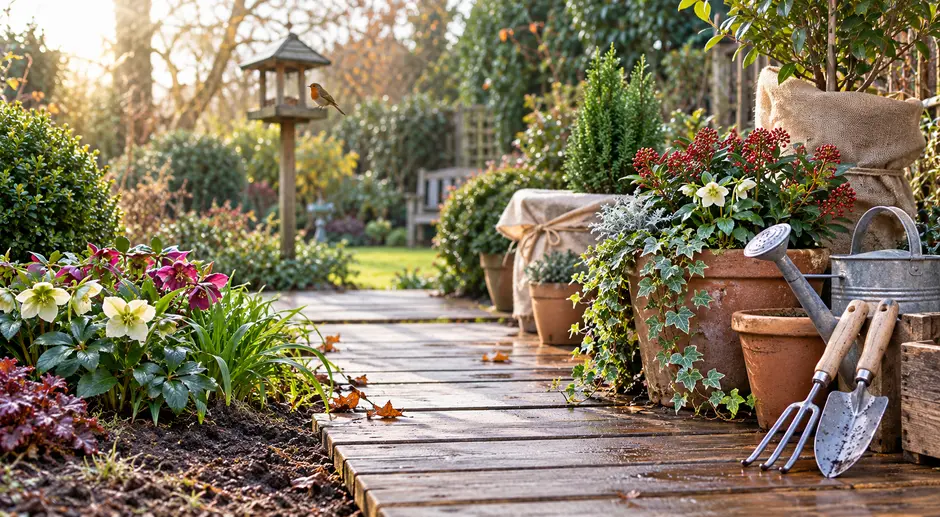
The main gardening jobs for December are protecting vulnerable plants from frost, harvesting winter vegetables, clearing leaves and checking the garden for storm damage. You can also plant bare-root trees, prune suitable plants, maintain the lawn and prepare beds for the next growing season.
December is usually a quieter month in the UK gardening calendar, but frost, wind, heavy rain and snow can still create work. Choose jobs that suit the weather and avoid digging, planting or laying materials when the ground is frozen or waterlogged.
If you are following the gardening calendar month by month, start with our November gardening tips before continuing with January gardening jobs.
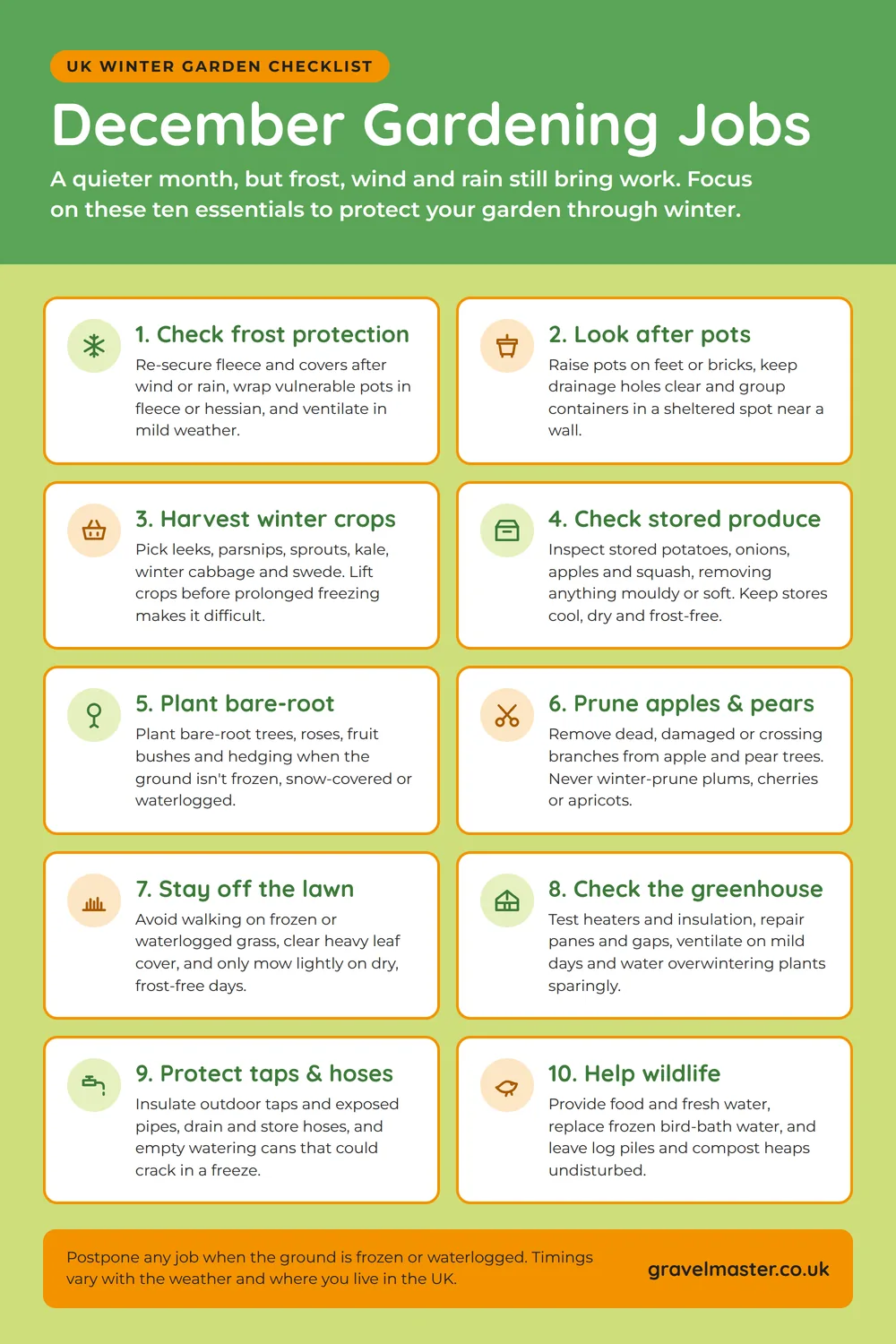
December gardening jobs checklist
Here are the main jobs to do in the garden in December:
| Garden area | December job |
|---|---|
| Lawns | Remove leaves and avoid walking on frozen or saturated grass |
| Beds and borders | Clear diseased growth and mulch vulnerable plants |
| Vegetable garden | Harvest winter crops and check stored produce |
| Trees and shrubs | Plant bare-root specimens and check stakes and ties |
| Containers | Raise pots and protect roots from frost and waterlogging |
| Greenhouse | Check heating, insulation, ventilation and stored plants |
| Paths and driveways | Remove slippery leaves and clear blocked drainage |
| Taps and hoses | Insulate taps and drain unused hoses |
| Wildlife | Provide food, fresh water and undisturbed shelter |
The timing of each task will depend on your location and the weather. Conditions can differ significantly between northern, southern, coastal and sheltered parts of the UK.
For advice covering the entire season, read our winter gardening jobs guide.
Protect plants from frost and winter weather
Check fleece, plant covers and insulating materials after strong winds or heavy rain. Reposition or replace anything that has become loose, damaged or saturated.
Move tender container plants into a greenhouse, garage or another frost-free location where possible. If containers cannot be moved, group them in a sheltered position close to a wall.
Wrap vulnerable pots with horticultural fleece, hessian or another breathable insulating material. Raise them on pot feet or bricks to allow excess water to escape through the drainage holes.
Apply a layer of mulch around vulnerable plants to help insulate the soil and protect their roots from rapid temperature changes. Keep mulch away from the stems and trunks of plants to reduce the risk of decay.
Remove heavy snow from vulnerable branches before its weight causes them to bend or break. Brush the snow away gently rather than shaking frozen branches.
Covered plants still need ventilation during mild weather. Avoid leaving them tightly wrapped in non-breathable materials that trap moisture and encourage mould or rot.
Our detailed guide explains how to protect plants from frost, including advice for pots, tropical plants, succulents and tree ferns.
Prepare beds and borders
December can be used to prepare empty beds when the ground is not frozen, saturated or covered with snow.
Remove annual weeds and diseased plant material. Healthy growth can be composted, but material affected by persistent diseases may need to be disposed of separately.
Avoid clearing every dead stem and seed head. Some provide winter structure, food for birds and shelter for beneficial insects.
Add compost, well-rotted organic matter or soil improver to empty beds. The material can be spread across the surface and left for worms and winter weather to begin incorporating it naturally.
Mulching can help protect roots, reduce weed growth and improve the soil. GravelMaster’s Winter Mix Compost Mulch is formulated for enriching and protecting garden soil during the colder months.
You can also use Ornamental Bark Mulch around established plants and landscaped areas.
Browse GravelMaster’s complete topsoil and mulch range for other suitable products.
December vegetable garden and allotment jobs
There may still be crops to harvest from the vegetable garden during December.
Depending on what you planted, these can include:
- Leeks
- Parsnips
- Brussels sprouts
- Kale
- Winter cabbage
- Swede
- Other hardy root crops
Frost can improve the sweetness of parsnips, but prolonged freezing conditions may make them difficult to lift. Harvest crops before severe weather if you are concerned that the ground will become inaccessible.
Remove yellowing or diseased leaves from brassicas and check that taller plants remain supported after strong winds. Inspect crop netting and repair gaps that allow birds to reach the plants.
Avoid repeatedly walking over wet vegetable beds. Use paths or place a board across the ground when access is necessary to reduce soil compaction.
Clear finished crops and add compost or suitable organic matter to empty ground. GravelMaster’s Fruit and Vegetable Soil can be used when preparing vegetable plots, allotments and growing areas.
For new raised beds, Raised Bed Topsoil Mix combines screened topsoil with peat-free compost and can be planted into directly.
Check stored fruit and vegetables
Inspect stored potatoes, onions, garlic, apples, pears and squash regularly. Remove anything showing signs of mould, softening or rot before the problem spreads.
Storage areas should be cool, dry, frost-free and adequately ventilated. Avoid storing produce in sealed containers where condensation can build up.
Check any lifted bulbs, tubers and corms at the same time. Remove damaged material and replace damp packing materials where necessary.
Mummified fruit left hanging on fruit trees should also be removed because it may harbour disease. Do not add diseased fruit to a home compost heap.
Plant bare-root trees, shrubs and hedging
December is part of the dormant planting season for many bare-root trees, fruit bushes, roses, shrubs and hedging plants.
Bare-root plants are supplied without a container of soil around their roots. They should be planted promptly and kept moist and protected from drying winds before planting.
Only plant when the ground is:
- Not frozen.
- Not covered with snow.
- Not waterlogged.
- Workable without becoming compacted.
Prepare a hole wide enough for the roots to spread naturally. Position the plant at the recommended depth, return the soil around the roots and firm it gently.
Water after planting if conditions are dry. Newly planted trees may also need staking in exposed positions.
Check stakes and ties on existing young trees after strong winds. Ties should hold the tree securely without rubbing against the bark or becoming too tight.
Prune suitable fruit trees
Established apple and pear trees can normally be pruned while dormant during winter.
Begin by removing dead, damaged, diseased, crossing or rubbing branches. Aim to maintain a balanced structure that allows light and air to reach the centre of the tree.
Do not remove too much growth at once. Renovating an overgrown tree may need to be spread across more than one winter.
Avoid pruning plum, cherry and apricot trees in December because winter pruning can increase their susceptibility to diseases such as silver leaf. These trees are usually pruned during their appropriate summer period.
Prune wisteria, roses and shrubs carefully
Wisteria side shoots can normally be shortened to two or three buds during winter. This helps control the plant and encourages the development of flowering spurs.
Some climbing roses can be pruned between late autumn and winter. Remove dead, damaged and diseased growth before tying healthy stems to their supports.
Rambling roses and other types may require different treatment, so identify the plant before pruning.
Do not remove faded hydrangea flower heads simply to make the plant look tidier. Leaving them in place over winter can provide some protection for the developing buds beneath.
Check the pruning requirements of every plant before cutting it back. December is not the correct pruning time for all trees, shrubs and climbers.
Can you lay turf in December?
Turf can be laid in December if the soil is not frozen, covered with snow or waterlogged.
Cool weather means the turf will establish more slowly than it would during the main growing season. However, lower temperatures and rainfall can also reduce the risk of newly laid turf drying out.
Prepare the ground before delivery and lay the turf promptly. Do not leave turf rolls stacked for extended periods.
Keep the new lawn moist when necessary, but do not saturate the ground. Avoid walking on the turf while its roots are establishing.
Postpone the work if frost, snow or prolonged heavy rain is forecast. For detailed instructions, read our guide explaining how to lay turf.
You can also browse GravelMaster’s turf and lawn seed range.
Look after the lawn
Remove heavy accumulations of leaves from the lawn. A thick, wet layer can block light, trap moisture and weaken the grass underneath.
Avoid walking on frosty grass. Frozen blades become brittle and may be damaged by foot traffic, leaving visible marks once the lawn thaws.
Stay off waterlogged lawns wherever possible because walking or moving equipment over them can compact the soil.
Grass may continue growing during particularly mild weather. If mowing is necessary, choose a dry and frost-free day, raise the mower blades and remove only a small amount of growth.
There is usually no need to apply a high-nitrogen lawn feed during December. The lawn should not be encouraged to produce soft growth that may be vulnerable to frost.
Read our autumn and winter lawn-care guide for more seasonal advice.
Check outdoor pots and winter containers
Raise outdoor containers on pot feet or bricks to improve drainage. Check that drainage holes have not become blocked with compacted compost or roots.
Move vulnerable pots into a sheltered position and group them together where practical. This can provide additional protection from cold winds.
Terracotta containers can crack if their compost becomes saturated and then freezes. Insulate vulnerable pots and avoid allowing them to stand in water.
Remove dead or diseased growth from winter displays, but continue leaving healthy seed heads where they provide food or shelter for wildlife.
Sheltered containers can still dry out during prolonged periods without rain. Check the compost and water sparingly during the warmer part of a frost-free day when necessary.
For general container advice, see how to plant flowers in pots and containers.
Check the greenhouse
Inspect greenhouse heaters, thermostats and insulation before severe frost arrives. Follow the manufacturer’s instructions and keep electrical equipment away from water.
Repair damaged panes and check for gaps around doors and vents. Clean blocked gutters so rainwater can drain freely.
Ventilate the greenhouse during mild weather to reduce condensation and fungal disease. Close doors and vents before temperatures fall again.
Reduce watering as plant growth slows, but do not allow overwintering plants to dry out completely. Remove dead leaves and check regularly for aphids, slugs, snails and other pests.
Inspect stored bulbs, tubers and corms for rot. Remove affected material promptly.
Protect taps, pipes and garden equipment
Insulate outdoor taps and exposed pipes to reduce the risk of frost damage. Disconnect and drain hoses that are not required during winter.
Empty watering equipment that could crack if the remaining water freezes. Check water butts and make sure overflow systems and gutters are not blocked.
Follow the manufacturer’s instructions when preparing pond pumps, irrigation equipment and powered garden tools for winter.
Secure or store lightweight furniture, pots and garden accessories before high winds. Check fences, trellis and climbing-plant supports for damage.
Clear paths, patios and gravelled areas
Wet leaves, moss, ice and snow can make paths, patios, steps and driveways slippery.
Sweep away leaves and organic debris regularly. Clear gutters, drains and channels so rainwater and melting snow can escape.
Rake loose gravel back into position and check whether edging has become displaced. Repair unstable steps or surfaces when conditions allow.
Take care when using de-icing products around lawns, borders and containers. Salt can damage plants and soil, so avoid allowing it to wash into planted areas.
If you are planning improvements for the new year, browse GravelMaster’s gravels and chippings and use the gravel calculator to estimate the amount of material required.
Care for a real Christmas tree
Remove transport netting from a cut Christmas tree as soon as practical and allow the branches to settle.
Cutting a small section from the bottom of the trunk before placing it in the stand may help the tree take up water. Use a stable stand with a water reservoir and check the water level every day.
Keep the tree away from radiators, fires and other direct heat sources. A cooler position can help slow moisture loss and reduce needle drop.
A container-grown Christmas tree should also be kept away from excessive indoor heat. Limit the time it spends indoors and gradually acclimatise it before moving it back outside.
After Christmas, remove all decorations, hooks and artificial materials. Untreated trees can be recycled through an appropriate local collection scheme or shredded for suitable garden use.
Do not shred trees that have been treated with artificial snow or decorative chemicals.
Help garden birds and wildlife
Continue providing suitable food and fresh water for garden birds during cold weather. Clean feeders and bird tables regularly, and remove food that has become wet or mouldy.
Check bird baths during freezing conditions. Replace frozen water rather than pouring boiling water onto a frozen container.
Leave selected seed heads for birds and retain some hollow stems for overwintering insects.
Log piles, leaf piles and undisturbed areas can provide shelter for hedgehogs and other wildlife. Check these areas carefully before moving or disturbing them.
Compost heaps may also be used by hibernating animals. Avoid turning a heap during the coldest part of winter unless necessary.
If you find a hedgehog sheltering in a safe and undisturbed location, leave it alone. If it appears injured or is exposed to immediate danger, contact an appropriate wildlife rescue organisation for advice.
Clean and store garden tools
Remove soil and plant material from forks, spades, hoes and hand tools. Dry metal surfaces before storing them to reduce corrosion.
Clean and sharpen secateurs and shears. Check handles, hinges and blades for damage and apply an appropriate protective oil where required.
Clean pots, seed trays and propagation equipment before the next sowing season. Store them somewhere dry and protected from frost.
December is also a useful time to organise seeds, review what performed well during the year and make notes for next season.
What should you avoid doing in December?
Avoid:
- Walking on frozen or waterlogged lawns.
- Digging saturated or frozen soil.
- Planting into frozen ground.
- Leaving vulnerable pots standing in water.
- Pruning trees and shrubs without checking their requirements.
- Winter-pruning cherries, plums or apricots.
- Leaving hoses connected during freezing weather.
- Using de-icing salt close to lawns or planted areas.
- Disturbing log piles, compost heaps or wildlife shelters unnecessarily.
- Laying turf during frost, snow or prolonged heavy rain.
If conditions are unsuitable, postpone the task rather than risk damaging the soil, plants or lawn.
Frequently asked questions about December gardening
What should I do in the garden in December?
The main December gardening jobs are protecting vulnerable plants, clearing leaves, harvesting winter vegetables, maintaining lawns and checking for storm damage. You can also plant bare-root trees, prune suitable fruit trees, prepare beds and provide food and water for wildlife.
What can I plant in December in the UK?
Bare-root trees, fruit bushes, roses, shrubs and hedging can be planted when the ground is not frozen or waterlogged. Container-grown hardy plants may also be planted in suitable conditions, although exposed or very wet sites may be better left until the weather improves.
Can I lay turf in December?
Yes. Turf can be laid in December if the soil is workable, frost-free and not waterlogged. Prepare the ground before delivery, lay the turf promptly and avoid walking on it while its roots establish.
Should I cut the grass in December?
Most lawns do not require regular mowing in December. If the grass is actively growing and conditions are dry and frost-free, mow lightly using a high cutting setting. Never mow frozen, snow-covered or saturated grass.
Can I prune trees in December?
Dormant apple and pear trees can normally be pruned in December. Avoid winter-pruning plum, cherry and apricot trees because it can increase the risk of disease. Always check the requirements of the individual tree before pruning.
Can I mulch the garden in December?
Yes. Mulch can be applied to moist, weed-free soil that is not frozen. It can help insulate roots, suppress weeds and improve the soil. Keep mulch away from plant stems and tree trunks.
Which vegetables can I harvest in December?
December harvests can include leeks, parsnips, Brussels sprouts, kale, winter cabbage, swede and other hardy root crops. The crops available will depend on what was planted earlier in the year and the local weather.
Can I plant bare-root trees in December?
Yes. December is part of the dormant planting season for many bare-root trees. Keep the roots moist before planting and avoid frozen, snow-covered or waterlogged soil.
How do I protect outdoor pots from frost?
Move vulnerable pots into a sheltered position, raise them above the ground and insulate the container with horticultural fleece or hessian. Make sure the drainage holes remain clear so water cannot collect and freeze around the roots.
Should I dig garden soil in December?
You can dig or improve soil in December when it is dry enough to work. Avoid frozen or waterlogged soil because digging in unsuitable conditions can damage its structure and cause compaction.
How do I look after a real Christmas tree?
Place a cut Christmas tree in a stable stand with a water reservoir and check the water level daily. Keep it away from radiators and other heat sources. Remove decorations and artificial materials before recycling it.
What should I feed garden birds in December?
Provide suitable high-energy food such as seeds, suet and unsalted nuts. Keep feeders clean, remove mouldy food and supply fresh water. Choose food and feeder types appropriate for the birds visiting your garden.
What should I do if I find a hedgehog in December?
Leave a safely sheltering hedgehog undisturbed. Avoid moving log piles, leaf piles and compost heaps during cold weather. Contact an appropriate wildlife rescue organisation if the animal appears injured, unresponsive or exposed to immediate danger.
Should I water plants during December?
Most outdoor plants need little additional water during December, but sheltered containers and plants under cover can still dry out. Check the soil and water sparingly during the warmer part of a frost-free day when necessary.
Prepare for January
By the end of December, vulnerable plants should be protected, drainage routes should be clear and the most urgent maintenance should be complete.
Continue checking the garden after frost, snow or strong winds. The next stage is covered in our January gardening jobs guide.
For advice covering the complete gardening calendar, visit GravelMaster’s gardening by season hub.