




January Gardening Jobs: What to Do in Your Garden
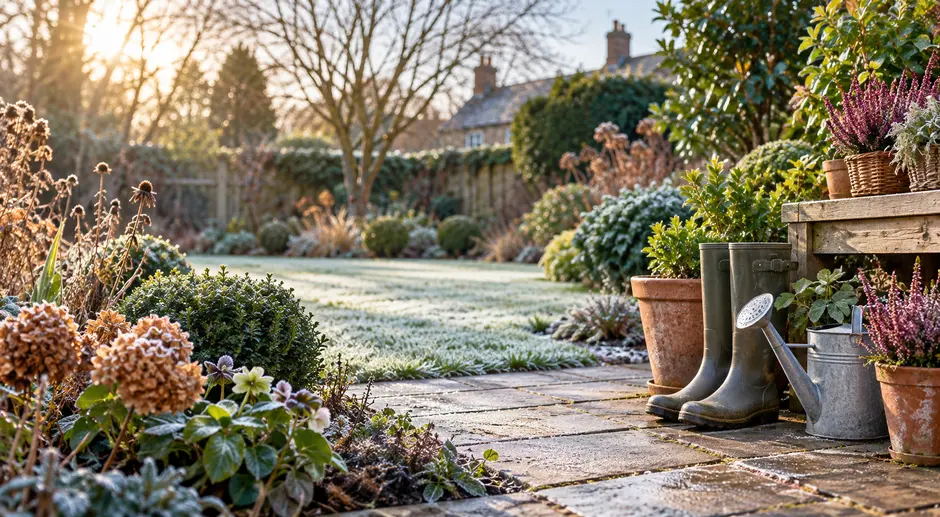
January may be one of the coldest and quietest months in the UK gardening calendar, but there are still plenty of useful jobs you can do.
The main gardening jobs for January include protecting plants from frost, clearing fallen leaves and damaged growth, caring for winter lawns, pruning selected trees and shrubs, preparing soil when conditions allow and planning projects for spring.
A little work now can protect your garden from winter weather and reduce the amount you need to do when the main growing season begins.
If you are following the gardening calendar month by month, review our planned December gardening jobs before continuing with February gardening jobs.
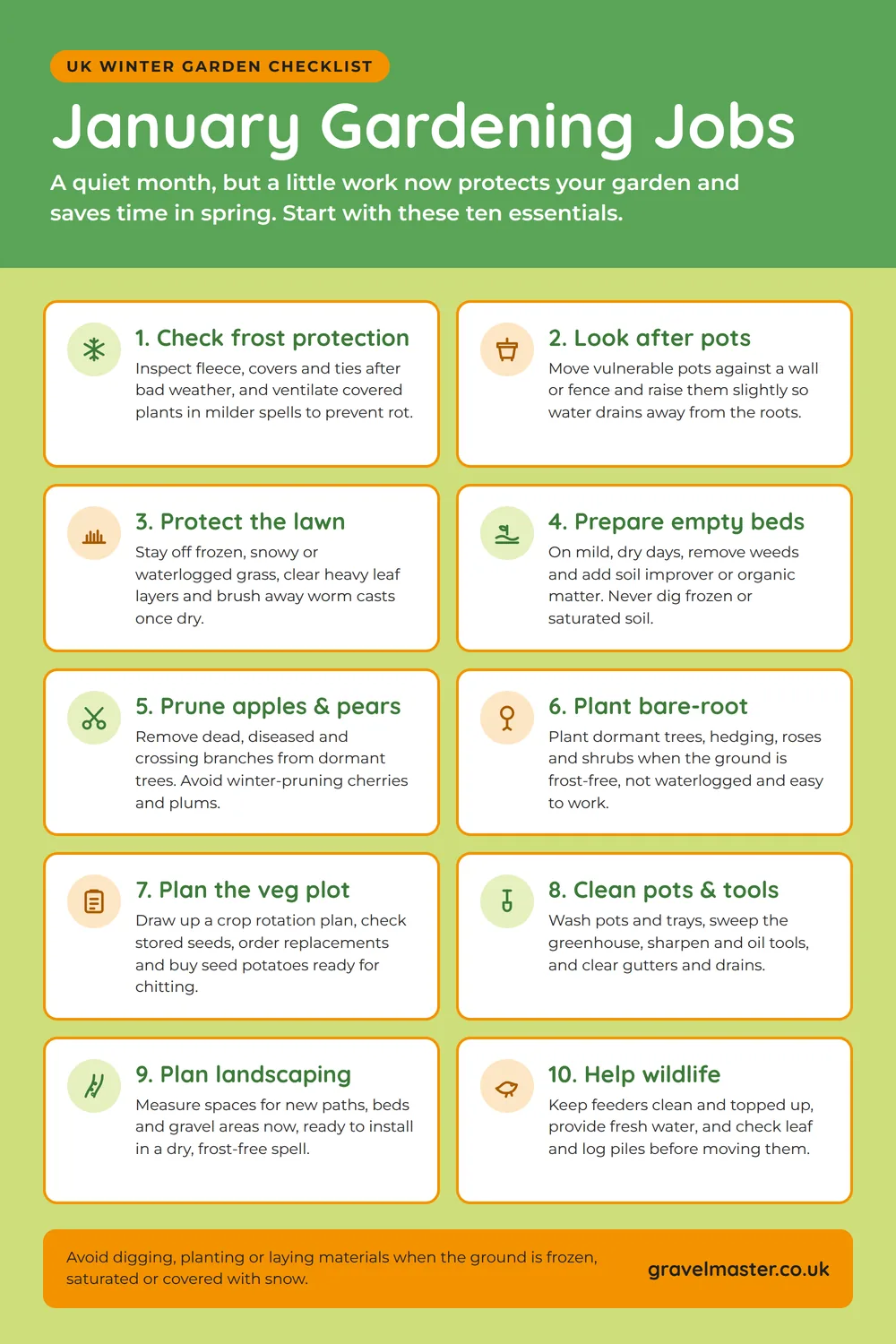
January gardening jobs at a glance
If you are wondering what to do in the garden in January, start with this checklist:
- Check plants and containers for frost or wind damage.
- Avoid walking on frozen or waterlogged lawns.
- Clear leaves and damaged plant material from beds and paths.
- Prune apple and pear trees while they are dormant.
- Plant bare-root trees and shrubs when the ground is workable.
- Improve empty beds with soil improver or organic matter.
- Check stored bulbs, tubers, fruit and vegetables for signs of rot.
- Clean pots, tools, gutters and greenhouses.
- Plan new beds, paths, lawns and landscaping projects.
- Prepare seeds and equipment for early spring sowing.
- Keep bird feeders and water supplies clean and topped up.
Always adjust your January gardening plans to the weather. Avoid digging, planting or laying materials when the soil is frozen, saturated or covered with snow.
Protect plants from frost and winter weather
One of the most important January garden jobs is checking how plants are coping with frost, heavy rain and strong winds.
Inspect fleece, plant covers and ties after bad weather. Replace or secure anything that has become loose, but allow covered plants some ventilation during milder conditions to reduce the risk of excess moisture and rot.
Move vulnerable containers to a sheltered position close to a wall or fence where practical. Raising pots slightly off the ground can also help water drain away instead of collecting around the roots.
Outdoor pots can still dry out during cold but rainless periods. Check the compost occasionally and water only when necessary, preferably during the warmer part of a frost-free day.
Remove broken or damaged branches once it is safe to do so. If a tree has suffered serious storm damage or a large branch is unsafe, contact a qualified tree professional rather than attempting the work yourself.
Our complete guide explains how to protect plants from frost, including advice for containers, tropical plants and other vulnerable species.
Look after your lawn in January
Most lawns require relatively little maintenance in January. The main priority is avoiding unnecessary damage.
Try not to walk across grass when it is frozen, covered with snow or saturated with water. Foot traffic can damage frozen grass blades and compact wet soil.
Continue clearing heavy layers of fallen leaves so that light and air can reach the grass. If worm casts appear, wait until they are dry before brushing them across the surface.
Only mow if the grass is actively growing and conditions are dry and frost-free. Use a higher cutting setting and remove only a small amount of growth. There is usually no need to feed a lawn during January.
January is also a good time to plan lawn repairs. Measure any bare or damaged areas, decide whether you will use turf or grass seed and prepare for work once growing conditions improve.
For more seasonal advice, read our autumn and winter lawn-care guide. You can also browse GravelMaster’s turf and lawn seed range when planning your spring lawn project.
Can you lay turf in January?
Turf can be laid during winter, including January, provided the ground is not frozen, covered with snow or waterlogged.
Winter-laid turf normally takes longer to establish because grass growth and root development slow down in cold conditions. Prepare the ground properly, lay the rolls promptly and avoid walking on the new lawn while it establishes.
If conditions are unsuitable, complete the planning and ground preparation first and wait for a milder period before laying the turf.
Our guide to laying turf explains the preparation and installation process. If you plan to establish the lawn from seed later in the year, see how to sow a lawn.
Prepare beds and borders for spring
January is a useful time to inspect empty beds and borders and decide what needs improving before spring.
Remove annual weeds and clear healthy plant debris that could shelter pests. Diseased material should generally be disposed of rather than added to a home compost heap.
On mild, dry days, organic matter or soil improver can be added to vacant beds. Avoid digging or working soil when it is frozen or waterlogged, as this can damage the soil structure and create compaction.
Where beds need topping up or completely renewing, choose a soil suited to their intended use:
- Multi-purpose soil for general planting and landscaping.
- Beds and borders topsoil for flower beds and ornamental planting.
- Fruit and vegetable soil for vegetable plots, raised beds and fruit-growing areas.
- Soil improver for improving existing garden soil.
Do not automatically add sand or grit to heavy soil in small quantities, as this may not resolve the underlying drainage problem. Organic matter and the correct soil preparation are usually more important.
Browse GravelMaster’s complete topsoil and mulch range for other soil-improvement and planting products.
Prune suitable trees and shrubs
Many deciduous plants are dormant in January, making their shape easier to see.
Established apple and pear trees can normally be winter-pruned during this period. Remove dead, damaged or diseased wood first, followed by branches that cross or rub against one another.
Currants, gooseberries and autumn-fruiting raspberries may also need attention, depending on how they are being grown.
Avoid pruning stone fruits such as cherries and plums during winter because this can increase their exposure to disease. These are generally better pruned during the growing season.
Before pruning any plant, confirm the correct timing for its species. Not every tree or shrub benefits from being cut back in January.
Plant bare-root trees and shrubs
Bare-root deciduous trees, hedging, roses and shrubs can often be planted during January while they are dormant.
Only plant when the ground is:
- Free from frost.
- Not covered with snow.
- Not waterlogged.
- Loose enough to prepare without compacting it.
Prepare a wide planting hole, position the roots naturally and return the excavated soil around them without burying the plant too deeply. Firm the soil gently and water after planting if conditions are dry.
Check recently planted trees after strong winds and make sure stakes and ties remain secure without rubbing against the bark.
Plan the vegetable garden
January is a good month for planning rather than extensive outdoor sowing.
Decide which crops you want to grow and create a simple rotation plan so that related vegetables are not planted in the same position every year. Check stored seeds, order replacements and clean trays and pots before sowing begins.
Depending on local conditions and the facilities available, gardeners may be able to:
- Sow broad beans in pots in a cold frame or unheated greenhouse.
- Start selected early crops indoors with adequate warmth and light.
- Buy seed potatoes ready for chitting in February.
- Prepare empty seed beds when the soil is dry enough to work.
- Check stored fruit and vegetables and remove anything showing signs of rot.
Avoid sowing too early if you cannot provide enough natural light. Weak, leggy seedlings may struggle when eventually moved outside.
For vegetable plots, allotments and raised beds, Fruit and Vegetable Soil can help create a suitable growing environment before the new season begins.
Clean the greenhouse, pots and tools
Cleaning and preparation are useful gardening jobs for January because they can be completed before spring becomes busy.
Remove old plant material and sweep greenhouse floors. Wash pots, trays and propagation equipment before reusing them, particularly if plants suffered from pests or disease during the previous year.
Clean soil and sap from tools, sharpen cutting equipment and apply oil where appropriate. Inspect handles for cracks or splinters and replace damaged equipment before it is needed.
Check water butts, gutters and drainage channels for blockages caused by leaves and other debris.
Recycle your Christmas tree
An untreated real Christmas tree can often be shredded to make a coarse mulch for paths or suitable established planting areas.
Remove all decorations, hooks, stands and artificial materials first. Do not use trees that have been sprayed with decorative chemicals or artificial snow.
Check whether your local authority offers a Christmas-tree recycling service if you cannot shred or compost it at home.
Plan paths and landscaping projects
With less foliage covering the garden, January can make it easier to assess its overall layout.
Consider whether you need:
- A more practical garden path.
- Better access to sheds, greenhouses or vegetable plots.
- New beds and borders.
- A lawn repair or replacement.
- Improved drainage.
- A lower-maintenance gravelled area.
- Weed-control membrane beneath a new path or decorative aggregate.
Measure the available area and make a written plan before ordering materials. If you are considering a gravel path or landscaped area, browse GravelMaster’s gravels and chippings and use the gravel calculator to estimate the amount of material required.
Our guide explains how to lay weed-control membrane. You can also browse the current weed-control membrane range.
Avoid installing materials while the ground is frozen or saturated. January is often better used for measuring, planning and arranging products for a suitable spell of weather.
Help garden wildlife
Natural food and water can become harder for wildlife to find during January.
Keep bird feeders clean and topped up with suitable food. Provide fresh water and check it regularly during freezing conditions.
Leave selected seed heads, hollow stems, logs and undisturbed leaf piles where they do not create a safety or drainage problem. These can provide food and shelter for birds, insects and other wildlife.
Check piles of leaves, logs or garden debris carefully before moving them because animals may be sheltering underneath.
What should you avoid doing in the garden in January?
Some gardening jobs are best postponed when conditions are unsuitable.
Avoid:
- Walking over frosty or waterlogged lawns.
- Digging frozen or saturated soil.
- Planting into frozen ground.
- Heavy pruning without checking the plant’s requirements.
- Pruning cherry or plum trees during winter.
- Feeding dormant lawns unnecessarily.
- Leaving tender plants uncovered during severe frost.
- Allowing fallen leaves to block drains or smother lawns.
- Sowing large quantities of seed without sufficient warmth and light.
If in doubt, wait for a dry, frost-free day rather than risking damage to the garden or compacting the soil.
Frequently asked questions about January gardening
What are the most important gardening jobs for January?
The most important January gardening jobs are protecting plants from frost, avoiding damage to wet or frozen lawns, clearing debris, pruning suitable fruit trees, checking stored crops and preparing the garden for spring.
Can you garden in January in the UK?
Yes. Although growth is slow, January is suitable for maintenance, planning, winter pruning, planting bare-root trees and improving empty beds when the soil is not frozen or waterlogged.
Can you put topsoil down in January?
Topsoil can be spread in January when the ground is dry and workable. Avoid applying or compacting topsoil over frozen, snow-covered or waterlogged ground.
Should you cut the grass in January?
Most lawns do not need regular mowing in January. If the grass is growing and conditions are dry and frost-free, mow lightly using a high cutting setting. Never mow a frozen or saturated lawn.
What can be planted in January?
Bare-root trees, hedging, roses and some shrubs can be planted when the ground is workable. Some early vegetables can also be started indoors or under protection, depending on the crop and growing conditions.
Should plants be watered in January?
Most outdoor plants need less water during winter, but containers and sheltered plants can still dry out. Check the compost and water sparingly during a frost-free part of the day when needed.
How can I prepare my garden for spring in January?
Clear damaged growth, improve empty beds, plan crop rotations, clean tools and pots, order seeds and assess any lawn or landscaping work. Completing these jobs in January can reduce the workload when growth accelerates in spring.
Get ready for the gardening year ahead
January is not simply a month for leaving the garden untouched. It provides an opportunity to protect plants, carry out essential maintenance and prepare for the growing season ahead.
Choose jobs that suit the weather, avoid disturbing frozen or waterlogged ground and use the quieter period to plan future lawn, planting and landscaping projects.
For broader seasonal advice, read our winter gardening jobs guide or explore more advice through the seasonal gardening hub.
Continue with the planned February gardening jobs when you are ready to prepare for the first signs of spring.