




February Gardening Jobs: Your Essential UK Checklist
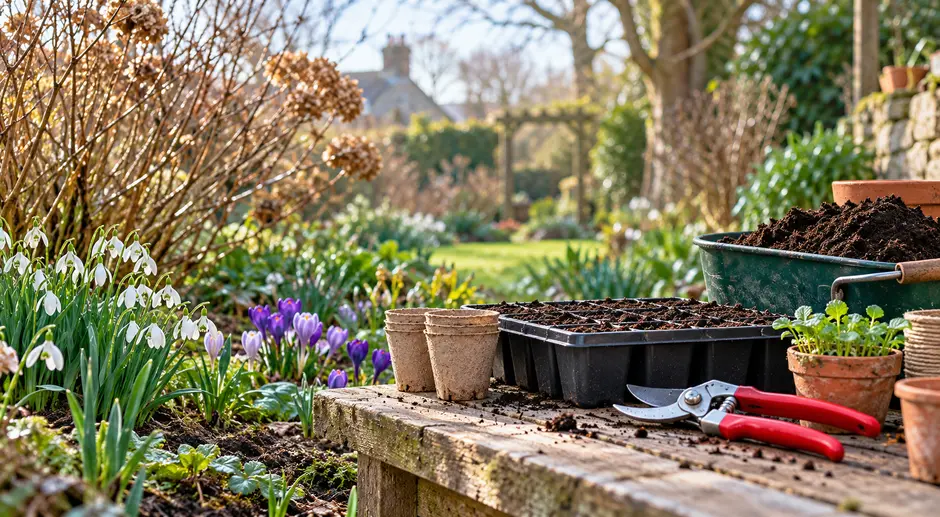
The main gardening jobs for February are preparing beds and seedbeds, pruning suitable plants, sowing selected seeds under cover and protecting early growth from frost. It is also time to chit seed potatoes, plant bare-root trees, look after winter lawns and prepare tools and greenhouses for spring.
February can feel like a turning point in the garden. The days are getting longer, but frost, heavy rain and waterlogged soil can still limit what you can safely do outside. Always adjust these tasks to your local weather and ground conditions.
If you are following the gardening calendar month by month, start with our January gardening jobs before continuing with March gardening jobs.
February gardening jobs checklist
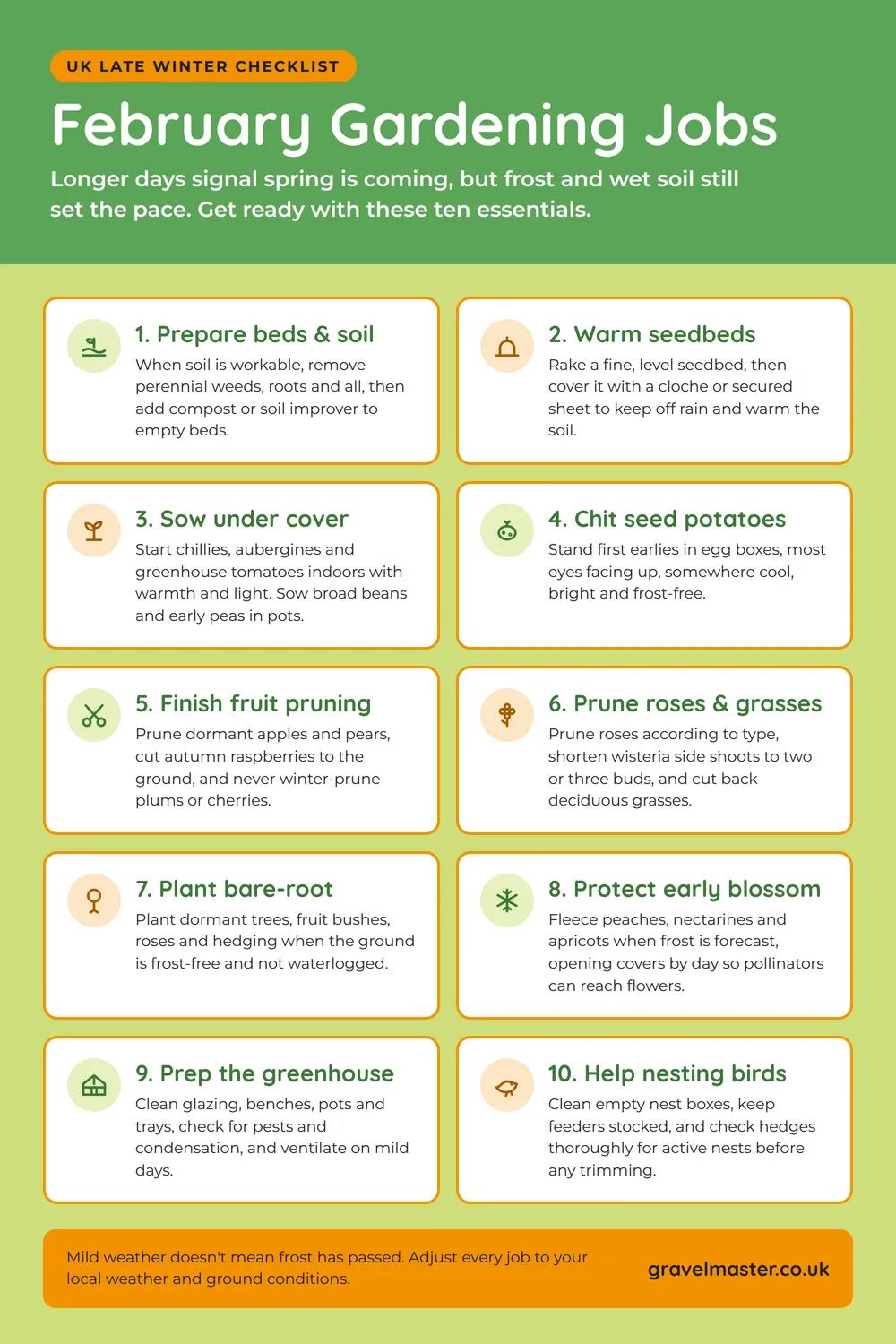
Here are the main garden jobs to complete during February:
| Garden area | February jobs |
|---|---|
| Vegetable garden | Prepare seedbeds, organise seeds and start suitable crops under cover |
| Flower beds | Remove weeds and cut back appropriate dormant growth |
| Fruit garden | Finish winter pruning and protect early blossom |
| Lawns | Keep off frozen grass and prepare for spring repairs |
| Trees and shrubs | Plant bare-root specimens while they remain dormant |
| Containers | Check drainage and continue frost protection |
| Greenhouse | Clean, organise and begin selected early sowing |
| Wildlife | Provide food, fresh water and suitable nesting places |
| Paths and structures | Check for winter damage and clear blocked drainage |
The timing of each job will vary across the UK. Gardeners in mild southern and coastal areas may be able to begin outdoor work earlier than those in colder, wetter or more exposed locations.
For advice covering the wider season, read our winter gardening jobs guide.
Prepare beds and soil for spring
February is a useful time to prepare empty beds, vegetable plots and raised beds, but only when the soil is dry enough to work.
Avoid digging frozen or waterlogged ground. Working saturated soil can destroy its structure, create compaction and make drainage problems worse.
Remove perennial weeds while their growth is still limited. Try to remove the entire root system rather than cutting off the visible growth, particularly with persistent weeds such as dandelions and brambles.
Clear old, diseased plant material from the previous growing season. Healthy material can be composted, but plants affected by persistent diseases may need to be disposed of separately.
Add compost, well-rotted organic matter or soil improver to vacant beds. The material can be spread across the surface or lightly incorporated when conditions allow.
GravelMaster’s ProBlend Soil Improver can be mixed with existing garden soil to improve its structure and fertility. Browse the complete topsoil and mulch range for other soil products.
Prepare and warm seedbeds
Outdoor seedbeds can be prepared towards the end of February if the ground is workable.
Remove weeds and stones before gently breaking up larger clods of soil. Rake the surface to create a level, fine texture suitable for sowing.
Covering prepared ground with a cloche or suitable sheet can help keep off excessive rain and gradually warm the soil. Secure any covers against strong winds and remove them when the bed needs ventilation.
Warming the soil does not remove the risk of frost. Always check the requirements of the crop and wait if the ground remains cold and saturated.
For new or depleted vegetable beds, Fruit and Vegetable Soil provides a growing medium containing organic matter. GravelMaster’s Raised Bed Topsoil Mix can be used when creating or refilling raised growing areas.
What can you sow in February?
February sowing depends on the crop, your location and whether you can provide suitable warmth and light.
Many seeds sown this month need to be started indoors, in a heated propagator or under cover. Avoid sowing large quantities too early if you cannot provide enough natural light. Weak, leggy seedlings may struggle when moved outside.
Seeds to sow indoors
Crops that require a long growing season may be started indoors from mid-February. These can include:
- Chillies
- Aubergines
- Tomatoes intended for greenhouse growing
- Selected greenhouse cucumbers
These seeds normally need consistent warmth and good light. Follow the temperature and sowing instructions provided with each variety.
Some summer-flowering plants can also be started indoors. Begonias and other slow-growing varieties may benefit from an early start, while faster-growing flowers can usually wait until March or April.
Seeds to sow under cover
Depending on the variety and local conditions, you may be able to sow:
- Broad beans in pots or modules
- Early peas in pots, modules or clean guttering
- Hardy salad leaves
- Sweet peas
- Selected hardy annual flowers
Keep seedlings somewhere bright, protected and frost-free. Ventilate greenhouses and cold frames during mild weather to reduce excess humidity.
Seeds to sow outdoors
Outdoor sowing in February is usually limited to mild areas with light, free-draining soil.
Broad beans, carrots, parsnips, early beetroot, radishes, spinach and salad onions may be suitable in favourable conditions. Gardeners with heavy soil or in colder areas should generally wait until the ground warms further.
Treat the instructions on the seed packet as the primary guide and consider the current soil temperature rather than relying on the calendar alone.
Chit early seed potatoes
February is the traditional time to start chitting first-early seed potatoes.
Chitting means encouraging short, sturdy shoots to develop before planting. It can help early varieties begin growing promptly when they are eventually placed outside.
Position each seed potato in an egg box or module tray with the end containing the most eyes facing upwards. Keep them in a cool, bright and frost-free place.
Avoid placing seed potatoes in a warm, dark room because this can produce long, pale and fragile shoots. The aim is to develop short, strong growth.
Do not rush to plant chitted potatoes outdoors. Wait until the soil and weather are suitable for the variety and your location.
February vegetable garden and allotment jobs
February is primarily a month for preparation in the vegetable garden.
Useful allotment and vegetable-garden jobs include:
- Removing perennial weeds.
- Preparing seedbeds when the soil is workable.
- Planning crop rotation.
- Organising seeds by sowing month.
- Chitting first-early potatoes.
- Mulching established asparagus and rhubarb.
- Checking stored fruit and vegetables.
- Removing yellowing leaves from brassicas.
- Checking crop netting and supports.
- Preparing raised beds.
- Planting garlic and shallots in suitable soil.
Garlic and shallots can be planted in light, free-draining soil, provided the ground is not frozen or waterlogged. Heavy soil may need more time to warm and dry.
Check stored potatoes, onions, apples and other produce regularly. Remove anything showing mould or rot before it affects the surrounding produce.
Prune suitable fruit trees and bushes
February is the final opportunity to complete the winter pruning of many dormant fruit trees and bushes.
Established apple and pear trees can normally be pruned before active spring growth begins. Start by removing dead, damaged, diseased, crossing or rubbing branches.
Autumn-fruiting raspberry canes can usually be cut down to the ground because they produce fruit on new growth. Summer-fruiting raspberries require different treatment, so identify the type before pruning.
Currants and gooseberries may also require winter pruning, depending on their age and how they are being trained.
Avoid pruning plum, cherry and apricot trees during winter because this can increase their susceptibility to diseases such as silver leaf. These trees are normally pruned during their appropriate summer period.
Prune roses, climbers and ornamental grasses
Many roses can be pruned during late winter, but the correct method depends on whether they are shrub, climbing or rambling varieties.
Remove dead, damaged and crossing stems before improving the overall shape. Use clean, sharp tools and make tidy cuts.
Wisteria side shoots can normally be shortened to two or three buds during winter. This helps control growth and encourages flowering spurs.
Summer-flowering Group 3 clematis can usually be cut back before new growth begins. Other clematis groups have different requirements, so identify the variety before pruning.
Cut back deciduous ornamental grasses before fresh shoots emerge. Evergreen grasses may only need dead material combed or trimmed away.
Winter-flowering shrubs should generally be pruned after their display has finished. Avoid applying one pruning method to every shrub because flowering times and growth habits differ considerably.
Plant bare-root trees, shrubs and hedges
Bare-root trees, fruit bushes, roses, hedging plants and shrubs can still be planted during February while they are dormant.
Only plant when the ground is:
- Free from frost.
- Not covered with snow.
- Not waterlogged.
- Workable without becoming compacted.
Keep bare roots moist and protected from drying winds before planting. Prepare a hole wide enough for the roots to spread naturally and avoid burying the plant more deeply than recommended.
Firm the soil gently around the roots and water after planting if conditions are dry. Check newly planted trees after high winds and make sure stakes and ties remain secure without rubbing against the bark.
Suitable deciduous trees and shrubs can also be moved before active growth begins, provided the ground conditions are appropriate.
Protect early blossom and emerging plants
Early-flowering peaches, nectarines and apricots may begin producing blossom during February. This blossom can be damaged by late frost.
Cover vulnerable plants with horticultural fleece when frost is forecast. Remove or open the protection during suitable daytime conditions so that pollinating insects can reach the flowers.
Continue checking tender plants and outdoor containers. Repair covers damaged by wind and make sure pots can drain freely.
Do not leave plants wrapped tightly in non-breathable material for extended periods. Poor ventilation can trap moisture and encourage rot.
Our detailed guide explains how to protect plants from frost.
Look after flower beds
Remove perennial weeds before active growth makes them more difficult to control. Take care around emerging bulbs and other early plants.
Cut down appropriate dead perennial growth and ornamental grasses before new shoots appear. Leave any stems still providing useful shelter for wildlife until conditions become milder.
Remove faded flowers from winter pansies to discourage seed production and encourage further flowering. Our deadheading guide explains why and when spent flowers should be removed.
Inspect hellebores for damaged or spotted leaves. Removing affected foliage can improve the appearance of the flowers and may help reduce the spread of disease.
Snowdrops can be lifted and divided while they are still growing, often described as dividing them “in the green”. Replant the divisions promptly and avoid allowing the roots to dry out.
If you are refreshing seasonal displays, read our guide to planting flowers in pots and containers.
Look after the lawn
Most lawns still need relatively little intervention in February.
Avoid walking on frosty grass because the frozen blades are easily damaged. Stay off waterlogged lawns to prevent compaction and surface damage.
Remove fallen branches and heavy accumulations of leaves. Dry worm casts can be brushed across the lawn, but avoid smearing them when wet.
Grass may begin growing during mild weather. If mowing is necessary, choose a dry, frost-free day, use a high cutting setting and remove only a small amount of growth.
February is a useful time to inspect bare patches, damaged edges and drainage problems. Plan whether you will repair the lawn using turf or grass seed once growing conditions improve.
Read our autumn and winter lawn-care guide for more seasonal advice. You can also browse GravelMaster’s turf and lawn seed range.
If you are planning a new lawn, see how to lay turf and how to sow a lawn.
Clean the greenhouse and prepare for sowing
Remove old plant material and clean greenhouse floors, benches and glazing. Increasing the amount of light reaching seedlings becomes increasingly important as sowing begins.
Wash pots, seed trays, labels and propagator equipment before reuse. Cleaning is particularly important if plants experienced pests or diseases during the previous season.
Inspect the greenhouse for:
- Cracked panes.
- Damaged seals.
- Blocked gutters.
- Poorly fitting doors.
- Aphids, slugs and snails.
- Signs of mould or excessive condensation.
Ventilate on mild days, but close doors and vents before temperatures fall. Reduce watering for dormant plants while continuing to check that containers have not dried out completely.
Organise seeds by sowing date and prepare the labels, compost and equipment required for the first spring sowings.
Help garden birds and wildlife
Natural food sources may still be limited during February, so continue providing suitable food and fresh water for birds.
Keep feeders and bird tables clean. Remove wet or mouldy food and clean water containers regularly.
Ground-feeding birds such as blackbirds may benefit from suitable food placed in an open area where approaching predators can be seen.
Clean empty nest boxes before birds begin using them. Avoid disturbing boxes that are already occupied.
February may be the final opportunity to trim some deciduous hedges before the nesting season becomes active. Check carefully before cutting and stop if you find an active nest.
Leave selected sheltered areas undisturbed for insects and other wildlife. Avoid clearing every hollow stem, log pile or patch of leaves before temperatures begin to rise.
Check paths, fences and garden structures
Inspect fences, gates, trellis and plant supports for damage caused by winter storms. Completing small repairs now can prevent further deterioration.
Clear leaves, mud and moss from paths where they create a slipping hazard. Remove debris from gutters and drainage channels before periods of heavy rain.
February is also a useful time to measure and plan new paths, beds or lower-maintenance gravelled areas. Avoid significant excavation or installation while the ground is frozen or saturated.
If you are planning a landscaping project, browse GravelMaster’s gravels and chippings and use the gravel calculator to estimate how much material you will require.
For new paths and gravelled areas, our guide explains how to lay weed-control membrane.
What should you avoid doing in February?
Avoid:
- Digging frozen or waterlogged soil.
- Sowing large quantities of seed without sufficient warmth and light.
- Walking on frosty or saturated lawns.
- Pruning plants without identifying their pruning group.
- Winter-pruning plum, cherry or apricot trees.
- Planting bare-root plants into unsuitable ground.
- Removing frost protection too early.
- Trimming hedges without checking for active nests.
- Mowing the lawn too closely.
- Assuming mild weather means the risk of frost has passed.
Waiting for suitable conditions is often better than completing a task simply because it appears on a monthly checklist.
Frequently asked questions about February gardening
What gardening jobs should I do in February?
The main February gardening jobs are preparing soil and seedbeds, pruning suitable dormant plants, chitting seed potatoes, sowing selected crops under cover and planting bare-root trees. You should also protect early blossom from frost, inspect the lawn and prepare tools and greenhouses for spring.
What can I plant in February in the UK?
Bare-root trees, roses, fruit bushes, shrubs and hedging can be planted if the ground is not frozen or waterlogged. Garlic and shallots may be planted in suitable free-draining soil. Some seeds can also be started indoors or under cover.
What vegetables can I sow in February?
Tomatoes, chillies and aubergines can be started indoors where sufficient heat and light are available. Broad beans and early peas may be sown under cover. Limited outdoor sowing is possible in mild areas with light soil, but colder locations should normally wait.
Can I prepare garden soil in February?
Yes, provided the soil is not frozen, saturated or covered with snow. Remove weeds and add compost, organic matter or soil improver. Avoid working wet soil because this can damage its structure and cause compaction.
When should I start chitting potatoes?
First-early seed potatoes are commonly chitted during February. Place them in a cool, bright and frost-free location with the end containing the most eyes facing upwards. Wait until outdoor conditions are suitable before planting them.
Can I prune roses in February?
Many established roses can be pruned during February, but the correct method depends on the type. Remove dead, damaged and crossing stems first. Check whether the plant is a shrub, climbing or rambling rose before completing more extensive pruning.
Which fruit trees can I prune in February?
Dormant apple and pear trees can normally be pruned in February. Avoid winter-pruning plum, cherry and apricot trees because it can increase their susceptibility to diseases such as silver leaf.
Can I mow the lawn in February?
Mow only if the grass is actively growing and conditions are dry and frost-free. Use a high cutting setting and remove only a small amount of growth. Do not mow frozen, saturated or waterlogged grass.
Can I lay turf in February?
Turf can be laid in February when the ground is workable, frost-free and not waterlogged. Establishment will be slower than in warmer weather, and the new lawn should not be walked on unnecessarily while its roots develop.
Is February too early to prepare raised beds?
No. February is a useful time to prepare or build raised beds, provided the ground is workable. Add suitable soil or organic matter and allow it to settle before the main spring planting period.
How do I protect early blossom from frost?
Cover vulnerable blossom with horticultural fleece before frost is forecast. Remove or open the covering during suitable daytime conditions so pollinating insects can reach the flowers. Secure the material without crushing the blossom.
What flowers can I sow in February?
Begonias and other flowers requiring a long growing season may be started indoors with sufficient warmth and light. Sweet peas and selected hardy annuals can also be sown under cover. Faster-growing flowers can usually wait until March or April.
Can I plant bare-root trees in February?
Yes. Bare-root trees can be planted during February while they remain dormant. Do not plant into frozen or waterlogged soil, and keep the roots moist and protected before planting.
Prepare for March
By the end of February, beds and equipment should be ready for spring, suitable pruning should be complete and the first protected sowings may be underway.
Continue monitoring the weather because frost and waterlogging remain possible. As conditions improve, move on to our March gardening jobs guide.
For advice covering the complete gardening calendar, visit GravelMaster’s gardening by season hub.