




March Gardening Jobs: What to Sow, Plant and Prune
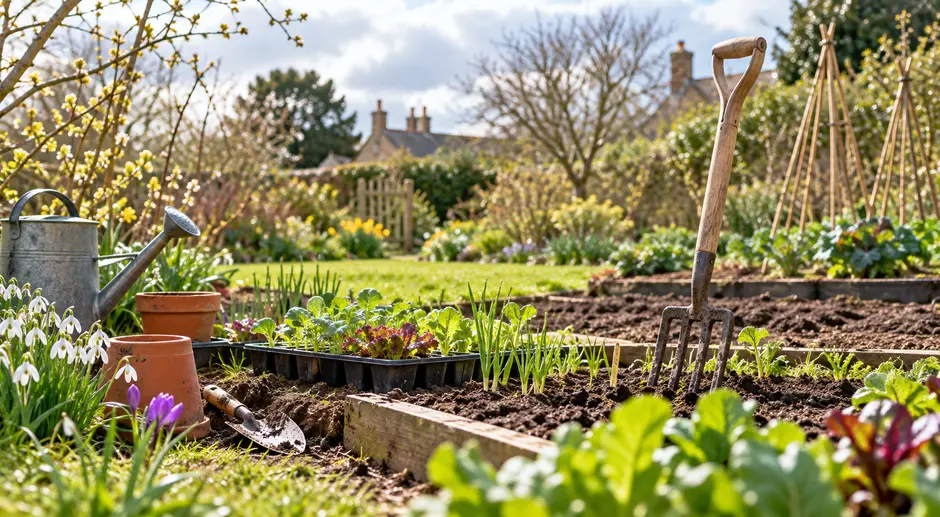
March marks the beginning of spring and the return of active growth to UK gardens. The most important gardening jobs for March include preparing soil, sowing suitable seeds, pruning selected plants, making the first lawn cut and protecting new growth from late frost.
Conditions can vary considerably across the UK, so use the weather and the condition of your soil as your guide. Avoid digging, mowing or sowing into frozen or waterlogged ground, even if the calendar says that spring has arrived.
If you are working through your garden month by month, review our February gardening jobs first, then use our April gardening jobs guide to plan ahead.
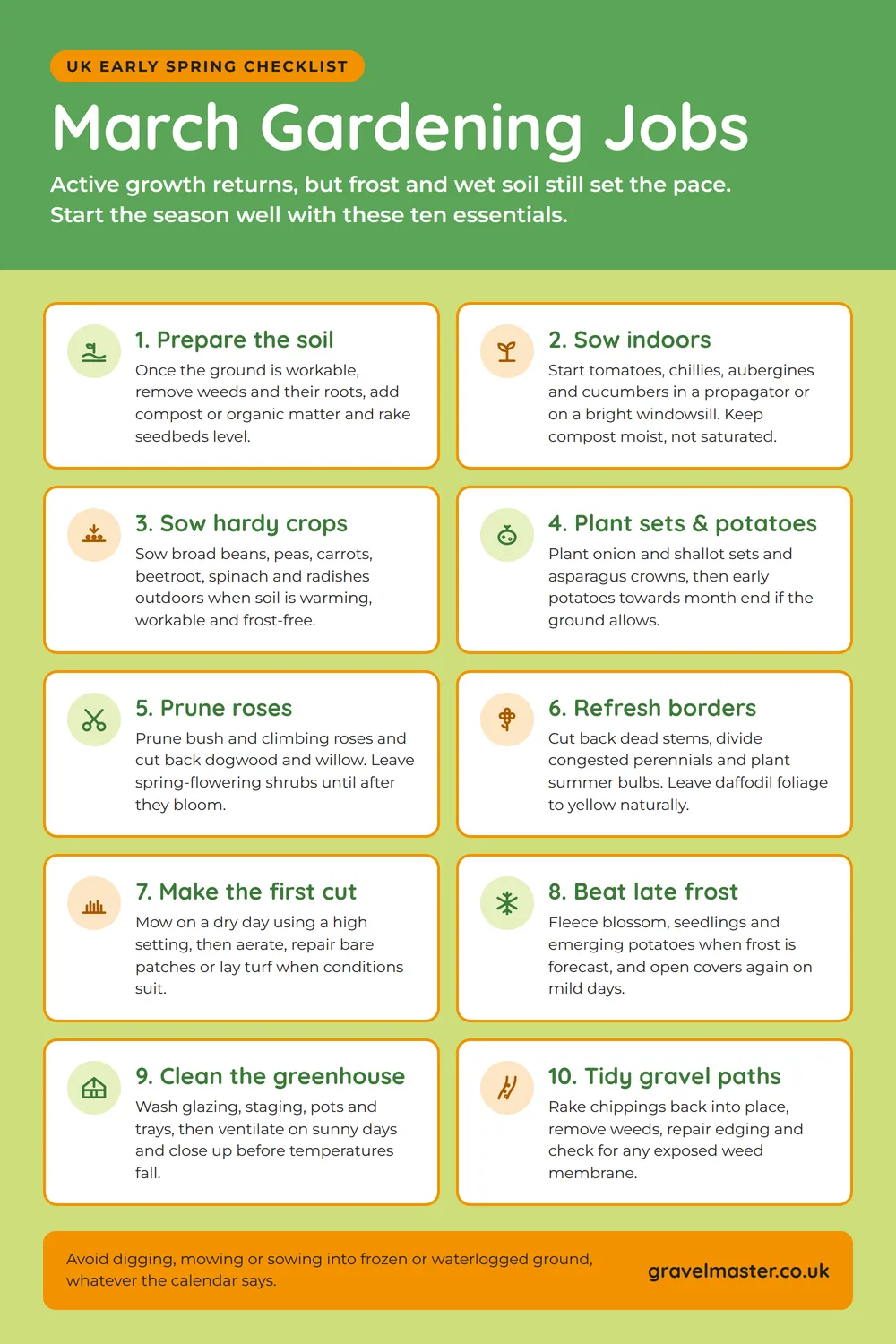
March gardening jobs checklist
The main jobs to do in the garden in March are:
- Prepare beds and improve the soil
- Remove weeds before they become established
- Start tender seeds indoors
- Sow hardy vegetables when conditions allow
- Plant onion sets, shallots and early potatoes
- Prune roses and selected deciduous shrubs
- Divide congested perennial plants
- Mow and repair lawns when the ground is dry
- Protect seedlings and blossom from late frost
- Clean greenhouses, pots and gardening tools
- Tidy paths, borders and gravelled areas
- Provide food, water and shelter for garden wildlife
Prepare your soil and garden beds
Preparing the soil is one of the most valuable gardening jobs to complete in March. Improving the ground before the main planting season gives seeds, flowers and vegetables a healthier environment in which to establish.
Wait until the ground is workable before digging. If soil sticks heavily to your boots or forms a wet, solid ball when squeezed, leave it to dry for a little longer. Working waterlogged soil can damage its structure and cause compaction.
Once conditions improve:
- Remove established weeds and their roots
- Clear away dead annual plants and unwanted debris
- Lightly fork compacted areas
- Add compost or well-rotted organic matter
- Rake seedbeds to create a fine, level surface
- Add mulch around established plants while the soil is moist
- Prepare raised beds for spring sowing
A suitable soil improver can add organic matter and help improve the structure of tired garden soil. For new planting areas, explore GravelMaster’s range of topsoil and compost.
If you are filling a new raised bed, use a suitable growing medium such as Raised Bed Soil. This provides a more reliable starting point than filling the bed entirely with ordinary garden soil.
What can you sow indoors in March?
March is a good time to sow tender crops and flowers indoors. Starting them in a warm, bright location gives them time to establish before they are planted outside later in spring.
Seeds that can be started indoors during March include:
- Tomatoes
- Chillies and sweet peppers
- Aubergines
- Cucumbers
- Celery
- Lettuce
- Globe artichokes
- Half-hardy annual flowers
Follow the instructions on the seed packet because germination temperatures and sowing depths vary between plants.
Place seed trays in a propagator, greenhouse or bright windowsill. Keep the compost moist but not saturated and turn windowsill trays regularly to prevent seedlings leaning towards the light.
Seedlings should not be moved directly from a warm indoor environment into the garden. Harden them off gradually when the weather becomes milder, and wait until the danger of frost has passed before planting tender varieties outside.
What can you sow and plant outside in March?
Hardy crops can be sown outdoors during March when the soil is warming, dry enough to work and free from frost.
Depending on local conditions, suitable crops can include:
- Broad beans
- Peas
- Carrots
- Parsnips
- Beetroot
- Spinach
- Radishes
- Lettuce and salad leaves
- Spring onions
- Turnips
- Summer cabbage
- Swiss chard
Sandy and chalky soils generally warm more quickly than heavy clay soils. Gardeners in colder parts of the UK may need to wait longer or start seeds in pots and modules under cover.
Covering the soil with a cloche or horticultural fleece can help warm the surface and protect early seedlings. However, sowing too early into cold, saturated ground can result in poor germination and rotting seeds.
Jobs for the vegetable garden
March is the month when many vegetable gardens and allotments begin to become active again.
Prepare seedbeds by removing weeds, breaking up large clumps of soil and raking the surface to a fine texture. Avoid walking directly across wet beds because this can compact the soil.
Other vegetable-garden jobs for March include:
- Plant onion and shallot sets
- Plant garlic if it was not planted during autumn
- Chit early and maincrop seed potatoes
- Plant early potatoes when the ground is suitable
- Install supports for peas
- Prepare supports and trenches for runner beans
- Plant asparagus crowns
- Clear finished winter crops
- Plan crop rotation for the coming season
- Protect young plants from slugs and pigeons
Potatoes can usually be planted towards the end of March, but there is no need to rush if the soil remains very wet or cold. A slightly later planting in suitable conditions is preferable to planting into waterlogged ground.
For new vegetable beds and large containers, Fruit and Vegetable Soil can provide a suitable growing environment for a range of edible crops.
Look after flower beds and borders
As temperatures rise, perennial plants and spring bulbs will begin putting on fresh growth. Clearing beds now creates space and light while making it easier to spot emerging weeds.
March flower-garden jobs include:
- Cut back dead perennial stems
- Divide congested herbaceous perennials
- Prune bush and climbing roses
- Cut back dogwood and willow grown for colourful winter stems
- Remove damaged or diseased growth
- Plant summer-flowering bulbs
- Top-dress pots and containers with fresh compost
- Support tall or vulnerable new growth
- Remove weeds before they flower or set seed
Avoid pruning spring-flowering shrubs before they have bloomed, as this can remove the current season’s flowers.
Deadhead faded daffodils and other spring bulbs, but leave their foliage in place until it has yellowed naturally. The leaves continue to feed the bulb and help it store energy for next year. Our deadheading guide explains how and when to remove spent flowers.
If you are preparing seasonal displays, see our guide to planting flowers in pots and containers and explore the current range of flower bulbs.
March lawn-care jobs
Lawns often begin growing more noticeably during March, but any work should be guided by the weather and ground conditions.
Make the first lawn cut
Mow the lawn when the grass is actively growing and the ground is dry and firm. Use a relatively high cutting setting for the first mow rather than immediately cutting the grass short.
Do not mow when the ground is:
- Frozen
- Waterlogged
- Very soft underfoot
- Covered in frost
- Likely to be damaged by the mower
Repair and improve the lawn
Once conditions are suitable, you can:
- Redefine untidy lawn edges
- Aerate compacted areas
- Brush away worm casts when they are dry
- Repair worn or bare patches
- Level small dips with appropriate soil
- Lay new turf
- Prepare the ground for grass seed
Grass seed can be sown in March if the soil has warmed sufficiently and cold, wet weather is not forecast. Germination will be slower in cold soil, so gardeners in northern areas may need to wait until later in spring.
For detailed preparation and sowing instructions, read How to Sow a Lawn. If you are creating an instant lawn, see How to Lay Turf.
You can also view GravelMaster’s available turf and lawn seed products.
Protect plants from late frost
Longer days and occasional warm weather can encourage plants into early growth, but frost is still common during March.
Pay particular attention to:
- Fruit blossom
- Emerging shoots
- Tender seedlings
- Recently planted specimens
- Potatoes growing above the soil
- Containers in exposed locations
Check local weather forecasts regularly. Cover vulnerable plants with horticultural fleece before temperatures fall, but remove or open the protection during mild days to provide ventilation and allow pollinating insects to reach flowers.
Move smaller containers next to a sheltered wall or into a greenhouse, porch or shed overnight. Avoid placing fleece directly against delicate blossom where possible.
Read our complete guide to protecting plants from frost for more seasonal advice.
Clean and prepare the greenhouse
Cleaning the greenhouse before it becomes crowded with seedlings can reduce pests and diseases while allowing more light to reach young plants.
March greenhouse jobs include:
- Wash the glazing
- Clean shelves and staging
- Remove dead leaves and old compost
- Wash pots, trays and propagator lids
- Check plants for pests
- Repair damaged glazing and seals
- Open doors and vents on warmer days
- Close the greenhouse before temperatures fall at night
Good ventilation is especially important on sunny days, when temperatures inside a greenhouse can rise quickly even if the outdoor air remains cool.
Tidy paths and gravelled areas
Winter weather can leave garden paths, driveways and decorative areas covered with leaves, weeds and displaced gravel.
Rake loose chippings back into place and check whether any areas have become noticeably thin. Remove weeds before they become established, repair damaged edging and investigate any exposed weed membrane.
If a gravelled area needs replenishing, use the gravel calculator to estimate how much material is required. You can then explore the available gravels and chippings.
When creating a new gravel path or decorative area, installing a suitable weed-control membrane can help separate the aggregate from the soil and reduce weed growth. Follow our guide to laying weed-control membrane before adding the gravel.
Look after garden wildlife
Birds, pollinators and other wildlife become increasingly active during March.
You can help by:
- Keeping bird feeders clean and topped up
- Providing a reliable source of fresh water
- Avoiding hedge cutting where birds may be nesting
- Planting early flowers for pollinating insects
- Leaving some undisturbed shelter for insects
- Checking ponds and removing only excessive debris
- Avoiding unnecessary pesticide use
Always check hedges and dense shrubs carefully for active nests before carrying out trimming or maintenance.
Clean and check your gardening tools
Inspect tools before the busiest part of the gardening season begins.
Clean soil from spades, forks and hoes, sharpen secateurs and replace damaged handles. Check lawnmowers and other powered equipment according to the manufacturer’s instructions.
Clean tools make gardening easier and reduce the risk of transferring plant diseases between different parts of the garden.
Plan ahead for April
March gardening is heavily influenced by the weather. Prioritise soil preparation, protected sowing and essential maintenance rather than trying to complete every spring task immediately.
By the end of the month, you can begin planning:
- Further outdoor sowing
- Planting hardened-off seedlings
- More regular lawn maintenance
- Feeding actively growing plants
- Spring container displays
- New gravel paths, borders and landscaped areas
Continue with our April gardening jobs guide or visit the Gardening by Season hub for more seasonal advice.
Frequently asked questions
What gardening jobs should I do in March?
The main gardening jobs for March are preparing soil, removing weeds, starting seeds indoors, sowing hardy crops, pruning roses, dividing perennial plants and carrying out the first lawn maintenance. You should also protect emerging growth and fruit blossom from late frost.
What can I sow in March in the UK?
Tomatoes, chillies, aubergines and cucumbers can be started indoors. Hardy crops such as peas, broad beans, carrots, parsnips, beetroot, spinach and radishes may be sown outdoors when the soil is warm, workable and not waterlogged.
Is March too early to plant outside?
March is suitable for planting hardy crops, onion sets, shallots, early potatoes and some perennial plants. Tender plants should normally remain under cover until the danger of frost has passed. Local temperatures and soil conditions should guide your decision.
Can I sow grass seed in March?
Grass seed can be sown during mild March weather once the soil has begun to warm. Avoid sowing into frozen, saturated or exceptionally cold ground. In colder areas of the UK, germination may be more reliable later in spring.
Should I mow my lawn in March?
You can make the first lawn cut in March if the grass is growing and the ground is dry and firm. Use a high mower setting and remove only a small amount of growth. Do not mow frozen, waterlogged or very soft lawns.
Can I lay turf in March?
March can be a suitable time to lay turf because the ground is often moist and temperatures are relatively cool. However, turf should not be laid onto frozen, waterlogged or poorly prepared soil.
What vegetables can I plant in March?
Depending on local conditions, you can plant onion sets, shallots, garlic, asparagus crowns and early potatoes. Peas, broad beans, carrots, parsnips, beetroot, spinach and salad crops can also be sown when the soil is suitable.
What flowers can I plant in March?
Hardy perennials, summer-flowering bulbs and container-grown shrubs can often be planted during March. The ground should be workable and not waterlogged. Tender bedding plants should remain protected until frost risk has passed.
Should roses be pruned in March?
March is usually a suitable time to prune established bush and climbing roses before strong new growth begins. Remove dead, damaged or crossing branches and use clean, sharp secateurs. Requirements can vary between different types of rose.
How do I protect new plants from March frost?
Move containers to a sheltered location and cover vulnerable plants with horticultural fleece before temperatures fall. Protect emerging shoots and fruit blossom, but remove or open covers during mild days to improve ventilation and allow access for pollinating insects.