




Spring Gardening Tips and Jobs: A Complete UK Guide
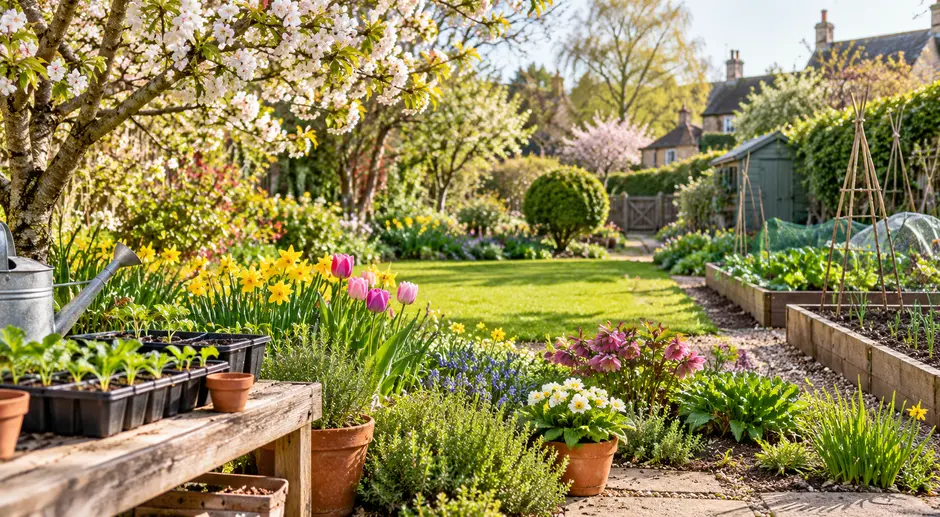
The main spring gardening jobs are clearing winter debris, preparing soil, controlling weeds, repairing lawns and starting suitable flowers and vegetables. Gardeners should also inspect plants for winter damage, protect new growth from late frost and gradually prepare beds, containers and landscaped areas for summer.
Spring is a period of rapid change. Soil begins to warm, daylight increases and plants return to active growth. However, conditions can vary considerably across the UK. A warm week does not necessarily mean the risk of frost has passed.
This guide explains the main priorities across the whole season. For tasks specific to the current month, use our detailed March, April and May gardening guides.
Spring gardening checklist
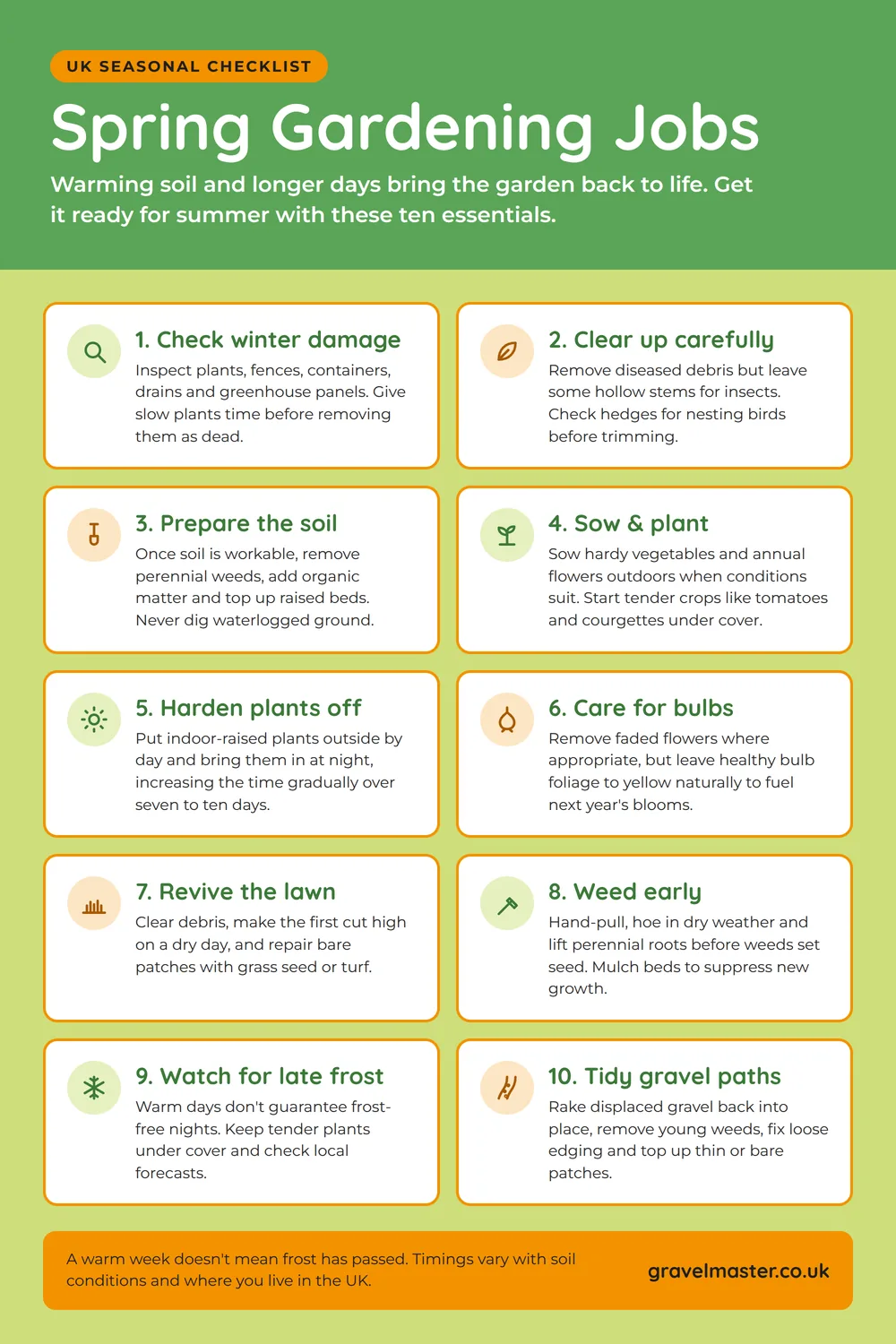
The most important spring gardening jobs are:
- Assess plants and structures for winter damage
- Clear unhealthy plant debris
- Prepare beds when the soil is workable
- Remove weeds before they set seed
- Add organic matter and suitable mulch
- Repair and reseed lawns
- Sow hardy vegetables and flowers
- Start tender plants under protection
- Plant container-grown shrubs and perennials
- Refresh pots and containers
- Protect new growth from late frost
- Monitor plants for pests
- Check hedges for active bird nests
- Prepare watering systems
- Repair gravel paths and garden edging
- Plan ahead for summer
The timing of these jobs depends on soil conditions, local climate and the date of the last frost. Northern, high-altitude and exposed gardens may develop several weeks later than sheltered gardens in southern England.
Spring gardening at a glance
Spring tasks change as the weather warms and plants move into active growth.
| Stage of spring | Main priorities | Detailed guide |
|---|---|---|
| Early spring | Assess winter damage, prepare soil and begin suitable sowing | March Gardening Jobs |
| Mid-spring | Increase sowing, plant hardy crops and maintain lawns | April Gardening Jobs |
| Late spring | Plant tender crops after frost, increase watering and prepare for summer | May Gardening Jobs |
Use the monthly guides for detailed checklists, planting recommendations and weather-dependent tasks.
When should you start spring gardening in the UK?
Start spring gardening when the ground is no longer frozen or waterlogged and conditions are suitable for the task.
Meteorological spring begins on 1 March, while the spring equinox occurs later in the month. Neither date guarantees that the soil is ready to work or that the risk of frost has passed.
Before starting:
- Check whether the soil is frozen or waterlogged
- Look for signs of new plant growth
- Monitor local frost forecasts
- Consider how exposed the garden is
- Check the instructions for individual seeds and plants
- Delay digging if soil sticks heavily to tools
Cold, wet soil can cause seeds and roots to rot. Working waterlogged ground can also compact the soil and damage its structure.
Assess the garden after winter
Begin by walking around the garden and inspecting plants, structures and landscaped areas.
Look for:
- Frost-damaged plants
- Broken branches
- Loose plant supports
- Damaged fencing
- Cracked containers
- Blocked drains
- Waterlogged areas
- Displaced gravel
- Loose edging
- Exposed weed-control membrane
- Damaged greenhouse panels
Do not remove apparently dead plants immediately unless they are clearly rotten or diseased. Some plants are slow to produce new growth and may recover when temperatures rise.
Broken or dangerous branches should be dealt with promptly. Larger trees and branches may require a suitably qualified professional.
Complete a careful spring garden clean-up
Clear unhealthy plant material and winter debris once conditions allow, but avoid removing every hollow stem and pile of leaves immediately. Beneficial insects and other wildlife may still be sheltering inside them.
Spring cleaning jobs can include:
- Removing diseased plant material
- Cutting back selected dead stems
- Clearing leaves from lawns and paths
- Cleaning pots and seed trays
- Removing young weeds
- Cleaning greenhouse glazing
- Washing and sharpening tools
- Checking garden furniture and structures
- Clearing blocked drainage channels
Leave some sheltered areas undisturbed and check carefully before moving logs, leaves or old stems.
Prepare beds and improve the soil
Healthy soil supports plant growth throughout the year. Spring is a useful time to improve beds, borders, raised beds and vegetable plots before they become crowded.
Wait until the soil is workable. Avoid digging when it is frozen, saturated or sticking heavily to your boots and tools.
Suitable spring soil jobs include:
- Removing perennial weeds
- Breaking up compacted surface soil
- Adding well-rotted organic matter
- Applying suitable mulch
- Topping up raised beds
- Checking drainage
- Preparing new planting areas
- Levelling beds where soil has settled
- Removing stones and debris where necessary
Adding organic matter can improve soil structure, drainage and moisture retention. The correct material and quantity will depend on the existing soil and intended planting.
Explore GravelMaster’s range of topsoil, compost and mulches, improve suitable areas with Soil Improver or use Beds and Borders Topsoil for appropriate projects.
Spring planting and sowing principles
Spring planting should progress gradually as soil and air temperatures rise.
The broad approach is:
| Plant group | General spring approach |
|---|---|
| Hardy vegetables | Sow when the soil is workable and conditions suit the variety |
| Tender vegetables | Start under cover and plant outside after frost |
| Hardy annual flowers | Sow outdoors in suitable soil |
| Tender flowers | Start indoors or under protection |
| Shrubs and perennials | Plant during cool, moist conditions |
| Summer-flowering bulbs | Plant according to their frost sensitivity |
| Container plants | Plant into suitable compost with adequate drainage |
Check the instructions supplied with each seed or plant. Varieties within the same crop or flower group can have different sowing times.
Harden plants off before moving them outside
Plants raised indoors or in a greenhouse need time to adjust to outdoor conditions.
Place them outside in a sheltered position during mild daytime weather and bring them back under cover at night. Increase the time spent outdoors gradually over seven to ten days.
Hardening off does not make a frost-tender plant frost-proof. Wait until the local risk of frost has passed before leaving tender plants outside permanently.
Prepare the spring vegetable garden
Spring vegetable gardening begins with preparing the soil and planning where crops will grow.
Useful seasonal tasks include:
- Removing weeds
- Adding suitable organic matter
- Planning crop rotation
- Preparing seedbeds
- Warming soil where appropriate
- Starting tender crops under cover
- Installing plant supports early
- Protecting seedlings from birds and pests
- Watering newly sown areas carefully
- Starting succession sowing as conditions improve
Hardy vegetables can be sown first when soil conditions allow. Tender crops such as tomatoes, courgettes and beans need more protection and should not be planted outdoors too early.
Raised beds can warm more quickly than surrounding ground, but they may also dry out faster. Check moisture levels regularly.
For productive beds and allotments, see Fruit and Vegetable Soil.
Use the March, April and May guides for the crops and tasks appropriate to each stage of spring.
Care for spring flowers and bulbs
Spring-flowering bulbs provide some of the earliest colour in the garden. Remove faded flowers where appropriate, but leave healthy foliage attached until it yellows naturally.
The leaves continue producing energy that is stored in the bulb for the following year. Cutting or tying green foliage too early can weaken future flowering.
Other spring flower jobs include:
- Supporting emerging perennials
- Removing weeds around new shoots
- Protecting young growth from frost
- Planting container-grown perennials
- Dividing suitable established plants
- Sowing hardy annual flowers
- Starting tender flowers under protection
- Planning gaps for summer colour
- Planting suitable summer-flowering bulbs
Our Deadheading Guide explains which flowers benefit from having faded blooms removed. You can also explore GravelMaster’s range of bulbs.
Repair and maintain the lawn
Spring lawn care should begin once the grass is actively growing and the ground is no longer waterlogged.
Start by removing fallen leaves, twigs and other surface debris. Complete the first cut on a dry day using a high mower setting. Avoid removing more than one-third of the grass height at once.
Other spring lawn jobs may include:
- Repairing bare patches
- Sowing new grass
- Laying turf
- Aerating compacted areas
- Scarifying excessive thatch
- Tidying lawn edges
- Removing weeds
- Watering newly established grass
- Cleaning mower blades
Do not scarify a weak or waterlogged lawn heavily. The grass needs suitable growing conditions to recover after treatment.
Is spring a good time to sow grass seed?
Spring can be suitable for sowing grass seed once the soil has warmed and frost is becoming less frequent. The prepared ground must remain moist while the seed germinates.
Follow our guide explaining how to sow a lawn or explore GravelMaster’s turf and lawn seed products.
Can you lay turf in spring?
Turf can be laid during spring when the ground is workable and the turf can be kept moist. Avoid laying it on frozen, waterlogged or extremely dry soil.
Prepare the ground thoroughly and water the new turf consistently until its roots become established. Our guide to laying turf explains the complete process.
Refresh pots and containers
Inspect containers for cracks or frost damage before reusing them. Clean pots and make sure the drainage holes are open.
Spring container jobs include:
- Removing dead plant material
- Replacing exhausted growing material
- Adding suitable grit where drainage needs improvement
- Planting seasonal displays
- Watering new plants
- Protecting tender growth from frost
- Raising containers where drainage is poor
- Cleaning reusable pots and trays
Use a growing medium suited to the chosen plants. GravelMaster supplies Multi-Purpose Soil and Horticultural Grit for suitable applications.
For planting instructions, read our guide to planting flowers in pots and containers.
Control weeds while they are young
Spring weeds can grow rapidly as the soil warms. Removing them early prevents competition with garden plants and stops many annual weeds from setting seed.
Methods include:
- Hand-pulling isolated weeds
- Hoeing annual weeds during dry weather
- Removing perennial roots carefully
- Applying suitable mulch
- Improving coverage in planted beds
- Preparing the ground properly before adding gravel
Mulch can suppress new weed growth while helping the soil retain moisture.
Weed-control membrane may be suitable beneath gravel paths and some landscaped areas. It should not replace proper ground preparation or be installed where it would interfere with the growth of established plants.
Read our guide to laying weed-control membrane or view the available weed-control membrane products.
Monitor spring pests and diseases
Fresh spring growth can attract pests. Inspect plants regularly so problems can be identified before they become established.
Common spring pests include:
- Slugs and snails
- Aphids
- Vine weevils
- Lily beetles
- Caterpillars
- Birds disturbing seedbeds
Check beneath leaves and around new shoots. Physical barriers, good garden hygiene and natural predators can help control many problems without unnecessary treatments.
Remove diseased material and maintain adequate spacing and airflow around plants. Avoid overwatering seedlings because continuously wet compost can encourage fungal problems.
Protect plants from late frost
Late frost can damage new growth, flowers and tender plants even after several warm days.
Protect vulnerable plants by:
- Monitoring local forecasts
- Keeping tender plants under cover
- Hardening plants off gradually
- Moving containers to a sheltered position
- Using suitable temporary protection
- Closing greenhouse doors before temperatures fall
- Removing protection during mild daytime weather
- Delaying tender planting where necessary
Warm daytime temperatures do not guarantee frost-free nights. Local conditions matter more than a fixed national planting date.
Can you cut hedges in spring?
Spring coincides with the main bird-nesting period. Check the entire hedge carefully before carrying out any work and postpone trimming if an active nest is present.
Never damage or disturb an occupied nest. If light work is necessary and no nests are present, identify the hedge species first and use clean, sharp tools.
Some spring-flowering shrubs should not be pruned until flowering has finished. The correct timing depends on the plant and how it produces its flowers.
Support spring wildlife
Gardens provide essential food, water and shelter as wildlife becomes more active.
Ways to support wildlife include:
- Leaving some hollow stems in place
- Retaining small areas of leaf litter
- Providing clean drinking water
- Growing spring flowers for pollinators
- Avoiding unnecessary pesticide use
- Checking ponds
- Securing netting
- Leaving sheltered areas undisturbed
- Providing access routes beneath suitable boundaries
Avoid clearing every bed completely at the first sign of warm weather. Insects may still be sheltering in old stems, leaves and other natural material.
Maintain gravel paths and landscaped areas
Winter weather can displace gravel, damage edging and expose membrane. Inspect paths, driveways and decorative areas during spring.
Look for:
- Young weeds
- Thin or bare patches
- Exposed membrane
- Loose edging
- Gravel spreading onto lawns
- Blocked drainage channels
- Uneven surfaces
- Areas where water collects
Remove weeds while they are small and rake displaced material back into place. Repair edging before adding replacement aggregate.
Where a top-up is required, use the Gravel Calculator to estimate the amount needed. You can also explore GravelMaster’s range of gravels and chippings.
Spring gardening tips for beginners
If you are new to gardening, start with a manageable number of tasks.
- Walk around the garden and identify any damage.
- Clear unhealthy material and obvious debris.
- Wait until the soil is workable.
- Prepare one bed or container at a time.
- Choose plants suited to the location.
- Follow seed packets and plant labels.
- Protect tender growth from frost.
- Water newly planted areas.
- Check weekly for weeds and pests.
- Use the monthly guides for current tasks.
Avoid trying to complete every project at once. Preparing the soil properly and selecting plants suited to the available light, space and drainage will have more value than filling the garden quickly.
Spring gardening safety
Inspect tools and equipment before regular use.
Check:
- Handles for cracks or splinters
- Blades for damage
- Electrical cables for wear
- Ladders for stability
- Greenhouse glass for cracks
- Paths for slippery surfaces
- Fences and structures for storm damage
Wear suitable gloves, footwear and eye protection for the task. Use lifting techniques appropriate to heavy bags, containers and paving materials.
Follow the manufacturer’s instructions when using powered equipment or garden treatments.
Prepare the garden for summer
Late spring is the time to prepare for faster growth, warmer temperatures and increasing watering requirements.
Before summer:
- Complete tender planting after frost
- Add mulch to suitable beds
- Prepare watering equipment
- Support growing plants
- Check containers and hanging baskets
- Complete lawn repairs
- Remove weeds before they set seed
- Repair gravel paths and edging
- Inspect plants regularly for pests
- Plan summer holiday care
Continue with the planned Summer Gardening Jobs guide and visit Gardening by Season for advice throughout the year.
Frequently asked questions
What are the main gardening jobs in spring?
The main spring gardening jobs are clearing winter debris, preparing soil, removing weeds, repairing lawns, sowing flowers and vegetables, planting hardy plants and protecting new growth from frost.
When should I start spring gardening in the UK?
Start when the soil is no longer frozen or waterlogged and conditions suit the task. Soil temperature, moisture and local frost forecasts are more useful than relying on one national date.
How do I prepare my garden for spring?
Inspect the garden for winter damage, remove unhealthy material, clear paths, remove weeds and prepare beds once the soil is workable. Check tools, drainage, containers and plant supports before regular growth begins.
What should beginners do in the garden during spring?
Beginners should start by clearing debris, preparing one small growing area and choosing plants suited to its light and soil. Follow plant labels and use the March, April and May guides for current tasks.
When should I prepare vegetable beds?
Prepare vegetable beds once the soil is workable and no longer waterlogged. Remove weeds, add suitable organic matter and create a level seedbed before sowing.
What can I plant during spring?
Spring planting can include hardy vegetables, annual flowers, container-grown shrubs, perennials and summer-flowering bulbs. Tender plants should remain protected until the local risk of frost has passed.
When can tender plants go outside?
Move tender plants outside permanently only after they have been hardened off and the local risk of frost has passed. This date varies across the UK.
How do I protect plants from late frost?
Monitor forecasts, move containers into shelter and use suitable temporary protection. Keep tender plants under cover and remove protective coverings during mild daytime conditions.
When should I start mowing the lawn in spring?
Begin mowing when the grass is actively growing and the ground is reasonably dry. Use a high cutting setting and avoid removing more than one-third of the grass height.
Is spring a good time to sow grass seed?
Spring can be suitable once the soil has warmed and frost is becoming less frequent. Keep the ground moist during germination and protect the area from heavy traffic.
Can I lay turf in spring?
Turf can be laid in spring when the ground is workable and it can be watered consistently. Avoid frozen, waterlogged or excessively dry soil.
Should spring-flowering bulbs be deadheaded?
Remove faded flowers where appropriate, but leave healthy foliage attached until it yellows naturally. The leaves replenish the bulb’s energy for the following year.
When should I clear dead stems from borders?
Clear dead stems gradually as temperatures rise and new growth appears. Check for sheltering insects and avoid removing every hollow stem too early.
How can I control weeds in spring?
Remove weeds while they are young, hoe annual weeds in dry weather and lift perennial roots carefully. Mulching suitable beds can suppress further growth.
Can I cut hedges during spring?
Only cut a hedge after checking thoroughly for active bird nests. Postpone work if an occupied nest is present and identify the hedge species before substantial pruning.
How should I prepare the garden for summer?
Complete tender planting after frost, add mulch, prepare watering equipment, support growing plants and finish lawn and path repairs. Continue controlling weeds and monitoring pests.