




Summer Gardening Jobs and Tips
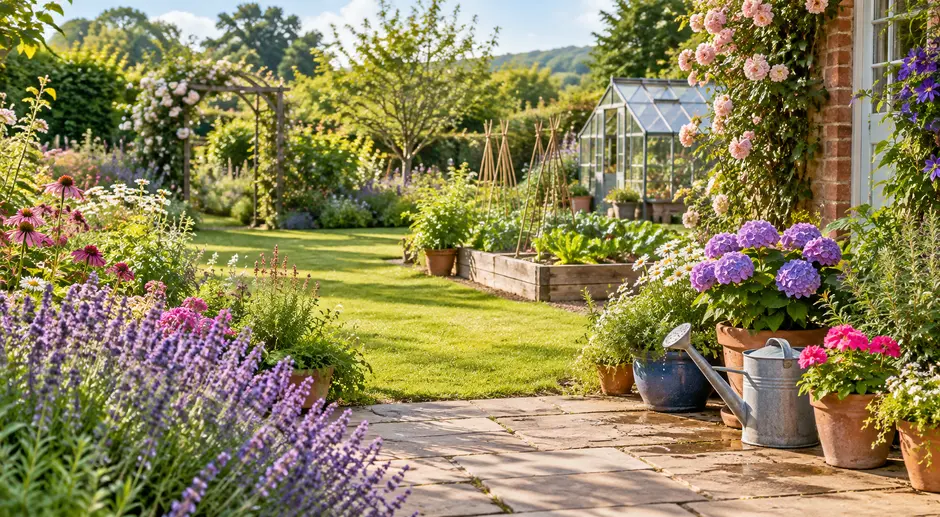
Summer brings warmer temperatures, longer days and rapid plant growth. The most important summer gardening jobs include watering effectively, deadheading flowers, harvesting crops, mowing lawns correctly, feeding containers, controlling weeds and preparing plants before holidays.
Conditions can vary considerably across the UK, so use the weather, soil moisture and condition of your plants to decide when each job needs doing.
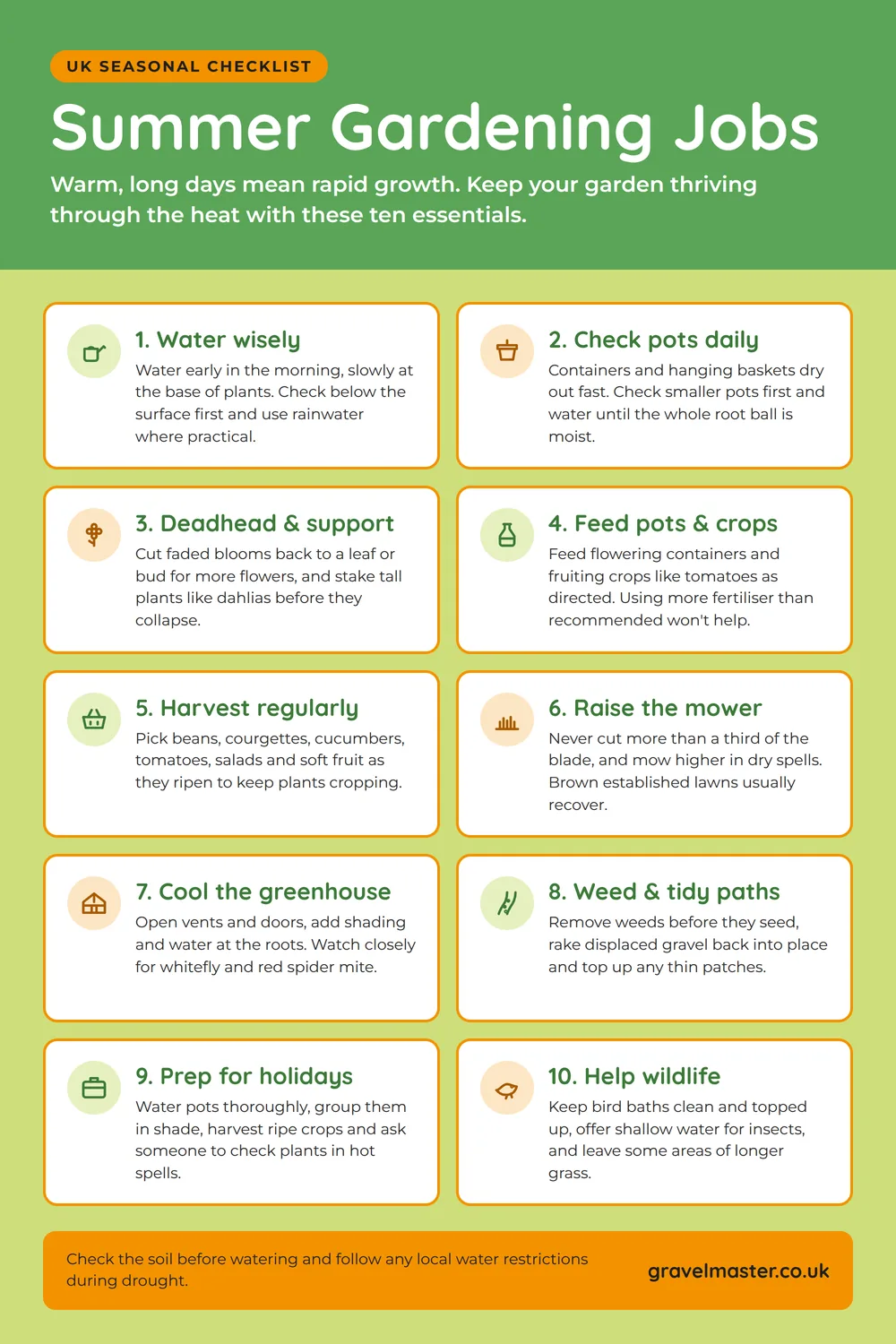
Essential summer gardening checklist
Use this quick checklist to keep your garden healthy throughout the season:
- Check the soil before watering.
- Water deeply and less frequently where appropriate.
- Give containers, hanging baskets and new plants extra attention.
- Deadhead flowering plants regularly.
- Harvest fruit and vegetables as they ripen.
- Feed flowering containers and fruiting crops.
- Raise the lawnmower cutting height during hot or dry weather.
- Remove weeds before they produce seed.
- Ventilate and shade greenhouses.
- Check plants regularly for pests and diseases.
- Prepare your garden before going on holiday.
- Keep bird baths and other wildlife water sources clean and topped up.
Summer gardening at a glance
Summer garden maintenance changes as the season progresses. This guide covers the broad principles, while our monthly articles provide more detailed checklists.
| Period | Main focus | Detailed guide |
|---|---|---|
| Early summer | Establish watering routines, support new growth and fill containers | June gardening jobs |
| Midsummer | Manage hot weather, maintain displays and harvest crops | July gardening jobs |
| Late summer | Continue harvesting and begin preparing for autumn | August gardening jobs |
When does summer gardening begin in the UK?
Meteorological summer begins on 1 June, while astronomical summer normally begins around 20 or 21 June. In practice, the gardening season does not follow a fixed date.
Temperatures, rainfall and the last frost vary between regions and from one year to another. Gardens in southern England may enter their main growing period earlier than exposed or northern locations.
Use local conditions as your guide. Before planting, watering or feeding, check the weather forecast, soil moisture and the condition of your plants.
How and when should you water a garden in summer?
The best time to water a garden in summer is usually early in the morning. Temperatures are cooler, evaporation is lower and foliage has time to dry during the day. Watering in the evening can also be effective, but persistently wet foliage may encourage fungal problems in susceptible plants.
The aim is to deliver water to the root zone instead of simply wetting the surface.
How to water effectively
- Check the soil below the surface before watering. A dry surface does not always mean that the root zone is dry.
- Apply water slowly around the base of the plant.
- Give priority to containers, hanging baskets, new plants, seedlings, vegetables and recently laid turf.
- Water thoroughly enough to encourage deeper roots.
- Avoid watering little and often unless you are caring for seedlings or very small containers.
- Direct water towards the soil rather than spraying leaves.
- Use collected rainwater where practical.
- Follow any local restrictions during periods of drought.
Established trees, shrubs and lawns may not require constant watering. Newly planted specimens need closer monitoring because their root systems have not yet spread into the surrounding soil.
Containers can dry out quickly during warm or windy weather. Check them daily during hot spells, paying particular attention to small pots and hanging baskets.
Help the soil retain moisture
Improving the soil and covering its surface can reduce moisture loss during warm weather.
Organic matter helps some soils hold water while also improving their structure. GravelMaster’s soil improver can be incorporated into existing garden soil when preparing beds and planting areas.
A layer of ornamental bark mulch can help suppress weeds and reduce evaporation from bare soil. Water the ground first and apply the mulch over moist soil, keeping it away from plant stems.
Browse the full range of topsoil, compost and mulch when preparing beds, borders and growing areas.
Look after summer flowers and plants
Roses, dahlias, lavender, salvias, echinacea, rudbeckia, hydrangeas, sweet peas and ornamental grasses can all contribute colour and structure during summer. Their individual requirements vary, but several general jobs apply across the garden.
Deadhead faded flowers
Removing faded flowers keeps beds and containers tidy and can encourage many plants to produce more blooms. Cut or pinch the old flower back to a suitable leaf, bud or sideshoot instead of removing only the petals.
Some plants should retain their seed heads for wildlife, decoration or seed collection. Learn which plants benefit from repeat flowering in our deadheading guide.
Support tall plants
Check dahlias, delphiniums, gladioli and other tall plants after strong growth or windy weather. Add supports before stems collapse and tie them loosely enough to allow movement and further growth.
Feed flowering containers
Plants growing in containers depend on a limited amount of compost. Watering also washes nutrients from the growing medium, so flowering pots and hanging baskets may need regular feeding with an appropriate fertiliser.
Always follow the product instructions. Applying more fertiliser than recommended will not necessarily improve flowering and can damage plants.
Watch for heat stress
Wilting does not always mean that a plant needs more water. Check the soil first. Some plants wilt temporarily during the hottest part of the day but recover as temperatures fall.
Yellowing leaves, scorched edges, flower drop and very dry compost can indicate that a plant requires attention. Move vulnerable containers away from intense afternoon sun where practical.
Caring for summer-flowering bulbs
Summer-flowering bulbs, corms and tubers include lilies, gladioli, dahlias and cannas. Once they are growing, their main requirements are moisture, nutrients and support.
- Water during prolonged dry periods.
- Feed plants grown in containers.
- Stake tall or top-heavy stems.
- Remove faded flowers where continued flowering is desirable.
- Check lilies and other vulnerable plants for pests.
- Make sure containers can drain freely.
Planting times differ between varieties, so follow the instructions supplied with each bulb. You can explore GravelMaster’s bulb range when planning future displays.
Can you plant during summer?
Container-grown plants can be planted during summer, but they need careful watering while establishing. Avoid planting during extreme heat or prolonged drought if the work can wait for cooler conditions.
When planting in summer:
- Water the plant in its container before removing it.
- Prepare a hole wide enough to accommodate the root ball.
- Make sure the surrounding soil is moist.
- Plant at the correct depth for the species.
- Firm the soil gently and water thoroughly.
- Apply a suitable mulch over moist soil.
- Continue checking the root zone during dry weather.
Do not rely on light rainfall to reach newly planted roots. A brief shower may wet only the soil surface.
For pots, hanging baskets and planters, multi-purpose peat-free compost provides a growing medium designed to support plant establishment and moisture retention.
Summer jobs in the vegetable garden
A productive summer vegetable garden needs consistent watering, regular harvesting and close monitoring for pests and diseases.
Water vegetables at their roots
Water the soil around plants instead of repeatedly wetting their leaves. Tomatoes, cucumbers, courgettes, beans and other fruiting crops perform best when they receive a reasonably consistent supply of water.
Irregular watering can stress plants and may contribute to problems such as split fruit or blossom end rot in tomatoes.
Support growing crops
Tie tomatoes and climbing beans to suitable supports as they grow. Check existing ties so they do not cut into expanding stems. Train cucumbers and other climbing crops carefully to avoid damaging new growth.
Feed fruiting plants appropriately
Tomatoes and other fruiting plants may require a suitable high-potassium feed once flowering and fruiting are underway. Follow the instructions for the crop and fertiliser rather than feeding every vegetable in the same way.
Continue succession sowing
Where conditions and the crop allow, small batches of fast-growing salads and vegetables can be sown at intervals. This can help spread the harvest instead of producing everything at once.
Exact sowing times vary, so use the relevant monthly guide and the instructions on the seed packet.
Harvest regularly
Pick beans, courgettes, cucumbers, salad leaves, tomatoes and soft fruit as they become ready. Regular harvesting prevents produce from becoming overripe and can encourage some plants to continue cropping.
For new raised beds, allotments and vegetable plots, Fruit and Vegetable Soil provides a growing medium containing organic matter and nutrients for crop establishment.
Summer lawn care
Lawns often grow quickly in early summer before slowing during hot or dry periods. Adjust your routine to match the weather and condition of the grass.
Mow according to growth
Mow when the lawn needs it rather than following a rigid schedule. Avoid removing more than around one-third of the grass blade in a single cut.
Raising the cutting height during hot or dry conditions leaves more leaf area and can reduce stress. Keep mower blades sharp to produce a cleaner cut.
Do not overwater established lawns
An established lawn may turn brown during prolonged dry weather and recover when rainfall returns. Constant watering is not always necessary.
New turf and recently sown lawns are different. Their shallow, developing roots require close attention until they become established.
If you are creating or repairing a lawn, see our guides to laying turf and sowing a lawn. GravelMaster also supplies a range of turf and lawn seed.
Avoid feeding drought-stressed grass
Do not apply lawn fertiliser to dry, stressed grass unless the product instructions state that conditions are suitable. Wait for moisture and active growth to return.
Larger repairs, reseeding and renovation are often more successful when cooler and wetter conditions arrive.
Look after containers and hanging baskets
Containers and hanging baskets need more frequent attention than plants growing in open ground because they hold a limited amount of water and nutrients.
During summer:
- Check the compost daily during warm weather.
- Water until the entire root ball is moist.
- Make sure drainage holes are clear.
- Empty saucers if plants should not remain waterlogged.
- Feed flowering containers as directed.
- Remove faded flowers and damaged leaves.
- Group pots together to reduce exposure.
- Move sensitive containers away from intense afternoon sun.
- Check small pots before larger ones, as they usually dry out faster.
If compost has become extremely dry, water may run down the sides without soaking the root ball. Apply water slowly in stages and check that moisture has reached the centre of the container.
Horticultural grit can help improve drainage in suitable compost mixes, although the needs of the plant should determine the final growing medium.
Greenhouse jobs during summer
A greenhouse can overheat quickly on a sunny day. Good ventilation, shading and consistent watering are therefore central to summer greenhouse care.
- Open vents and doors when conditions require it.
- Use suitable shading to reduce excessive temperatures.
- Check containers and growing bags regularly.
- Water crops at their roots.
- Support tomatoes, cucumbers and other climbing plants.
- Remove damaged or diseased leaves.
- Keep paths clear and remove plant debris.
- Look for aphids, whitefly and red spider mite.
- Harvest crops before they become overripe.
Avoid creating permanently damp, stagnant conditions. Ventilation helps control temperature and can reduce the risk of some fungal diseases.
Control weeds before they spread
Warm weather can encourage rapid weed growth. Remove weeds while they are young and before they flower or produce seed.
Hand weeding and hoeing are useful in planted areas, while established paths and gravel surfaces may require a different approach. Remember that a membrane reduces weeds growing from below but cannot prevent seeds from landing and germinating in material collected on the surface.
If you are creating a new path or decorative area, read our guide to laying weed-control membrane and browse the available weed-control membranes and accessories.
Check for pests and diseases
Inspect plants regularly so problems can be identified before they spread. Common summer issues include:
- Aphids on soft new growth
- Slugs and snails around seedlings
- Vine weevil damage in containers
- Whitefly in greenhouses
- Red spider mite in hot, dry conditions
- Powdery mildew
- Tomato and potato blight
Correct identification is important because similar symptoms can have different causes. Yellow leaves, for example, may be connected with watering, nutrition, root damage or disease.
Start with simple measures such as removing badly affected material, improving airflow and correcting growing conditions. Use any treatment only as directed and select an option suitable for the plant and problem.
Prepare the garden before a summer holiday
A little preparation can help plants cope while you are away.
Before leaving:
- Water containers thoroughly.
- Group pots together in a sheltered position.
- Move vulnerable containers out of strong afternoon sun.
- Harvest ripe fruit and vegetables.
- Deadhead flowering plants.
- Check greenhouse ventilation.
- Remove diseased growth.
- Ask someone to check plants during prolonged hot weather.
- Test any irrigation system before departure.
Our complete guide to looking after your garden while on holiday covers the preparation in more detail.
Help garden wildlife during summer
Hot and dry weather can reduce the amount of accessible water available to birds, insects and other wildlife.
You can help by:
- Keeping bird baths clean and filled with fresh water.
- Providing a shallow water dish with safe landing points for insects.
- Maintaining access to ponds.
- Growing nectar-rich flowers.
- Leaving some areas of longer grass.
- Retaining selected seed heads.
- Avoiding unnecessary pesticide use.
- Cleaning bird feeders regularly.
Birds can be fed during summer, but food should be appropriate and feeders must be kept hygienic. Remove spoiled food and avoid allowing uneaten material to accumulate.
Looking after a north-facing garden in summer
A north-facing garden may receive less direct sunlight, but that does not mean it will always remain cool or moist. Walls, fences, containers, wind and surrounding buildings can all affect its conditions.
Choose plants according to the actual amount of light and moisture available. Ferns, hostas and some hydrangeas can suit shaded areas, while brighter sections may support a wider range of plants.
Check the soil before watering. Shaded ground may retain moisture longer, but containers and areas sheltered from rain can still dry out.
Maintain gravel paths and landscaped areas
Summer is a useful time to keep paths, driveways and decorative aggregate areas tidy.
- Remove weeds before they produce seed.
- Rake displaced gravel back into place.
- Sweep leaves and other organic material from the surface.
- Check edging for movement or damage.
- Top up areas where the aggregate has become thin.
- Check that drainage routes remain clear.
- Remove gravel that has spread onto lawns or planting beds.
If a gravel area needs topping up, browse the range of gravels and chippings and use the gravel calculator to estimate the amount required.
Prepare for late summer and autumn
As summer progresses, begin preparing for the next season without bringing the full autumn checklist into this guide.
Useful transition jobs include:
- Continue harvesting crops as they ripen.
- Collect seed from suitable healthy plants.
- Identify areas of lawn that will need repair.
- Plan autumn planting.
- Remove annual weeds before they set seed.
- Check paths, gutters and drainage channels.
- Order materials needed for cooler-weather projects.
- Review which containers will need protection later in the year.
The August gardening jobs guide covers late-summer tasks in more detail. When the season begins to change, continue with our autumn gardening tips.
Frequently asked questions
What gardening jobs should I do in summer?
The main summer gardening jobs are watering, deadheading, harvesting, mowing, feeding containers, controlling weeds, supporting tall plants, checking for pests and maintaining greenhouses. The exact priorities depend on the weather and condition of your garden.
What is the best time to water a garden in summer?
Early morning is usually the best time to water because temperatures are cooler and less moisture is lost through evaporation. Water the soil around the roots instead of spraying plant leaves.
How often should I water my garden in hot weather?
There is no single schedule for every garden. Check the soil and give priority to containers, hanging baskets, new plants, vegetables and recently laid turf. Established plants growing in open ground may need less frequent but more thorough watering.
Can I plant new plants during summer?
Container-grown plants can be planted in summer if they can be watered consistently. Avoid planting during extreme heat or drought, water the root ball and surrounding soil thoroughly, and monitor the plant until it establishes.
Should I feed my lawn in summer?
Only feed a lawn when the grass is actively growing and conditions are suitable for the chosen product. Avoid applying fertiliser to a dry or drought-stressed lawn.
What vegetables can I harvest in summer?
Depending on sowing time and local conditions, summer harvests can include salad leaves, beans, courgettes, cucumbers, potatoes, tomatoes, strawberries, raspberries and currants. Pick produce when it is ready rather than relying only on the calendar.
How can I protect my plants while I am on holiday?
Water containers thoroughly, group pots in a sheltered location, harvest ripe crops, check greenhouse ventilation and arrange for someone to monitor vulnerable plants during hot weather.
Should I feed garden birds in summer?
Birds can be offered suitable supplementary food during summer. Keep feeders clean, remove spoiled food and provide a reliable source of fresh water.
How can I help wildlife during hot weather?
Provide clean water at different heights, keep ponds accessible, grow pollinator-friendly flowers and retain some longer grass and seed heads. Avoid using pesticides unless they are genuinely necessary.
How should I prepare my garden for autumn?
Continue harvesting, collect seeds, remove weeds, identify lawn repairs, plan autumn planting and check paths and drainage. Use the late-summer and autumn guides for the detailed seasonal tasks.