




May Gardening Jobs: UK Garden Checklist
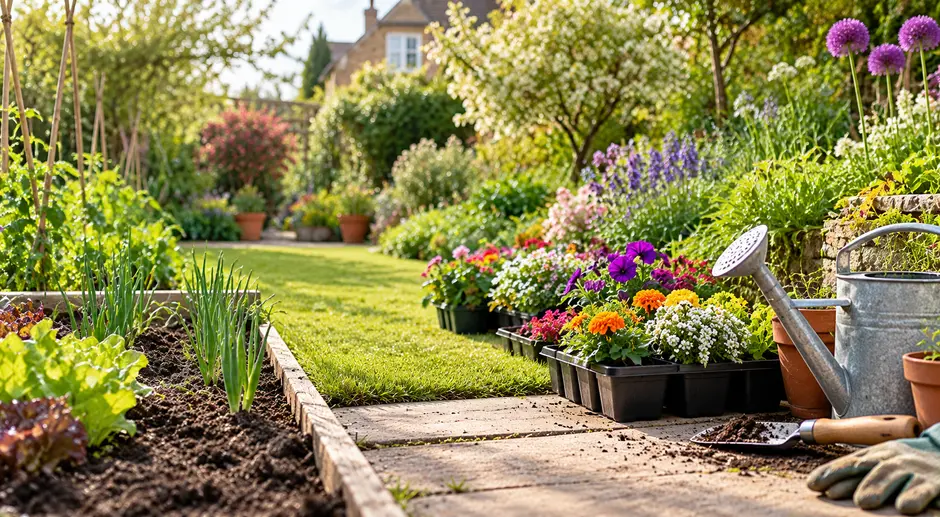
The main gardening jobs for May include hardening off tender plants, sowing vegetables and flowers, planting summer bedding, earthing up potatoes, maintaining lawns and keeping weeds and pests under control.
Temperatures normally rise quickly during May, but late frost remains possible across the UK. Check your local forecast and the condition of your soil before planting tender crops or moving greenhouse-grown plants outside permanently.
If you are working through your garden month by month, review our April Gardening Jobs first. You can also plan ahead with our June Gardening Jobs guide.
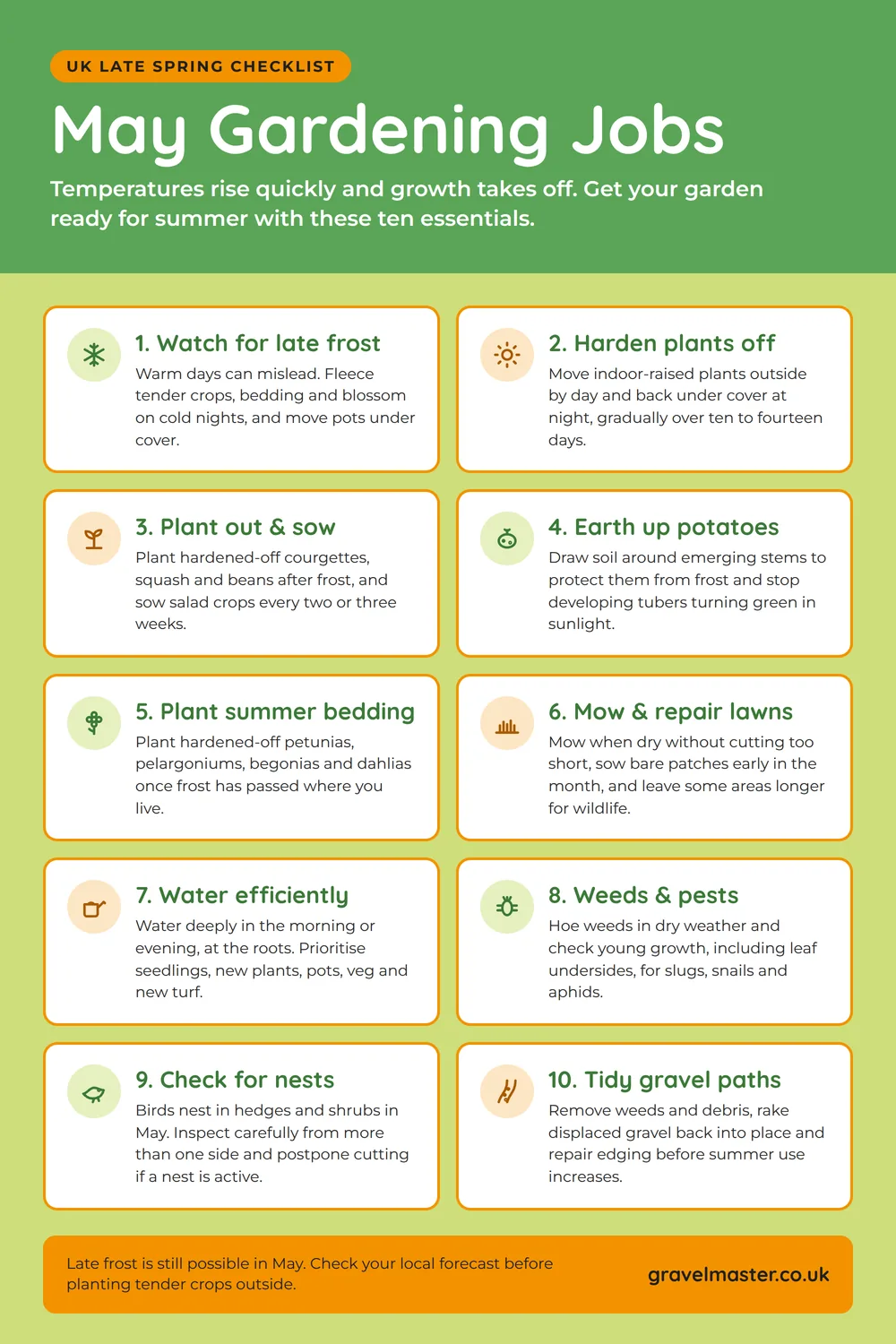
May gardening jobs checklist
The principal jobs to do in the garden in May are:
- Check forecasts for late frost
- Harden off plants raised indoors or under cover
- Plant summer bedding when frost risk has passed
- Sow vegetables, herbs and salad crops
- Plant courgettes, squash and beans when conditions allow
- Earth up potatoes
- Install supports for peas and climbing beans
- Water newly planted crops
- Mulch beds and borders
- Mow established lawns
- Sow grass seed early in the month
- Hoe weeds regularly
- Prune selected spring-flowering shrubs
- Check for nesting birds before cutting hedges
- Monitor young plants for slugs, snails and aphids
- Open greenhouse doors and vents on warm days
- Prepare pots, containers and hanging baskets
- Continue supporting garden wildlife
Protect tender plants from late frost
Warm days can encourage gardeners to plant tender crops outside too early. Frost may still occur during May, particularly in northern, inland, rural and exposed locations.
Pay close attention to:
- Tomatoes
- Courgettes
- Pumpkins and squash
- Cucumbers
- Runner and French beans
- Dahlias
- Cannas
- Summer bedding plants
- Young potato growth
- Fruit blossom
Check local forecasts and cover vulnerable plants with horticultural fleece before temperatures fall. Cloches can be used to protect rows of young vegetables.
Move containers into a greenhouse, porch or another sheltered position overnight where practical. Remove or open plant coverings during warm days to provide ventilation and allow pollinating insects to reach flowers.
Read our guide to protecting plants from frost for more detailed advice.
Harden off plants before planting outside
Hardening off is the process of gradually acclimatising indoor or greenhouse-grown plants to outdoor conditions.
Plants raised under cover are not immediately prepared for lower night-time temperatures, direct sunlight or stronger winds. Moving them straight outside can cause damage and slow their growth.
To harden off plants:
- Move them into a sheltered outdoor position during the warmest part of the day.
- Bring them back under cover before temperatures fall.
- Gradually increase the time they spend outside.
- Expose them slowly to more sunlight and wind.
- Continue for approximately 10–14 days.
- Plant them outside permanently once conditions are suitable.
Cold frames can make the process easier because they provide protection while allowing ventilation to be increased gradually.
Do not rely on a fixed planting date. The final frost date can vary considerably between different parts of the UK.
What vegetables can you plant in May?
May is a busy planting month in the vegetable garden, but tender crops should only be planted outside after they have been hardened off and the risk of frost has passed.
| Crop | May task | Conditions |
|---|---|---|
| Courgettes | Plant outside towards the end of May | Harden off and provide fertile soil |
| Pumpkins and squash | Move into their final growing positions | Allow plenty of space and shelter |
| Runner and French beans | Sow or plant outside | Install supports before growth accelerates |
| Tomatoes | Plant in a greenhouse or sheltered outdoor position | Outdoor planting depends on local temperatures |
| Maincrop potatoes | Plant any remaining seed potatoes | Avoid waterlogged soil |
| Celery and celeriac | Plant outside | Harden off first |
| Lettuce and salad leaves | Plant at regular intervals | Keep the soil moist |
| Peas and broad beans | Continue planting | Provide suitable supports |
| Sweetcorn | Plant in blocks rather than single rows | Wait for warm conditions |
| Brassicas | Plant established young plants | Protect against pests and birds |
For new vegetable beds and raised growing areas, consider using Fruit and Vegetable Soil.
What vegetables can you sow in May?
Warmer soil makes May suitable for sowing a broad selection of vegetables.
Crops that can be sown outside include:
- Carrots
- Beetroot
- Spinach
- Chard
- Lettuce
- Radishes
- Spring onions
- Peas
- Broad beans
- Turnips
- Swedes
- Kale
- Runner beans
- French beans
Tender crops such as courgettes, pumpkins, squash and sweetcorn can be sown in pots under cover or directly outside later in the month when conditions are reliably warm.
Always follow the spacing and sowing-depth instructions supplied with the seeds.
Use successional sowing
Successional sowing means planting smaller quantities at regular intervals instead of sowing the entire packet at once.
Fast-growing crops suitable for this approach include:
- Lettuce
- Radishes
- Spinach
- Rocket
- Beetroot
- Spring onions
- Peas
Sowing every two or three weeks can provide a steadier harvest and reduce the risk of producing more food than you can use at one time.
May allotment jobs
May is one of the busiest months on an allotment because crops, weeds and pests all become more active.
Important allotment jobs for May include:
- Hoeing weeds regularly
- Mulching around established crops
- Planting remaining maincrop potatoes
- Earthing up early potatoes
- Installing supports for peas and beans
- Thinning carrot and beetroot seedlings
- Sowing salad crops at regular intervals
- Planting hardened-off courgettes and squash
- Protecting brassicas and young vegetables
- Watering newly planted crops
- Checking plants for slugs, snails and aphids
- Harvesting asparagus, rhubarb and early radishes
- Tying in new growth on trained fruit
Keep empty soil covered where possible. Mulch can reduce moisture loss and suppress weeds, while temporary crops such as radishes and lettuce can make use of gaps before larger plants fill the available space.
Earth up potatoes
Earthing up means drawing soil around the stems of developing potato plants to create a ridge.
Begin when the shoots emerge and continue adding soil as the plants grow. This helps to:
- Protect young growth from late frost
- Prevent developing potatoes from exposure to sunlight
- Support the stems
- Increase the amount of covered growing space
Potatoes exposed to sunlight can turn green and should not be eaten. Check ridges after heavy rain because soil may be washed away.
Water potato plants during prolonged dry periods, particularly once the tubers begin forming. Apply water to the soil rather than repeatedly wetting the foliage.
Prepare beds and borders for summer
Beds and borders can fill rapidly during May. Regular maintenance now can prevent weeds and overcrowding from becoming difficult to manage later.
Begin by removing annual weeds with a hoe during dry weather. Dig out perennial weeds with as much of their root system as possible.
Other May jobs for beds and borders include:
- Adding mulch around established plants
- Installing supports for tall perennials
- Removing finished spring bedding
- Preparing space for summer displays
- Dividing suitable overcrowded perennials
- Watering newly planted flowers and shrubs
- Checking plants for pest damage
- Tying in climbing plants
Mulch should be applied to moist, weed-free soil. It can help retain water, limit weed growth and gradually improve soil condition.
GravelMaster’s ProBlend Soil Improver can be incorporated into existing soil. For new ornamental areas, Beds and Borders Topsoil provides a suitable growing medium.
You can also browse the complete range of topsoil and mulches.
Plant summer bedding
Summer bedding can be planted towards the end of May in many parts of the UK, but colder and exposed areas may need to wait until June.
Suitable summer bedding can include:
- Petunias
- Pelargoniums
- Begonias
- Marigolds
- Busy Lizzies
- Lobelia
- Nicotiana
- Calibrachoa
Harden the plants off first and prepare the soil before planting. Water plants while they are still in their pots, then water the planting area after placing them in the ground.
Choose each plant’s position according to its requirements. Some bedding plants need full sun, while others perform better in partial shade.
Continue checking recently planted bedding during dry or windy weather because small root systems can dry out quickly.
Plant dahlias and summer-flowering bulbs
Dahlias started in pots can be planted outside once the danger of frost has passed. Choose a sunny position with fertile, well-drained soil.
Cannas and other tender plants can also be moved outside once conditions are suitable. Taller varieties may need support before their stems become heavy.
Gladioli can still be planted during May to extend the summer flowering period. Planting small batches at intervals can produce flowers over a longer period.
Where drainage needs improving, mix an appropriate amount of Professional Horticultural Grit into the growing medium.
Browse GravelMaster’s current selection of flower bulbs when planning seasonal displays.
Look after spring bulbs
Daffodils, tulips and other spring-flowering bulbs may finish flowering during May.
Deadhead faded flowers, but allow the leaves to remain until they have yellowed and died back naturally. The green foliage continues producing and storing energy for next year’s display.
Overcrowded clumps of daffodils and other bulbs can be lifted and divided after flowering. Replant healthy bulbs at a suitable depth and discard any that show signs of rot or disease.
Avoid mowing areas containing naturalised bulbs until the foliage has finished dying back.
Our Deadheading Guide explains when and how to remove spent flowers.
Prune spring-flowering shrubs
Spring-flowering shrubs that have finished blooming can often be pruned during May.
These can include:
- Forsythia
- Flowering quince
- Ornamental currants
- Early-flowering spiraea
Remove some of the oldest flowering stems and shorten finished growth according to the needs of the particular plant. This allows time for new stems to develop before next year’s flowers.
Other pruning and plant-support jobs include:
- Removing dead or damaged growth
- Tying in climbing and rambling roses
- Supporting peonies and tall perennials
- Loosening restrictive tree ties
- Pinching out selected plants to encourage bushier growth
Always confirm the pruning requirements of the individual plant. Not every shrub should be cut back in May.
Consider the Chelsea Chop
The Chelsea Chop is a late-spring pruning technique used on selected summer- and autumn-flowering perennials. It is usually carried out around the time of the Chelsea Flower Show in May.
Suitable established plants can be shortened to encourage:
- More compact growth
- Additional side shoots
- A later flowering period
- Less need for staking
Plants commonly treated this way include selected sedums, phlox, heleniums and perennial sunflowers.
The technique is not appropriate for every perennial. Check the growth habit and pruning requirements of the individual plant before cutting it back.
May lawn-care jobs
Grass grows quickly during May, so lawn maintenance becomes more regular.
Mow established lawns
Mow when the grass is dry and adjust the frequency according to growth. Weekly mowing may be appropriate during warm, damp conditions, while slower-growing lawns need less attention.
Avoid cutting the grass excessively short. A slightly longer lawn retains more moisture and provides greater value for wildlife.
You can also leave a section unmown or cut it less frequently to allow clover, daisies and other lawn flowers to provide pollen and nectar.
Repair bare patches
Early May may still provide suitable conditions for sowing grass seed and repairing bare areas.
Prepare the ground by:
- Removing weeds and debris.
- Loosening compacted soil.
- Levelling and lightly firming the surface.
- Sowing the seed evenly.
- Watering gently during dry conditions.
- Keeping people and pets away while the grass establishes.
Avoid mowing newly sown areas until the grass is established and tall enough for a light first cut.
For detailed instructions, read How to Sow a Lawn.
Can you lay turf in May?
Turf can be laid during May, but warmer and drier weather increases its watering requirements. Early May is generally preferable to planting during hot conditions.
Prepare the ground thoroughly, lay the turf promptly after delivery and keep it consistently moist while the roots establish.
If hot, dry weather has arrived and regular watering cannot be guaranteed, autumn may provide more dependable conditions.
See our turf-laying guide or browse GravelMaster’s turf and lawn seed.
Water the garden efficiently
Plants need more water as temperatures and growth rates increase.
Watering thoroughly but less frequently generally encourages roots to grow deeper than applying a small amount to the surface every day.
Prioritise:
- Newly planted flowers and shrubs
- Seedlings
- Vegetable crops
- Containers and hanging baskets
- Greenhouse plants
- Newly laid turf
- Newly sown lawns
- Fruit plants developing crops
Water early in the morning or during the evening when evaporation is lower. Direct the water towards the soil around the roots rather than repeatedly wetting the foliage.
Check the soil below the surface before watering. A dry surface does not always mean the root zone lacks moisture.
Where possible, collect rainwater in water butts and apply mulch to reduce evaporation.
Plant pots, containers and hanging baskets
Pots and hanging baskets can be prepared during May, but tender plants should remain protected until frost risk has passed.
Use a suitable growing medium and make sure drainage holes remain open. Larger containers normally retain moisture longer than small pots and may require less frequent watering.
After planting:
- Water thoroughly
- Place the container in suitable light
- Check moisture regularly
- Begin feeding once plants become established
- Protect tender displays on cold nights
- Remove faded flowers as they develop
Read How to Plant Flowers in Pots and Containers for more detailed instructions.
Greenhouse jobs for May
Greenhouses can become hot very quickly during sunny May weather.
Important jobs include:
- Opening doors and vents on warm days
- Closing the greenhouse before cold nights
- Increasing watering as plants grow
- Providing space between pots
- Potting on crowded seedlings
- Supporting tomatoes and cucumbers
- Checking plants for pests
- Hardening off plants destined for the garden
- Removing dead leaves and spilled compost
Monitor temperature and humidity carefully. Poor ventilation combined with high humidity can encourage fungal disease, while excessive heat can scorch tender growth.
Tomatoes, cucumbers, chillies, peppers, aubergines and melons can be planted into their final greenhouse positions when sufficiently established.
Control weeds
Weeds can grow rapidly during May and compete with garden plants for light, moisture and nutrients.
Hoe annual weeds during dry weather so the exposed growth dries out. Perennial weeds should be removed with as much of their roots as possible.
Pay particular attention to:
- Newly prepared vegetable beds
- Gravel paths
- The bases of hedges
- Beds containing young plants
- Gaps between paving
- Containers and raised beds
A layer of mulch can reduce new weed growth, but it should only be applied after existing weeds have been removed.
Check for slugs, snails and other pests
Young May growth is particularly vulnerable to garden pests.
Check regularly for:
- Slugs and snails
- Aphids
- Lily beetles
- Vine weevils
- Caterpillars
- Whitefly
- Red spider mites
Inspect plants closely, including the underside of leaves. Small infestations can often be removed by hand or with a gentle stream of water.
Encourage natural predators such as birds, frogs, beetles, hoverflies and ladybirds. Use pesticides only when necessary and follow the product instructions carefully.
Avoid spraying open flowers or using treatments when pollinating insects are active.
Check hedges for nesting birds
Birds may be nesting in hedges, shrubs and climbing plants during May.
Inspect vegetation carefully before cutting. Dense evergreen hedges should be checked from more than one angle because nests may be difficult to see from the outside.
If a nest is occupied or under construction, postpone the work and leave the surrounding vegetation undisturbed.
Where no nesting activity is present, limit cutting to the maintenance required rather than removing large amounts of healthy growth unnecessarily.
Support garden wildlife
May brings increased activity from birds, pollinators and other garden wildlife.
You can help by:
- Keeping bird baths clean and filled
- Cleaning bird feeders regularly
- Growing nectar-rich flowers
- Leaving part of the lawn longer
- Avoiding disturbance around nests
- Providing shelter among logs and dense planting
- Maintaining ponds carefully
- Reducing unnecessary pesticide use
If removing blanket weed or excess plants from a pond, leave the material beside the water temporarily so small creatures can return before it is composted.
Tidy paths and landscaped areas
Remove weeds and debris from paths, patios and gravelled areas before summer use increases.
Rake displaced gravel back into place and check for thin areas where the underlying surface or membrane has become exposed. Repair damaged edging before loose aggregate spreads into lawns or borders.
If an area needs replenishing, use GravelMaster’s gravel calculator to estimate the required quantity. You can then explore the available gravels and chippings.
When creating a new gravel path or decorative area, an appropriate weed-control membrane can help separate the aggregate from the soil. Read How to Lay Weed-Control Membrane before beginning the work.
Prepare for June
Towards the end of May, prepare for faster growth and potentially warmer, drier weather.
Your next gardening jobs may include:
- Planting remaining summer bedding
- Moving tender vegetables into their final positions
- Supporting tomatoes and climbing plants
- Beginning regular feeding
- Increasing watering
- Continuing successional sowing
- Harvesting early vegetables and salad crops
- Mowing established lawns regularly
- Staking tall flowering plants
- Deadheading early summer flowers
Continue with our June Gardening Jobs guide or visit the Gardening by Season hub.
Frequently asked questions
What gardening jobs should I do in May?
The main gardening jobs for May include hardening off tender plants, sowing vegetables, planting summer bedding, earthing up potatoes and mowing established lawns. You should also control weeds, monitor pests, water new plants and protect vulnerable growth from late frost.
What vegetables can I plant in May?
Courgettes, squash, pumpkins, runner beans, French beans, tomatoes, sweetcorn, celery and celeriac can be planted during May when conditions are suitable. Tender vegetables should be hardened off and planted outside only after the risk of frost has passed.
What vegetables can I sow in May?
Carrots, beetroot, lettuce, radishes, spinach, chard, spring onions, peas, beans, turnips, swedes and kale can be sown in May. Courgettes, pumpkins and squash can be started in pots or sown outside later in the month when the soil is warm.
Is May too late to start a vegetable garden?
May is not too late to start a vegetable garden. Many vegetables can be sown or planted during the month, including beans, courgettes, squash, salad crops, beetroot and carrots. Choose crops suited to the available space and follow their sowing instructions.
Can I plant tomatoes outside in May?
Tomatoes can be planted outside once they have been hardened off and the risk of frost has passed. In colder or exposed parts of the UK, it may be safer to wait until late May or early June.
Can I plant summer bedding in May?
Summer bedding can be planted during May after it has been hardened off and frost is no longer expected. In colder locations, keep plants under cover until the end of the month or early June.
Is frost still possible in May?
Frost remains possible during May, particularly in northern, inland and exposed areas. Check local forecasts and protect tender plants, young vegetables and fruit blossom with fleece or cloches when cold nights are expected.
Can I sow grass seed in May?
Grass seed can be sown in early May when the soil is warm and moist. Keep the area watered during dry weather. If hot, dry conditions have already arrived, waiting until early autumn may produce more reliable establishment.
Can I lay turf in May?
Turf can be laid during May, but it will require regular watering as temperatures rise. Prepare the ground carefully, lay the turf promptly and keep it moist until the roots establish. Avoid laying it during very hot or dry weather.
How often should I mow the lawn in May?
Established lawns may need mowing weekly during warm, damp weather. Adjust the frequency according to growth and avoid removing too much grass at once. Leaving part of the lawn longer can provide food and shelter for wildlife.
What flowers can I plant in May?
Summer bedding, dahlias, cannas, gladioli and hardy perennials can be planted during May. Tender flowers should be hardened off and planted outside only when frost risk has passed.
What does hardening off mean?
Hardening off means gradually acclimatising indoor or greenhouse-grown plants to outdoor temperatures, sunlight and wind. Move plants outside for longer periods over approximately 10–14 days before planting them permanently.
What allotment jobs should I do in May?
May allotment jobs include sowing vegetables, planting tender crops, earthing up potatoes, installing bean supports, thinning seedlings, controlling weeds and checking for pests. Asparagus, rhubarb, radishes and overwintered leafy crops may also be ready to harvest.
Should I cut my hedge in May?
Check the hedge carefully for active bird nests before cutting. If birds are nesting, postpone the work and avoid disturbing the surrounding vegetation. Inspect dense hedges from more than one side because nests may be concealed.
What can I harvest in May?
Depending on planting dates and local conditions, May harvests can include asparagus, rhubarb, radishes, spinach, chard, spring onions and early salad leaves. Pick crops regularly while they are young and in good condition.