




April Gardening Jobs: What to Do This Month
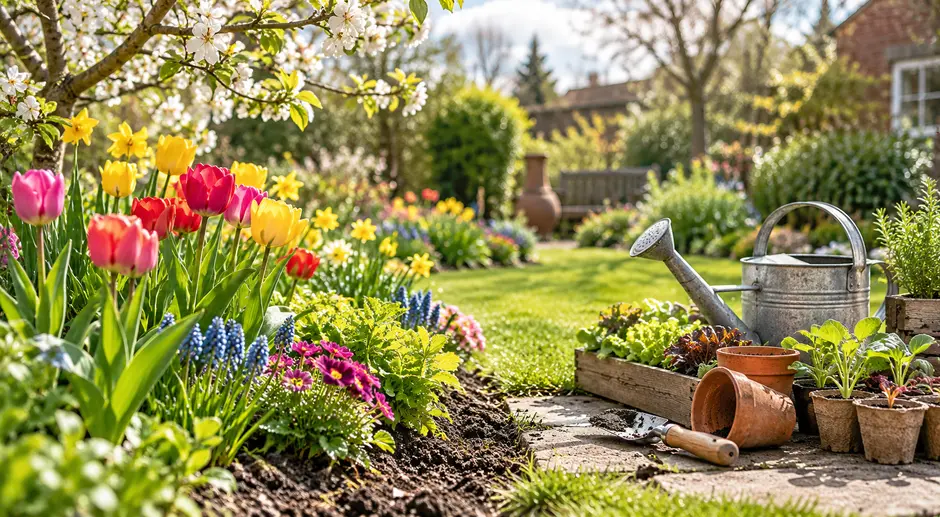
The main gardening jobs for April include preparing beds, sowing vegetables and flowers, planting potatoes, repairing lawns, pruning selected shrubs and protecting tender growth from late frost.
April is one of the busiest months in the UK gardening calendar, but conditions can vary considerably. Check the weather, soil and plants before beginning each job. Avoid working waterlogged ground and do not assume that the risk of frost has passed simply because warmer days have arrived.
If you are working through your garden month by month, review our March Gardening Activities first. You can also plan ahead with our May Gardening Jobs guide.
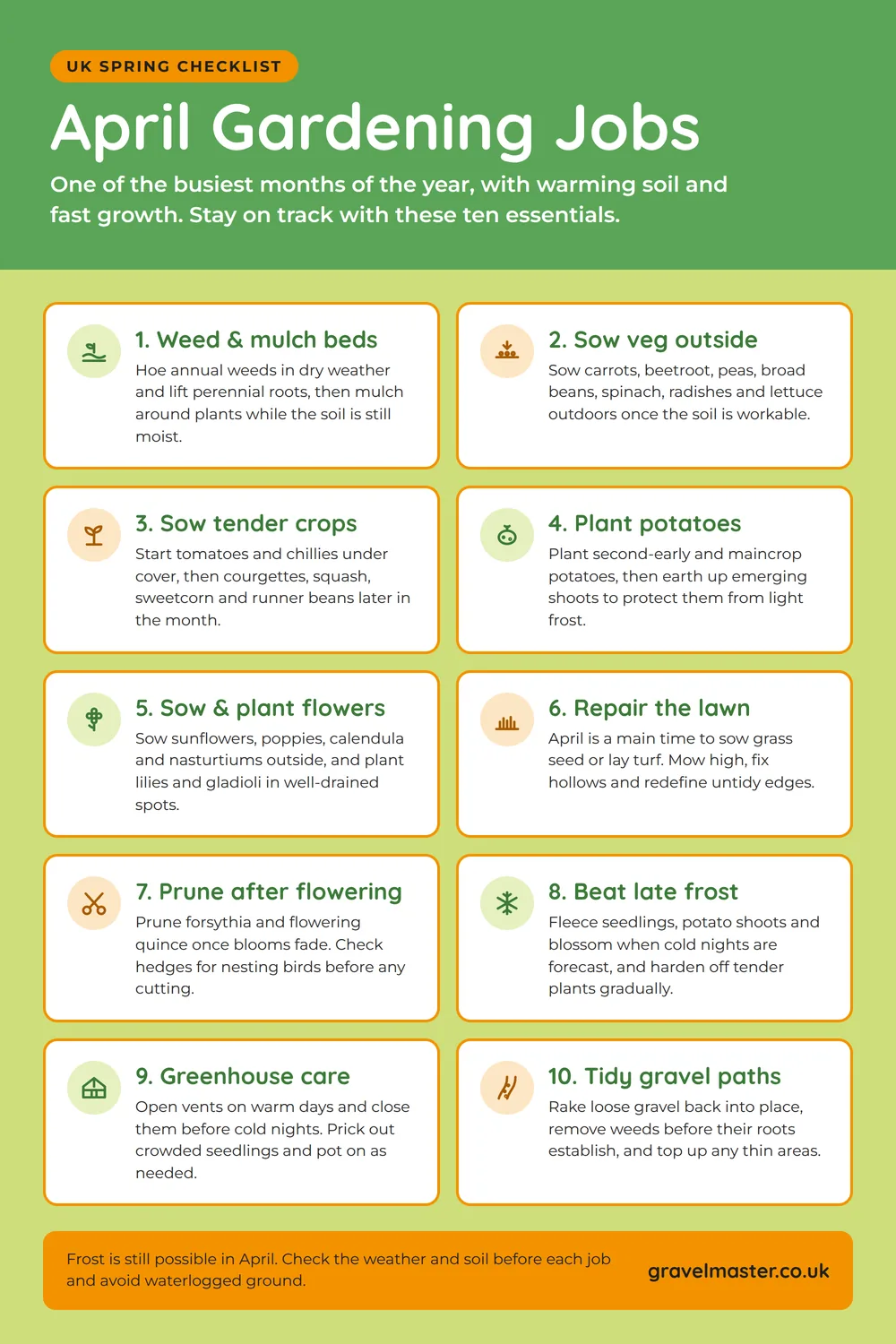
April gardening jobs checklist
Here are the principal jobs to do in the garden in April:
- Remove weeds from beds, borders and vegetable plots
- Improve soil with compost or soil improver
- Apply mulch while the ground is moist
- Sow hardy vegetables outside
- Continue sowing tender crops under cover
- Plant potatoes, onion sets and shallots
- Sow hardy annual flowers
- Plant summer-flowering bulbs
- Deadhead spring bulbs without removing their green foliage
- Prune spring-flowering shrubs after flowering
- Mow, repair and reseed lawns
- Protect seedlings and blossom from late frost
- Check emerging growth for slugs, snails and aphids
- Ventilate the greenhouse on warmer days
- Check for nesting birds before cutting hedges
- Tidy paths and replenish gravelled areas
Prepare beds, borders and soil
April brings warmer soil and more active plant growth. Preparing beds and borders early in the month can give new flowers and vegetables a better start.
Begin by removing weeds. Annual weeds can usually be hoed off during dry weather, while perennial weeds should be lifted with as much of the root system as possible. Dealing with them now prevents them from competing with garden plants for moisture, light and nutrients.
Before digging or planting, check the ground:
- If the soil sticks heavily to your boots, it may still be too wet to work.
- If it crumbles when handled, conditions are more suitable.
- If the surface is dry but the ground underneath remains saturated, wait a little longer.
- Avoid repeatedly walking over wet beds because this can cause compaction.
Add compost or organic matter to soil that needs improving. GravelMaster’s ProBlend Soil Improver can be incorporated into existing garden soil to improve its fertility and structure.
Apply mulch around established plants after removing weeds and while the soil contains moisture. Mulching can reduce water loss, suppress new weeds and gradually add organic matter to the ground.
For new planting areas, explore GravelMaster’s range of topsoil and mulches. Beds and Borders Topsoil is suitable for creating or replenishing ornamental planting areas.
What vegetables can you sow in April?
April is a useful month for sowing vegetables, but the best location depends on how hardy each crop is and whether the soil has warmed sufficiently.
| Where to sow | Suitable crops | Important conditions |
|---|---|---|
| Directly outside | Carrots, parsnips, beetroot, peas, broad beans, spinach, radishes, lettuce and spring onions | Sow when the soil is workable and not waterlogged |
| Greenhouse or windowsill | Tomatoes, chillies, aubergines and cucumbers | Provide warmth, good light and regular monitoring |
| Under cover or in modules | Courgettes, pumpkins, squash, sweetcorn and runner beans | Start later in April and protect from cold nights |
| Pots and containers | Salad leaves, radishes, beetroot and many herbs | Use suitable compost and prevent containers from drying out |
Always follow the instructions on the seed packet because sowing depth, spacing and temperature requirements vary between crops.
Sowing vegetables outside
Prepare a fine seedbed by removing weeds, breaking up large clumps and raking the surface level. Sow seeds into shallow drills at the recommended spacing.
Seeds will germinate more reliably in warming soil. Gardeners in northern or exposed areas may need to sow later than those in warmer, sheltered locations.
Cloches and horticultural fleece can help protect early sowings, but they should be opened or removed during warm weather to improve ventilation.
Sowing tender vegetables under cover
Tender crops such as tomatoes, chillies, aubergines and cucumbers need warmth and protection. Sow them in a greenhouse, heated propagator or on a bright windowsill.
Courgettes, pumpkins, squash, runner beans and sweetcorn grow quickly. Starting them too early can produce large plants before outdoor conditions are suitable, so these are often best sown later in April.
Turn windowsill trays regularly so seedlings grow evenly. Keep compost moist but not saturated, and pot seedlings on when they become crowded.
April jobs for the vegetable garden and allotment
Vegetable gardens and allotments become increasingly active during April. The exact timing of each job should still be adjusted for rainfall, soil temperature and local frost risk.
Important April allotment jobs include:
- Planting second-early and maincrop potatoes
- Earthing up potato shoots as they emerge
- Planting onion sets and shallots
- Sowing peas and broad beans
- Installing supports before climbing crops become established
- Potting on tomato seedlings
- Sowing small batches of salad crops at regular intervals
- Preparing space for courgettes, squash and runner beans
- Removing weeds from empty ground
- Protecting young brassicas and carrots
- Feeding established soft-fruit plants where necessary
Successional sowing means planting a small quantity of fast-growing crops every few weeks. This can produce a steadier harvest of lettuce, radishes, spinach and other salad crops rather than everything becoming ready at once.
Crop rotation is also worth considering. Avoid growing the same plant family in the same part of the vegetable plot every year, particularly where previous crops experienced pests or soil-borne diseases.
For new vegetable beds, raised beds and larger growing areas, consider using Fruit and Vegetable Soil.
Plant and care for potatoes
Second-early and maincrop potatoes can generally be planted during April when the soil is workable and not waterlogged.
Dig a trench or individual planting holes and position seed potatoes with the shoots facing upwards. Follow the spacing and planting-depth instructions supplied with the variety.
When shoots begin appearing above the ground, draw soil around them to form a ridge. This process is known as earthing up. It helps protect new growth from light frost and prevents developing potatoes near the surface from being exposed to sunlight.
Continue monitoring the weather because young potato foliage can be damaged by frost. Cover emerging shoots with soil or horticultural fleece when cold conditions are forecast.
What flowers can you sow and plant in April?
Many hardy flowers can be sown outside during April once the soil has warmed.
Suitable choices can include:
- Sunflowers
- Poppies
- Calendula
- Cornflowers
- Nigella
- Sweet peas
- Nasturtiums
Remove weeds, rake the ground and sow according to the seed-packet instructions. Water the area gently after sowing and keep the soil moist while the seeds establish.
Tender annual flowers should remain in a greenhouse or another protected location until frost risk has passed. Plants raised indoors must be hardened off gradually before being planted outside.
Hardy perennials and container-grown shrubs can also be planted during April. Water them thoroughly after planting and continue checking the soil during dry weather.
Plant summer-flowering bulbs
April is suitable for planting many summer-flowering bulbs and corms, including lilies and gladioli. Dahlias can be started in pots under cover but should not be planted into exposed ground while frost remains likely.
Choose a position with the light and drainage required by the plant. Bulbs can rot in persistently wet soil, so incorporate Professional Horticultural Grit where additional drainage is appropriate.
Explore GravelMaster’s current range of flower bulbs when planning your seasonal displays.
Look after spring-flowering bulbs
Daffodils, tulips and other spring-flowering bulbs may begin to fade during April.
Remove spent flowers once they have finished, but leave the green foliage intact. The leaves continue producing energy that is stored in the bulb for the following year. Cutting or tying green foliage too early can weaken the next display.
Wait until the leaves have turned yellow and died back naturally before removing them. Where bulbs grow through a lawn, avoid mowing the area while the leaves remain green.
Our Deadheading Guide explains how removing spent flowers can support plant health and future flowering.
April lawn-care jobs
Grass normally begins growing more strongly during April. Lawns can be mown more regularly, repaired and prepared for summer once the ground is firm and dry enough.
Mow the lawn
Mow when the grass is dry and the ground is not soft or waterlogged. Keep the mower blades relatively high during the first few cuts and avoid removing too much growth at once.
Mowing frequency can gradually increase as grass growth accelerates. Leaving some areas longer can also provide flowers and shelter for pollinators and other wildlife.
Repair worn and uneven areas
April is a useful time to:
- Redefine untidy lawn edges
- Aerate compacted areas
- Repair bumps and hollows
- Rake away excessive dead material
- Overseed bare patches
- Prepare the ground for a new lawn
- Lay turf
When repairing a hollow, lift the turf carefully, add suitable soil underneath and replace the turf at the correct level. Raised areas can be corrected by removing excess soil from beneath the turf.
Can you sow grass seed in April?
April is one of the main periods for sowing grass seed in the UK. Germination is most reliable when the soil has warmed, contains sufficient moisture and is not waterlogged.
Mid-April into early May can provide suitable conditions, but cold weather may delay germination. Prepare the ground by removing weeds and stones, levelling the surface and lightly firming it before sowing.
Newly sown areas should be watered gently during dry weather. Avoid walking on the new lawn and do not make the first cut until the grass has established sufficiently.
For complete instructions, read How to Sow a Lawn.
Can you lay turf in April?
Turf can be laid during April as long as the soil is properly prepared and not frozen or saturated. Mild conditions can help the turf establish before hot summer weather increases its watering requirements.
Lay turf soon after delivery and water it thoroughly. Keep the soil beneath it moist while new roots establish and avoid regular foot traffic during this period.
See our step-by-step guide to laying turf or browse the available turf and lawn seed products.
Prune spring-flowering shrubs
Some spring-flowering shrubs can be pruned after their flowers have faded.
Forsythia and flowering quince are examples of shrubs that flower on growth produced during the previous year. Pruning them immediately after flowering gives the plant time to develop new stems for the following spring.
Other April pruning jobs can include:
- Removing frost-damaged shoots
- Lightly trimming lavender without cutting deeply into old wood
- Tying in climbing and rambling roses
- Removing dead or damaged growth
- Loosening tree ties that are becoming tight
- Supporting tall perennials before they need it
Do not prune every shrub in the same way. Check the requirements of the individual species before cutting.
Can you cut a garden hedge in April?
Hedges should be checked carefully for active bird nests before any cutting begins. If a nest is occupied or being built, postpone the work and leave the surrounding vegetation undisturbed.
Where no nesting activity is present, only carry out the maintenance needed and avoid removing large amounts of healthy growth unnecessarily.
Dense evergreen hedges can conceal nests that are difficult to see from the outside. Inspect both sides and the interior carefully before using powered cutting equipment.
Protect plants from late frost
Frost remains possible during April, particularly in northern, inland and exposed locations. Tender plants, emerging potato shoots, young seedlings and fruit blossom can all be damaged by a sudden cold night.
Protect vulnerable plants by:
- Checking local forecasts regularly
- Covering plants with horticultural fleece before nightfall
- Using cloches over young crops
- Moving pots into a greenhouse, porch or sheltered position
- Delaying the planting of tender crops
- Hardening off indoor-raised plants gradually
- Removing or opening covers during warm days
Avoid relying entirely on a fixed calendar date. Local temperatures and the position of your garden are more useful indicators of when tender plants can remain outside.
Read How to Protect Plants from Frost for more detailed advice.
Look after pots and containers
Plants in containers have limited access to water and nutrients, so they require regular attention as temperatures rise.
April container jobs include:
- Removing weeds and dead leaves
- Scraping away the top layer of tired compost
- Adding fresh growing material
- Repotting root-bound plants
- Checking drainage holes
- Moving pots into their final positions
- Increasing watering during dry or windy weather
- Protecting tender containers from cold nights
Containers should drain freely without drying out too quickly. Where suitable, mixing horticultural grit into the growing medium can improve drainage.
For more guidance, read How to Plant Flowers in Pots and Containers.
Greenhouse jobs for April
Rising daytime temperatures mean greenhouse plants grow more quickly during April. They may need more space, water and ventilation.
Important jobs include:
- Pricking out crowded seedlings
- Potting plants into larger containers
- Turning trays for even growth
- Increasing watering as required
- Opening doors and vents on warm days
- Closing the greenhouse before cold nights
- Protecting tender seedlings from sudden temperature changes
- Checking for aphids, red spider mites and grey mould
- Removing dead leaves and spilled compost
- Beginning the hardening-off process
Monitor conditions rather than following a fixed watering schedule. Seedlings in small pots can dry out quickly, but constantly saturated compost can encourage disease.
Control weeds and garden pests
Weeds begin growing rapidly during April. Remove them before they flower or develop extensive roots.
Hoe annual weeds during dry weather so the exposed growth dries out. Perennial weeds such as dandelions and docks should be removed with their roots where possible.
Check new shoots and seedlings regularly for:
- Slugs and snails
- Aphids
- Lily beetles
- Vine weevils
- Caterpillars
- Signs of fungal disease
Remove small infestations by hand where practical and encourage natural predators such as birds, frogs, beetles and ladybirds. If a treatment is necessary, use a product suitable for the affected plant and follow its instructions carefully.
Support garden wildlife
April is an active month for nesting birds and pollinating insects.
You can help garden wildlife by:
- Checking shrubs and hedges before pruning
- Keeping bird baths clean and filled
- Cleaning bird feeders regularly
- Planting flowers that provide nectar and pollen
- Leaving some lawn areas longer
- Providing shelter among plants and logs
- Avoiding unnecessary pesticide use
- Maintaining safe access to ponds
A small wildflower area or a less frequently mown section of lawn can provide food and shelter without requiring a complete garden redesign.
Tidy paths and gravelled areas
Winter weather may leave paths and decorative areas covered with weeds, leaves and displaced chippings.
Rake loose gravel back into place and check for thin areas where the underlying surface or membrane has become exposed. Remove weeds before their roots become established and repair damaged edging.
If an area needs replenishing, use the gravel calculator to estimate how much material is required. You can then explore GravelMaster’s range of gravels and chippings.
When creating a new path or decorative area, installing an appropriate weed-control membrane can separate the aggregate from the soil and help reduce weed growth. Follow our guide to laying weed-control membrane before adding the aggregate.
Prepare for May
Towards the end of April, begin preparing for the warmer growing conditions expected in May.
Your next jobs may include:
- Continuing to harden off tender plants
- Preparing beds for summer bedding
- Sowing further batches of salad crops
- Installing supports for beans and climbing plants
- Monitoring watering requirements
- Increasing lawn-mowing frequency
- Preparing containers and hanging baskets
- Watching for late frost before planting tender crops outside
Continue with our May Gardening Jobs guide or visit the Gardening by Season hub.
Frequently asked questions
What gardening jobs should I do in April?
The main April gardening jobs include removing weeds, improving soil, sowing vegetables and flowers, planting potatoes, repairing lawns and pruning selected shrubs after flowering. You should also protect tender growth from frost, check plants for pests and prepare containers for warmer weather.
What can I plant in April in the UK?
You can plant potatoes, onion sets, shallots, hardy perennials, container-grown shrubs and many summer-flowering bulbs. Tender plants should remain under cover until frost risk has passed. Always check local weather and soil conditions before planting.
What vegetables can I sow in April?
Carrots, beetroot, peas, broad beans, spinach, radishes, lettuce, spring onions and parsnips can be sown outside when the soil is suitable. Tomatoes, chillies, aubergines, courgettes, squash, sweetcorn and runner beans can be started under cover.
Can I sow grass seed in April?
Yes. April is one of the main times to sow grass seed in the UK. Wait until the soil has warmed and is not waterlogged. Prepare and level the ground, keep the seed moist during dry weather and avoid walking on the area while the grass establishes.
Is April too late to plant grass seed?
April is not too late to plant grass seed. Mid-spring conditions are often suitable because the soil is warming and usually contains moisture. Sowing may need to be delayed during unusually cold or wet weather.
Can I lay turf in April?
Turf can be laid in April when the ground is workable and properly prepared. Water the turf thoroughly after laying and keep the soil moist while the roots establish. Avoid laying turf onto frozen or saturated soil.
Is frost still likely in April?
Frost remains possible throughout April, especially in northern, inland and exposed locations. Check local forecasts and protect tender seedlings, emerging potato shoots and fruit blossom with fleece or cloches when cold nights are expected.
Can I cut my garden hedge in April?
Check the hedge carefully for active bird nests before cutting. If birds are nesting, postpone the work and avoid disturbing the surrounding vegetation. Dense hedges should be inspected from both sides because nests may be concealed inside.
What flowers can I plant in April?
Hardy annuals, perennials, sweet peas and many summer-flowering bulbs can be planted or sown during April. Tender annuals should normally remain protected until frost risk has passed.
Can I plant summer-flowering bulbs in April?
Many summer-flowering bulbs and corms, including lilies and gladioli, can be planted in April. Choose a suitable position with good drainage. Tender plants such as dahlias may be started in pots under cover before being moved outside later.
Should I prune shrubs in April?
Spring-flowering shrubs such as forsythia can be pruned after their flowers fade. You can also remove frost-damaged or dead growth. Check the requirements of each plant because some shrubs should be pruned at a different time.
When can tender plants go outside?
Tender plants can remain outside once they have been hardened off and the risk of frost has passed. This date varies across the UK, so use local forecasts and conditions rather than relying on the calendar alone.