




October Gardening Jobs: Monthly Checklist
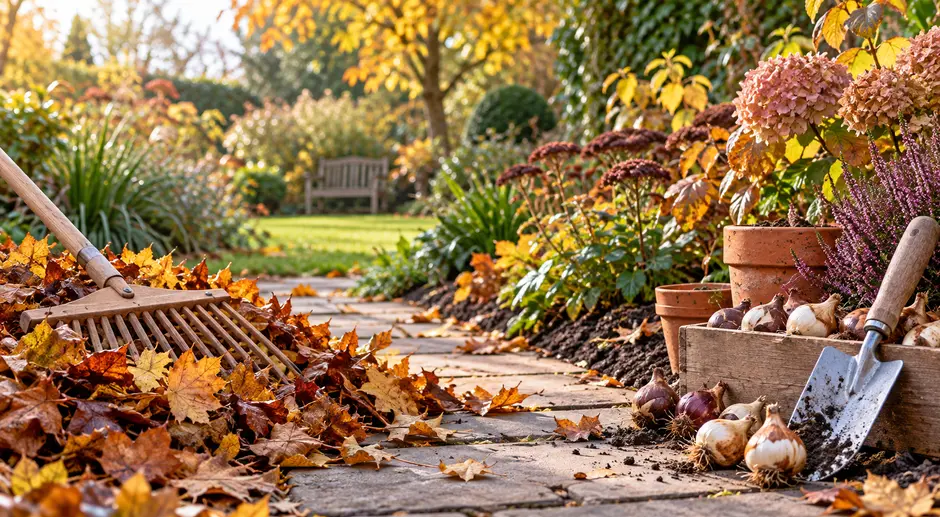
October is the month to clear fallen leaves, look after lawns, plant spring-flowering bulbs, harvest remaining crops and protect vulnerable plants from colder weather. Completing these gardening jobs in October will help keep your garden healthy through winter and give it a stronger start next spring.
The exact timing of each task will depend on your location and the weather. Gardeners in colder parts of the UK may need to protect plants earlier, while milder areas may experience active growth for longer.
If you are following the gardening calendar month by month, review our planned guide to September gardening jobs before moving on to November gardening tips.
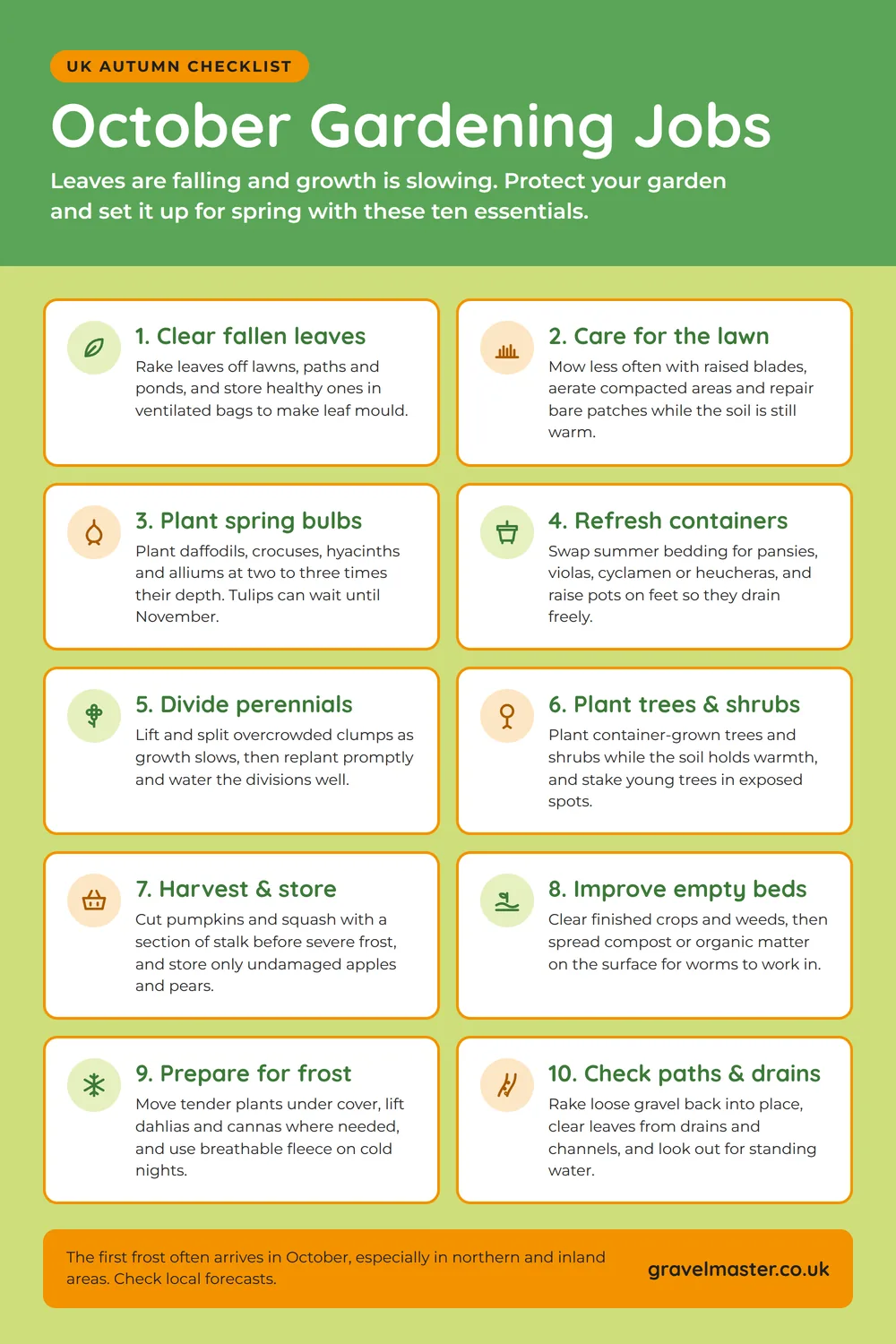
Gardening jobs for October: quick checklist
The main garden jobs for October are:
- Clear fallen leaves from lawns, paths and ponds
- Mow the lawn less frequently as growth slows
- Repair bare or damaged areas of grass
- Plant spring-flowering bulbs
- Lift and protect tender plants
- Harvest pumpkins, squash, apples and pears
- Clear finished vegetable crops
- Add compost or organic matter to empty beds
- Move vulnerable containers into sheltered positions
- Check pots, paths and borders for drainage problems
- Prepare plants for the first frosts
- Provide food, water and shelter for wildlife
Clear fallen leaves and garden debris
Regularly collect leaves from lawns because a thick covering can block light, trap moisture and weaken the grass underneath. Leaves can also become slippery when allowed to accumulate on paths, patios and steps.
Healthy leaves can be gathered into a separate pile or stored in ventilated bags to make leaf mould. Avoid adding diseased leaves to a home compost heap unless you are confident that the composting process will reach a temperature capable of destroying the disease.
Remove fallen leaves from ponds where possible. A pond net can reduce the amount of organic material entering the water while trees are shedding heavily.
October is also a suitable time to remove dead annual plants and cut away damaged or diseased growth. However, not every border needs to be completely cleared. Leaving selected seed heads and hollow stems can provide food and shelter for birds and beneficial insects.
Our deadheading guide explains when removing spent flowers is beneficial and when they can be left in place.
Look after the lawn
Grass growth usually slows during October, so lawns require less frequent mowing. Raise the mower blades slightly and avoid cutting the grass when it is waterlogged or covered with frost.
Continue removing fallen leaves and lightly rake areas affected by thatch or moss. Compacted lawns may also benefit from aeration, particularly where water remains on the surface after rain.
Small bare patches can be repaired while the soil remains warm enough for germination. Our guide to how to sow a lawn provides advice on preparing the ground and sowing grass seed.
If you are replacing a larger damaged area, browse GravelMaster’s turf and grass seed products and read the guide explaining how to lay turf.
Avoid using a high-nitrogen summer lawn feed at this time of year. It can encourage soft new growth that is more vulnerable to cold weather. See our autumn and winter lawn-care guide for more seasonal advice.
Plant spring-flowering bulbs
October is one of the main months for planting spring-flowering bulbs, including daffodils, crocuses, hyacinths and alliums. Planting in autumn allows the bulbs to establish roots before winter.
Choose a position with suitable light and free-draining soil. As a general rule, bulbs are planted at approximately two to three times their own depth, but requirements vary between species.
If your soil is heavy and holds water, improve the planting area with appropriate organic matter or grit. Bulbs left in waterlogged ground are more likely to rot.
Tulips are often planted later in autumn, commonly during November, because cooler conditions can reduce the risk of some diseases. Always follow the recommendations supplied with the variety you have purchased.
Read our top tips for planting spring bulbs for more detailed planting guidance.
Refresh pots and autumn containers
Remove exhausted summer bedding plants and replace them with autumn and winter displays where required. Suitable seasonal choices may include pansies, violas, cyclamen, heucheras, ornamental grasses and small evergreen shrubs.
Check that every container has adequate drainage. Raise pots slightly above the ground using pot feet or supports so excess water can escape during wet weather.
Tender container plants should be moved into a greenhouse, conservatory or another frost-free location before temperatures fall significantly. Where pots cannot be moved, place them in a sheltered position and protect the container and root system with suitable insulating material.
Our guide to planting flowers in pots and containers covers container preparation, planting and aftercare.
Divide and move established plants
Once growth begins to slow, October can be a suitable time to divide established herbaceous perennials. Dividing overcrowded plants can restore vigour and provide additional plants for other parts of the garden.
Lift the plant carefully, split the root mass into healthy sections and replant them promptly. Water the divisions well and monitor them during dry autumn weather.
Plants that prefer free-draining soil or are sensitive to winter wet may be better divided in spring. Check the requirements of the individual plant before moving it.
Autumn can also be a good time to move shrubs because cooler conditions reduce water loss through their leaves. Try to retain as much of the root system as possible and prepare the new planting hole before lifting the plant.
Plant trees, shrubs and hedges
Container-grown trees and shrubs can be planted during autumn, provided the soil is not frozen or waterlogged. The soil normally retains some summer warmth while increased rainfall helps the roots establish.
Prepare a planting hole that allows the roots to spread naturally. Avoid planting too deeply and firm the soil gently around the root ball. Newly planted trees may require staking in exposed locations.
Bare-root trees, roses and hedging plants become available during the dormant season. Depending on the plant and local weather, their main planting period generally begins later in autumn and continues through winter.
Harvest pumpkins, squash and fruit
Harvest pumpkins and winter squash before severe frost. Mature fruits usually have a firm skin and should sound hollow when tapped. Cut them from the plant with a section of stalk attached rather than pulling them away from the vine.
Where conditions permit, allow pumpkins and squash to cure in a warm, dry and well-ventilated place before storing them. Our guide to harvesting your pumpkin provides further advice.
Continue harvesting late apples and pears as they ripen. Store only undamaged fruit and inspect it regularly so that any fruit beginning to deteriorate can be removed.
Remaining beans, courgettes and other frost-sensitive crops should be collected before cold weather damages them.
Clear vegetable beds and improve the soil
Remove finished vegetable plants and weeds from beds and allotments. Healthy material can be composted, but plants affected by persistent diseases should be disposed of appropriately.
Once a bed is clear, add a layer of compost, well-rotted organic matter or suitable topsoil. Leaving the material on the surface allows worms and winter weather to begin incorporating it into the soil.
GravelMaster’s topsoil and compost range includes products for improving beds, borders and growing areas. For vegetable plots, raised beds and allotments, consider Fruit and Vegetable Soil.
Empty vegetable beds can also be covered to suppress weeds and protect the soil surface. Where a longer-term barrier is suitable for the intended planting scheme, see our guide explaining how to lay weed-control membrane.
Prepare plants for frost
October often brings the first frost of the season, particularly in northern and inland parts of the UK. Monitor local forecasts rather than relying on a fixed date.
Move tender plants under cover and lift plants that cannot survive winter outdoors. Dahlias, cannas and other tender plants may need their underground storage organs lifted once frost has damaged the top growth, depending on the variety and local growing conditions.
Use horticultural fleece or another suitable breathable material to protect vulnerable outdoor plants during cold nights. Avoid wrapping plants so tightly that air cannot circulate.
Read our guide to protecting plants from frost for more information.
Clean and organise the greenhouse
Remove finished summer crops and dispose of unhealthy plant material. Clean pots, seed trays, benches and glazing to reduce the risk of pests and diseases surviving into the next growing season.
Check the greenhouse for damaged panes, blocked gutters and gaps around doors or vents. Maintaining ventilation remains important, even during colder weather, because stagnant and humid conditions can encourage fungal diseases.
Bring tender plants inside before frost is forecast, but inspect them first for pests. Keeping affected plants separate can prevent pests from spreading through the greenhouse.
Check paths, gravel and drainage
Autumn rain can reveal drainage problems that were less obvious during summer. Check paths, patios, driveways and borders for standing water, displaced gravel or blocked drainage channels.
Rake loose gravel back into place and clear leaves from drains and channels. Deal with weeds before they become established, but avoid applying treatments in unsuitable weather.
Improving these areas during October can make the garden safer and reduce the amount of work required during wetter winter conditions.
Look after garden wildlife
Avoid making the entire garden too tidy. Seed heads, logs, leaf piles and undisturbed areas can provide food and shelter for insects, birds and other wildlife.
Keep bird feeders clean and provide fresh water. If you have a pond, leave a route that allows wildlife to enter and escape safely.
Before moving a leaf pile or lighting a bonfire, check carefully for hedgehogs and other animals. Ideally, rebuild a bonfire immediately before lighting it rather than leaving a prepared pile in place for several days.
Clean and store tools
Clean soil from spades, forks, hoes and hand tools before storing them. Dry metal surfaces and apply an appropriate protective oil where required to reduce corrosion.
Sharpen secateurs and shears, checking for loose or damaged components. Drain and store hoses if freezing weather is likely, and follow the manufacturer’s instructions when preparing powered garden equipment for winter.
Organising tools now means they will be ready when regular gardening work begins again in spring.
Frequently asked questions about October gardening
What should I do in the garden in October?
The main October gardening jobs are clearing leaves, mowing and repairing lawns, planting spring bulbs, harvesting autumn crops, improving empty beds and protecting tender plants from frost.
Is October too late to plant?
No. October is a suitable month for planting many spring-flowering bulbs, container-grown shrubs, trees and hardy perennials. Avoid planting when the soil is frozen, waterlogged or excessively dry.
Can I sow grass seed in October?
Grass seed can germinate in early October if the soil remains warm and moist. Results become less reliable later in the month as soil temperatures fall. In colder regions, it may be better to wait until spring.
Should I cut my lawn in October?
You can continue mowing during mild weather while the grass is growing. Mow less frequently, raise the cutting height and avoid mowing wet, frozen or waterlogged grass.
Which bulbs can I plant in October?
Daffodils, crocuses, hyacinths, alliums and many other spring-flowering bulbs can be planted in October. Tulips are often planted later in autumn, commonly in November.
Should I cut back all plants in October?
No. Remove diseased, damaged or collapsing growth, but consider leaving healthy seed heads and hollow stems that provide winter structure, wildlife habitat and food for birds.
How should I prepare vegetable beds for winter?
Remove finished crops and weeds, then apply compost, well-rotted organic matter or suitable topsoil. Beds can be covered where appropriate to reduce erosion, nutrient loss and weed growth.
When should I protect plants from frost?
Protect tender plants before the first forecast frost. The timing varies across the UK, so monitor local temperatures and prepare protective materials in advance.
Plan ahead for November
By the end of October, tender plants should be protected, leaves should be under control and the most urgent planting and harvesting work should be complete.
The next stage is to prepare the garden for colder and wetter conditions. Continue with our November gardening tips, or explore the wider autumn gardening guide.
You can also visit GravelMaster’s gardening by season hub for more seasonal advice.
Related monthly gardening guides
- September gardening jobs
- October gardening jobs – current guide
- November gardening tips
- December gardening jobs