




September Gardening Jobs: What to Do in Your Garden
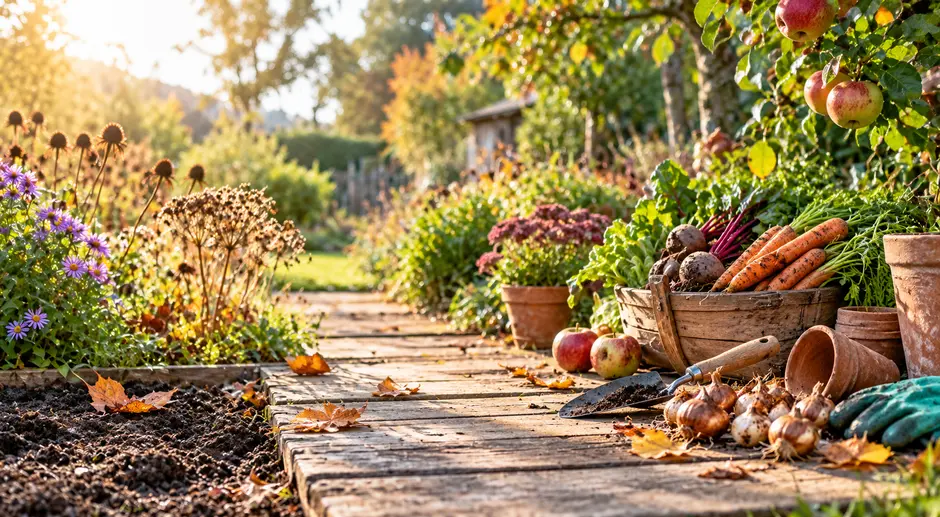
The main gardening jobs for September include harvesting fruit and vegetables, planting spring-flowering bulbs, repairing lawns, collecting seeds and clearing finished summer plants. Gardeners can also sow winter salads, divide suitable perennials, improve the soil and begin protecting tender plants as temperatures start to fall.
September marks the beginning of meteorological autumn, although warm and dry conditions can continue well into the month. The soil usually remains warm enough for roots and grass seed to establish, while increasing rainfall can make planting and lawn renovation easier.
Use this September gardening checklist to prepare your garden for autumn while continuing to enjoy late-summer flowers and harvests.
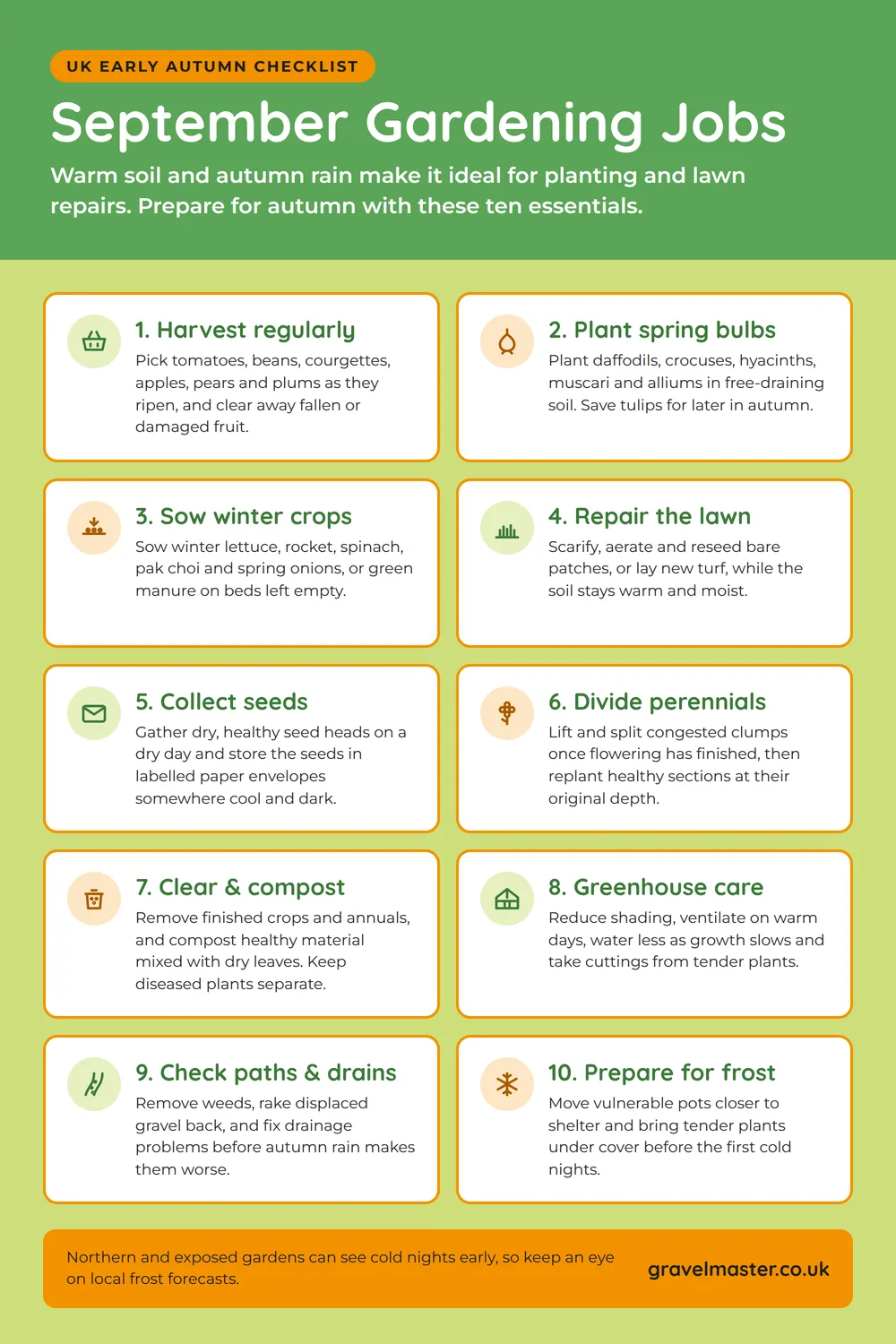
September gardening jobs checklist
The most important jobs to do in the garden in September are:
- Harvest fruit and vegetables regularly
- Sow winter salads and hardy vegetables
- Plant spring-flowering bulbs
- Plant container-grown shrubs and perennials
- Collect ripe seeds on a dry day
- Divide suitable herbaceous perennials
- Repair, aerate and reseed lawns
- Clear finished vegetable crops
- Compost healthy garden waste
- Remove weeds before they set seed
- Reduce greenhouse shading
- Take cuttings from tender plants
- Refresh containers with autumn plants
- Check paths and drainage
- Protect tender plants from early frost
- Leave selected seed heads for wildlife
The timing of individual tasks will vary according to location and weather. Gardens in northern or exposed areas may experience cooler nights and the first frost earlier than sheltered gardens in southern England.
What can you sow and plant in September?
September can provide good planting conditions. The soil is usually still warm, but cooler air and increasing rainfall reduce stress on newly planted shrubs and perennials.
| Crop or plant | What to do in September |
|---|---|
| Winter lettuce | Sow suitable hardy varieties |
| Rocket | Sow under cover or outdoors in mild areas |
| Spinach | Sow suitable varieties for autumn leaves |
| Radishes | Make final outdoor sowings |
| Spring onions | Sow overwintering varieties |
| Pak choi | Sow for young autumn leaves |
| Spring cabbage | Plant out established seedlings |
| Green manure | Sow on empty vegetable beds |
| Hardy perennials | Plant or divide in suitable conditions |
| Container-grown shrubs | Plant while the soil remains warm |
| Autumn bedding | Add to beds, pots and baskets |
| Spring-flowering bulbs | Begin planting suitable varieties |
Check seed packets and plant labels because sowing and planting times vary between varieties and regions.
Prepare the ground before planting by removing weeds and adding suitable organic matter. GravelMaster’s Fruit and Vegetable Soil, Beds and Borders Topsoil and Multi-Purpose Soil can support appropriate gardening projects.
Is September a good time to start a garden?
September can be an excellent time to start a garden, establish a lawn, prepare new beds or plant container-grown shrubs and perennials.
The soil retains warmth from summer, supporting root development, while cooler air reduces water loss and heat stress. Autumn rainfall can also reduce the amount of watering required.
September is particularly suitable for:
- Preparing new beds and borders
- Improving poor soil
- Planting hardy perennials
- Planting container-grown shrubs
- Sowing or turfing a lawn
- Planting spring-flowering bulbs
- Creating gravel paths and landscaped areas
- Sowing suitable autumn vegetables
New plants still need watering during dry periods. Frost-tender plants should not be established outdoors when colder weather is approaching.
Plant spring-flowering bulbs
September is the beginning of the main planting season for many spring-flowering bulbs.
Bulbs that can be planted during September include:
- Daffodils
- Crocuses
- Hyacinths
- Muscari
- Alliums
- Fritillaries
- Other bulbs recommended for early-autumn planting
Plant bulbs at the depth and spacing recommended for the particular species. Most require free-draining soil because prolonged waterlogging can cause them to rot.
When planting in containers, make sure the drainage holes remain clear. Suitable grit can improve drainage in growing mixes for plants that require it.
Tulips are often planted later in autumn when soil temperatures are lower. Always follow the instructions supplied with the particular bulb variety.
Read our guide explaining how to plant bulbs this autumn, browse the available bulbs or view Horticultural Grit for suitable drainage applications.
September allotment and vegetable-garden jobs
Vegetable plots remain productive during September, but finished crops should be cleared so empty spaces can be prepared for autumn and winter.
Harvest summer vegetables
Continue harvesting:
- Tomatoes
- Cucumbers
- Courgettes
- Runner beans
- French beans
- Sweetcorn
- Potatoes
- Onions
- Beetroot
- Carrots
- Pumpkins and squash when mature
Pick beans and courgettes regularly while plants remain productive. Remove damaged or overripe produce so it does not attract pests or develop mould.
Clear finished crops
Remove vegetable plants that have stopped producing. Healthy plant material can be added to the compost heap after being cut into smaller pieces.
Do not add badly diseased plants to a garden compost heap that may not reach a sufficiently high temperature. Remove or dispose of the material according to current guidance for the particular disease.
Sow crops for autumn and winter
Use empty spaces to sow winter salads, spinach, rocket, radishes and suitable spring onions. Established spring cabbage seedlings can also be planted out.
Green manure can be sown on bare beds that will not be needed immediately. It protects the soil surface, suppresses weeds and adds organic matter when incorporated later.
Check brassicas
Inspect cabbages, kale and other brassicas for caterpillars and damage. Remove yellow or badly damaged leaves and make sure protective netting remains secure.
Netting should be checked regularly so birds and other wildlife cannot become trapped.
What can you harvest in September?
September is one of the busiest harvesting months. The exact crops available will depend on variety, sowing date and local conditions.
Possible September harvests include:
- Tomatoes
- Cucumbers
- Courgettes
- Runner and French beans
- Sweetcorn
- Potatoes
- Onions
- Beetroot
- Carrots
- Pumpkins and squash
- Apples
- Pears
- Plums
- Blackberries
- Autumn raspberries
- Herbs
Harvest ripe crops regularly and remove fallen or damaged fruit.
To check an apple or pear, cup it in your hand and lift it gently. Ripe fruit should normally separate without being pulled forcefully. Not every variety ripens at the same time, so do not harvest the entire tree based on one fruit.
Pumpkins and squash should be left to mature where conditions allow. Place developing fruit on a dry surface to protect it from wet soil and harvest it before damaging frost arrives.
Ripen remaining tomatoes
Tomato plants may continue producing fruit during September, particularly in a greenhouse. However, falling temperatures and lower light levels can slow ripening.
To help the remaining crop:
- Harvest ripe tomatoes regularly
- Remove badly damaged or diseased foliage
- Maintain airflow around the plants
- Reduce overcrowding
- Remove flowers that are unlikely to produce mature fruit
- Water according to the plant’s needs
- Monitor for blight
- Bring mature green fruit indoors if frost threatens
Avoid removing excessive healthy foliage all at once because leaves are still needed for photosynthesis.
Mature green tomatoes can be ripened indoors in a dry, ventilated place. Check them regularly and remove fruit that begins to deteriorate.
Look after pumpkins and squash
Pumpkins and winter squash need time to develop a firm skin before storage.
Keep fruit away from damp soil by placing it on a tile, board or other dry surface. Remove leaves only where necessary to improve light and airflow around the fruit.
When the crop is mature, cut each fruit with a section of stalk attached. Cure suitable varieties in a warm, dry place before storage.
Protect the crop if cold weather or frost is forecast. Damaged fruit should be used promptly rather than stored.
September flower-garden jobs
September borders can remain colourful, with dahlias and other late-flowering plants continuing until the first frost.
Important flower-garden jobs include:
- Deadheading dahlias and repeat-flowering plants
- Collecting ripe seeds
- Supporting tall late-flowering plants
- Dividing suitable perennials
- Planting container-grown perennials
- Removing annuals that have finished
- Taking cuttings from tender plants
- Watering recent plantings
- Identifying gaps for autumn planting
- Leaving selected seed heads for wildlife
Continue deadheading plants that can produce more flowers, but leave attractive seed heads where they provide winter structure or food for birds.
Our deadheading guide explains which plants benefit and how to remove faded flowers correctly.
Which flowers bloom in September?
Flowers that may provide colour during September include:
- Dahlias
- Asters
- Rudbeckias
- Echinaceas
- Japanese anemones
- Hylotelephiums
- Crocosmias
- Late-flowering salvias
- Chrysanthemums
- Autumn crocuses
Flowering times vary according to the variety, local climate and summer weather. Some plants may finish earlier in northern or exposed gardens.
Late-flowering plants provide important nectar for bees and other pollinators, so retain healthy flowers for as long as possible.
Collect seeds for next year
Collecting seed can provide new plants for the following year.
Choose dry, healthy seed heads and collect them on a dry day. Place the seeds in labelled paper envelopes after removing excess plant material.
Record:
- The plant name
- Flower colour where relevant
- Collection date
- Garden location
- Any useful growing information
Store dry seeds in a cool, dark and dry place. Avoid collecting seed from diseased plants.
Seeds collected from hybrid plants may not produce offspring that look identical to the parent plant.
Divide and replant perennials
September can be a suitable time to divide established herbaceous perennials once flowering has finished and conditions are no longer hot or dry.
Dividing congested plants can:
- Restore vigour
- Improve flowering
- Control their spread
- Produce additional plants
- Fill gaps elsewhere in the garden
Lift the clump carefully and split it into healthy sections, each with roots and shoots. Discard weak or damaged central material where appropriate.
Replant the divisions promptly at their original depth and water them thoroughly.
Avoid dividing plants during drought or when the ground is waterlogged. Some perennials dislike disturbance, so identify the plant before lifting it.
Autumn lawn care in September
September is one of the best months for lawn repair because the soil remains warm while moisture levels usually begin to rise.
Possible September lawn jobs include:
- Repairing bare patches
- Sowing grass seed
- Laying turf
- Scarifying excessive thatch
- Aerating compacted soil
- Applying top dressing
- Tidying lawn edges
- Removing fallen leaves
- Reducing mowing frequency
- Raising the cutting height
Carry out major renovation only when the soil is moist but not waterlogged.
Scarify the lawn where necessary
Scarifying removes excessive thatch and dead material from the surface of the lawn. It can improve airflow and help water reach the soil.
Do not scarify an already weak or drought-stressed lawn heavily. The grass needs suitable growing conditions to recover.
Aerate compacted areas
Garden forks or suitable lawn aerators can create holes in compacted soil, helping air and water reach the root zone.
Concentrate on areas affected by frequent foot traffic. Avoid aerating ground that is extremely dry or waterlogged.
Repair bare patches
Loosen the surface, remove debris and apply suitable grass seed. Keep the area moist while the seed germinates and protect it from heavy traffic.
Read our Autumn and Winter Lawn Care Tips or follow the complete guide explaining how to sow a lawn.
Can you lay turf in September?
September is often a good time to lay turf. Warm soil encourages root development, while cooler temperatures and increasing rainfall reduce the risk of the turf drying out.
The prepared soil and new turf must still be kept moist during establishment. Avoid laying turf on waterlogged or frozen ground.
Follow our guide to laying turf or explore GravelMaster’s turf and lawn seed products.
Prepare beds and improve the soil
Clearing finished summer plants creates an opportunity to improve beds before autumn and winter.
Useful tasks include:
- Removing weeds
- Clearing finished annuals and vegetable crops
- Adding well-rotted organic matter
- Applying suitable mulch
- Sowing green manure
- Testing drainage
- Preparing new planting areas
- Leaving some undisturbed habitat for wildlife
Avoid working or digging soil when it is waterlogged. This can compact the ground and damage its structure.
Browse GravelMaster’s range of topsoil, compost and mulches or improve suitable areas with Soil Improver.
Compost healthy garden waste
September generates large amounts of spent plant material, lawn clippings and fallen leaves.
For effective composting:
- Mix fresh green material with dry brown material
- Cut thick stems into smaller pieces
- Add fallen leaves gradually
- Keep the contents moist rather than saturated
- Turn the material where appropriate
- Avoid adding persistent weeds carrying mature seed
- Keep badly diseased plant material separate
Fresh grass clippings can become wet and compacted if added in thick layers. Mix them with drier material such as shredded cardboard, small woody prunings or dry leaves.
Greenhouse jobs for September
Greenhouse conditions begin to change as days become shorter and night-time temperatures fall.
September greenhouse jobs include:
- Harvesting tomatoes, cucumbers and peppers
- Reducing or removing shading
- Ventilating on warm days
- Reducing watering as plant growth slows
- Removing fallen leaves and spoiled fruit
- Monitoring tomatoes for blight
- Checking plants for mildew
- Taking cuttings from tender plants
- Cleaning empty pots and trays
- Preparing frost protection
- Cleaning glazing where needed
Close doors and vents before temperatures fall during the evening, but continue to provide ventilation during warm daytime conditions.
Refresh containers for autumn
Summer containers may begin to lose their colour during September. Remove plants that have finished and replace them with suitable autumn displays.
Possible tasks include:
- Retaining healthy plants that remain productive
- Removing exhausted summer bedding
- Planting autumn bedding
- Adding spring bulbs beneath autumn displays
- Replacing depleted growing material
- Checking drainage holes
- Raising containers on pot feet
- Reducing feeding as summer growth slows
- Moving tender plants before frost
Our guide to planting flowers in pots and containers explains how to prepare and arrange container displays.
Control weeds, pests and diseases
Remove weeds before they set seed. Perennial weeds should be lifted carefully, including as much of their root system as possible.
Pests that may remain active in September include:
- Slugs and snails
- Vine weevils
- Cabbage white butterfly caterpillars
- Aphids in protected conditions
- Wasps around fallen fruit
- Greenhouse whitefly
Inspect containers for signs of vine weevil larvae and check brassicas for caterpillar damage.
Monitor for blight
Tomato and potato blight can remain a risk during warm, wet weather. Check leaves and stems for rapidly spreading brown patches.
Remove clearly affected material and follow current guidance for the particular crop and disease.
Check for powdery mildew
Powdery mildew appears as a white or grey coating on leaves and stems. Improve airflow, avoid allowing roots to become excessively dry and remove badly affected foliage where appropriate.
Weed-control membrane can help reduce weed growth beneath suitable gravel paths and landscaped areas. Read our guide to laying weed-control membrane or explore the available weed-control membrane products.
Can you cut hedges in September?
The main bird-nesting season may be nearing its end, but active nests can still be present. Check the entire hedge carefully before starting work and postpone trimming if an occupied nest is found.
If no nests are present, September can be suitable for tidying some hedges before winter. Identify the hedge species before carrying out substantial pruning because different plants have different requirements.
Avoid removing excessive growth from hedges that may not recover before cold weather.
Help wildlife during early autumn
Gardens provide food and shelter as wildlife begins preparing for colder weather.
Useful September wildlife jobs include:
- Leaving selected flower seed heads
- Retaining berry-producing plants
- Keeping bird baths clean and filled
- Maintaining ponds
- Leaving some grass longer
- Avoiding unnecessary pesticide use
- Checking netting regularly
- Creating a small log habitat
- Leaving sheltered areas for insects
- Allowing some healthy leaf litter to remain in suitable areas
Avoid making every part of the garden excessively tidy. Hollow stems, seed heads and small piles of natural material can provide valuable shelter.
Maintain gravel paths and improve drainage
September is a useful time to prepare gravel paths, driveways and decorative areas for wetter autumn weather.
Inspect these areas for:
- Young weeds
- Thin or bare patches
- Exposed membrane
- Loose or damaged edging
- Gravel spreading onto lawns
- Blocked drainage channels
- Areas where water collects
- Uneven surfaces
Remove weeds before they set seed and rake displaced gravel back into place. Additional aggregate may be required in areas affected by regular foot or vehicle traffic.
Correct drainage problems before prolonged autumn rainfall makes them worse. Keep gravel and other materials away from drains and drainage channels.
Browse GravelMaster’s range of gravels and chippings or use the Gravel Calculator to estimate how much material is required for a new area or top-up.
Prepare tender plants for colder weather
Monitor local forecasts because exposed or northern gardens can experience cold nights earlier than expected.
Prepare tender plants by:
- Moving vulnerable containers closer to shelter
- Taking cuttings as insurance
- Bringing suitable plants under cover
- Checking greenhouse protection
- Reducing watering as growth slows
- Removing damaged foliage
- Checking plants for pests before moving them indoors
- Preparing suitable frost protection
Do not wrap plants too early during mild weather. Excessive protection can restrict airflow and create damp conditions.
Prepare the garden for October
Completing essential September gardening jobs will make the transition into colder and wetter weather easier.
Before October arrives:
- Finish urgent lawn repairs
- Plant suitable spring-flowering bulbs
- Harvest remaining tender crops
- Clear unhealthy plant debris
- Improve empty beds
- Check paths and drainage
- Move vulnerable plants under cover
- Clean and store unused equipment
- Continue collecting fallen leaves
- Review plans for autumn landscaping
For more seasonal guidance, read our August Gardening Jobs, continue with the planned October Gardening Jobs and explore our Autumn Gardening Tips. You can also visit the Gardening by Season hub for advice throughout the year.
Frequently asked questions
What are the main gardening jobs for September?
The main September gardening jobs are harvesting fruit and vegetables, planting spring-flowering bulbs, repairing lawns, collecting seeds, dividing suitable perennials, clearing finished crops and preparing beds for autumn.
What should I do in the garden in September?
Continue harvesting while beginning autumn maintenance. Sow winter salads, plant bulbs, repair lawns, improve empty beds, collect seeds, clean the greenhouse and prepare tender plants for colder nights.
What can I plant in September in the UK?
September is suitable for planting spring-flowering bulbs, hardy perennials, autumn bedding and container-grown shrubs. Winter salads, spinach, spring onions and suitable spring cabbage varieties can also be sown or planted.
Is September a good time to start a garden?
September can be a good time to start a garden because the soil remains warm and rainfall usually increases. It is particularly suitable for preparing beds, planting hardy perennials and shrubs, establishing lawns and planting bulbs.
Which vegetables can I sow in September?
Vegetables that can be sown in September include winter lettuce, rocket, spinach, radishes, spring onions and pak choi. Suitable varieties and sowing methods depend on local conditions.
Which bulbs should I plant in September?
Daffodils, crocuses, hyacinths, muscari, alliums and fritillaries can usually be planted during September. Tulips are often planted later in autumn when the soil is cooler.
What can I harvest in September?
September harvests may include tomatoes, cucumbers, courgettes, beans, sweetcorn, potatoes, onions, beetroot, carrots, pumpkins, squash, apples, pears, plums, blackberries and autumn raspberries.
Which flowers bloom in September?
September flowers can include dahlias, asters, rudbeckias, echinaceas, Japanese anemones, Hylotelephium, crocosmias, salvias, chrysanthemums and autumn crocuses.
Which perennials can be divided in September?
Many established herbaceous perennials that have finished flowering can be divided in September. Suitable examples may include hardy geraniums, hostas and some daylilies. Identify the plant first because not every perennial responds well to autumn division.
Should I deadhead flowers in September?
Continue deadheading repeat-flowering plants such as dahlias and roses while they remain productive. Leave selected seed heads where they provide winter structure, seeds for collection or food for wildlife.
Is September a good time to sow a lawn?
September is often one of the best months for sowing grass because the soil remains warm and moisture levels usually increase. Keep newly sown areas moist and protect them from heavy traffic.
Can I lay turf in September?
September is usually a suitable month for laying turf. Cooler temperatures and autumn rainfall can help it establish, although the turf and soil must still be kept moist.
Should I scarify and aerate the lawn in September?
September can be suitable for scarifying and aerating when the grass is actively growing and the soil is moist but not waterlogged. Avoid aggressive treatment of weak or drought-stressed lawns.
Can I cut hedges in September?
Hedges can be trimmed only after checking thoroughly for active bird nests. If no nests are present, September may be suitable for tidying some hedge species before winter.
How should I prepare my greenhouse for autumn?
Reduce shading, continue ventilation on warm days and remove spoiled fruit and fallen leaves. Clean empty pots, monitor plants for disease and prepare suitable frost protection.
When should tender plants be moved under cover?
Move tender plants before the first damaging frost. Monitor local forecasts because exposed and northern gardens can experience cold nights earlier than sheltered southern locations.
How should I prepare the garden for October?
Finish lawn repairs, plant bulbs, harvest tender crops, clear diseased debris and check drainage. Begin moving vulnerable plants under cover and prepare beds and containers for colder weather.