




Gravel Front Garden Ideas for Small Spaces
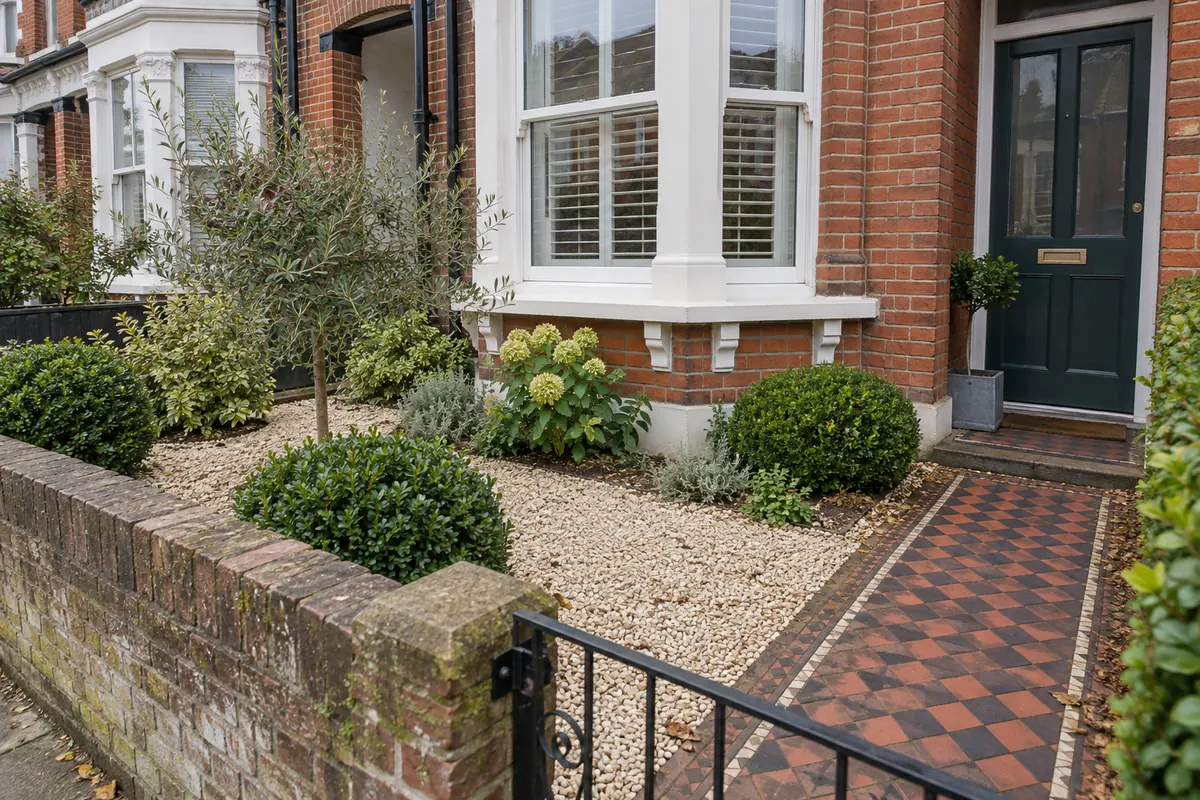
The most useful gravel front garden ideas start with three things: a clear route to the door, stone that complements the house and planting that suits the space. Even a narrow frontage can accommodate all three without feeling crowded.
Gravel can reduce the area you need to mow and bring a
consistent finish around plants and pots. There will still be leaves to collect
and occasional weeds to remove, so it helps to choose a layout you can
comfortably look after.
Here are eight front garden ideas with gravel to help you picture the possibilities.
Small Gravel Front Garden Ideas
1. Keep a narrow frontage simple with one gravel colour
Outside a terraced house, a single gravel colour can bring
together an awkward strip between the bay window, boundary wall and entrance
path. Repeat a small number of plants through it, rather than squeezing a
different feature into every corner.
Look at the house before choosing the stone. Cream gravel
can pick up pale mortar or stone detailing, while grey may connect with
existing paving. Cotswold
Chippings 10mm, for example, have a light cream colour and an angular
shape.
Leave space beneath windows and around the gate. In a shallow frontage, one shrub at its full size may have more impact than several plants that need constant trimming to fit.
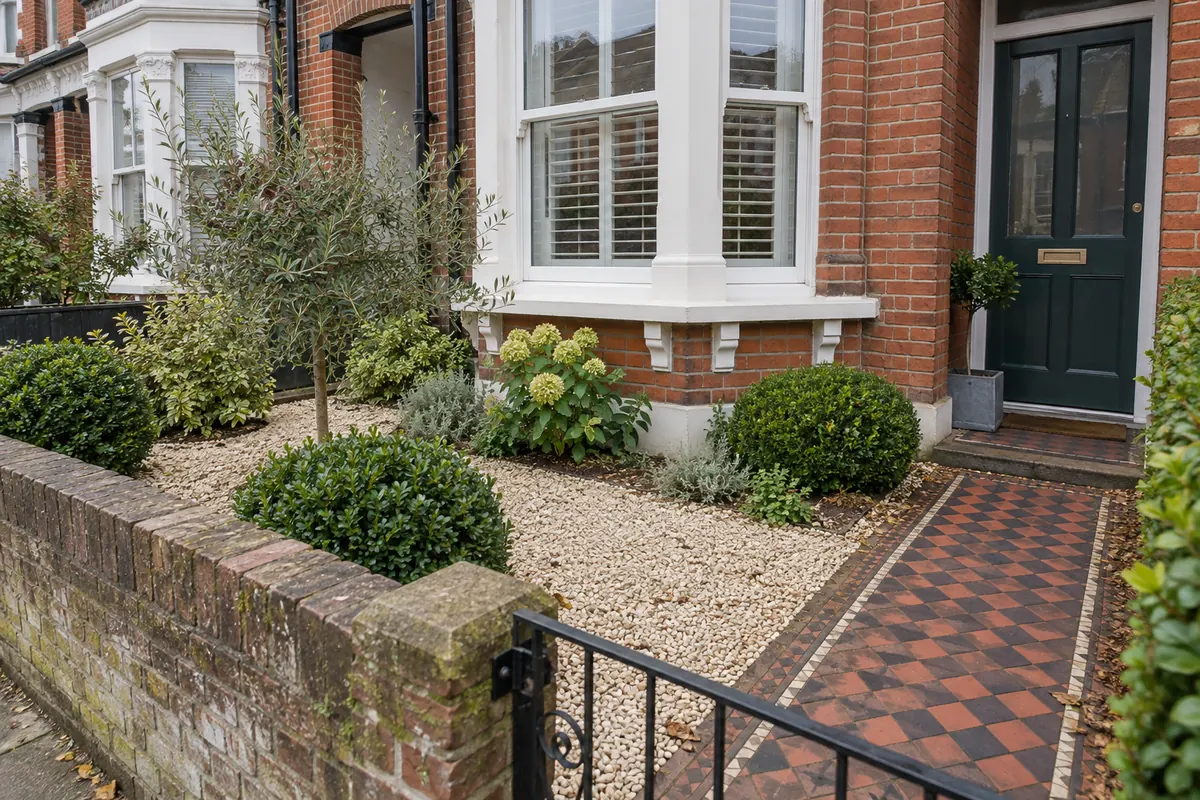
One gravel colour and repeated planting keep a narrow frontage simple.
2. Combine gravel with a clear path to the front door
A defined path gives the front garden a clear layout. Keep
an existing paved route if it works, then use gravel and planting on either
side to make the surrounding space feel considered.
Before adding pots or widening a bed, walk from the gate to
the door carrying shopping. Check where a delivery would be left and how you
move the wheelie bins. A firm, even route is generally more practical for
wheels than loose gravel or widely spaced stepping stones.
Our garden path design guide can help you think through the route and material choices. Consider how the entrance will work alongside the planting, boundaries and any parking space.
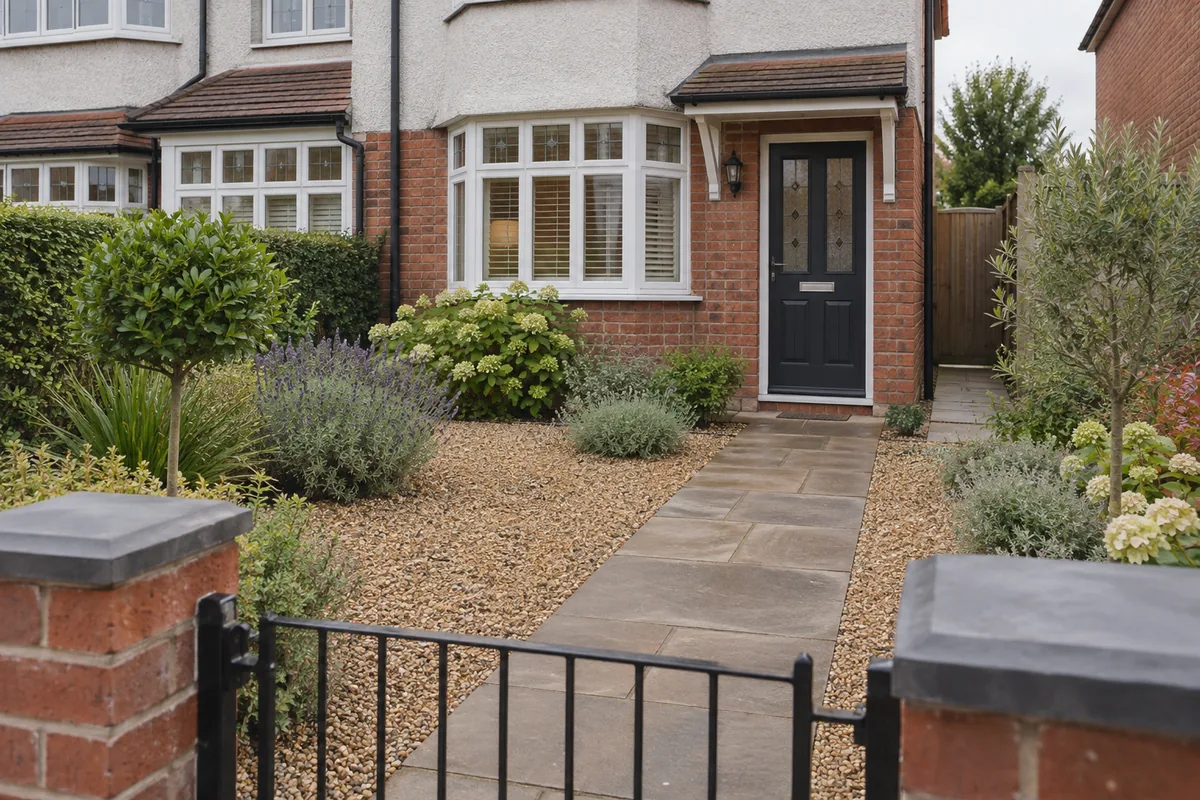
A clear entrance route gives the surrounding gravel and planting a practical layout.
3. Add height and colour with pots
Front garden ideas with gravel and pots work particularly
well where there is little room for planting in the ground. Picture three
containers grouped beside a window, with one taller plant behind two lower pots
and gravel continuing around them.
Using the same pot material creates a connection even when
the shapes differ. Terracotta can sit comfortably with warm gravel and brick,
while simple grey containers suit a cooler palette.
Keep the group to one side of the entrance and allow the door to open fully. Pots need watering, feeding and occasional repotting, so choose a manageable number and put them somewhere you can reach easily.
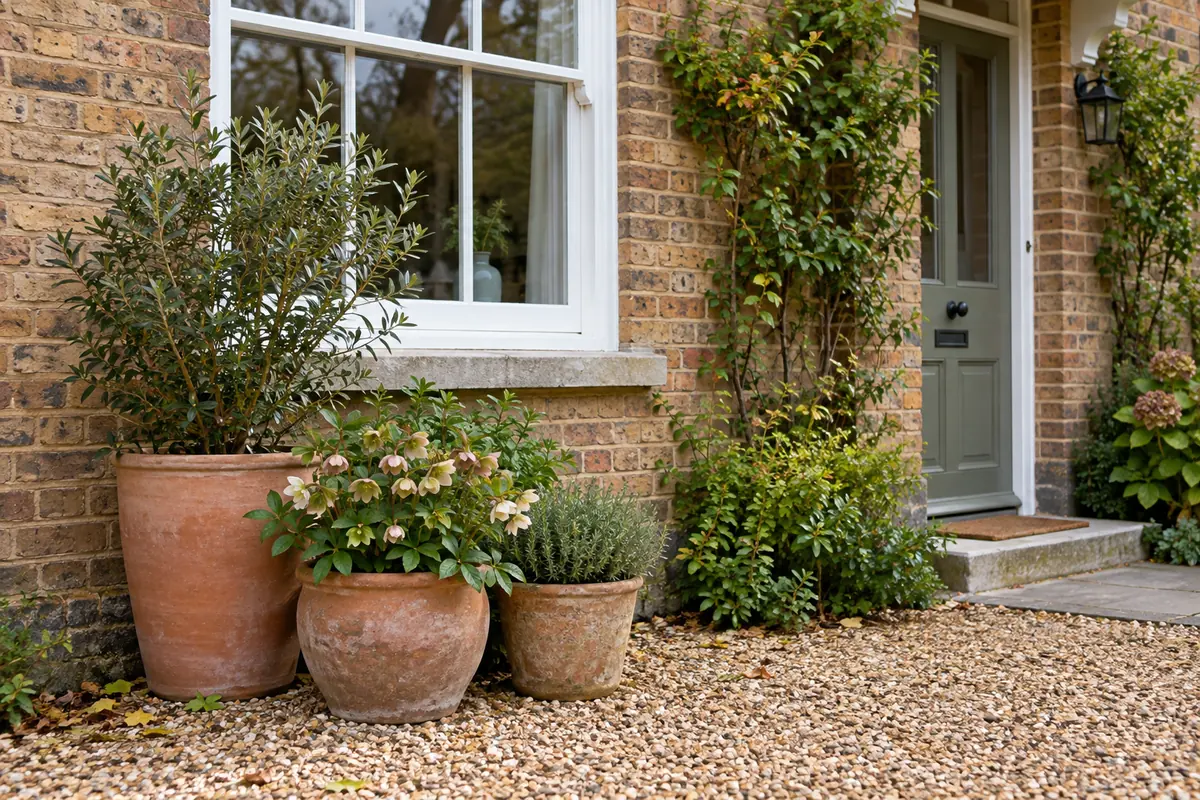
Grouped pots add height and colour without filling the entrance space.
4. Replace a small lawn with gravel and planting pockets
If mowing a tiny front lawn feels like more effort than it
deserves, consider a gravel area with generous pockets of planting.
A curved bed beneath a window and another beside the
boundary can leave an open gravel centre without making the frontage feel bare.
Repeating plants between those beds helps the layout feel connected. Think
about the view from inside the house as well as from the pavement.
Choose plants for the soil and light available. A shady frontage needs a different planting scheme from a sunny one, and a layer of decorative gravel will not correct waterlogged ground beneath it.
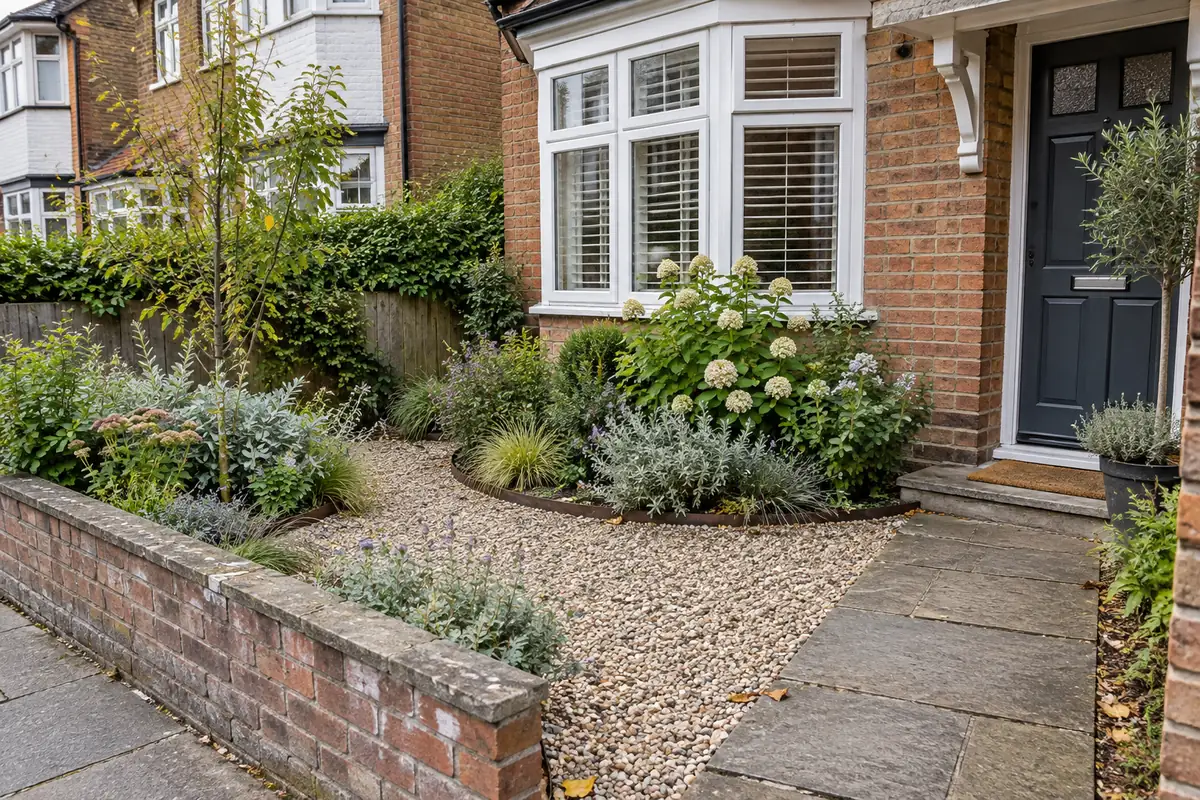
Generous planting pockets soften a gravel frontage and reduce the area needing mowing.
Gravel Front Garden Ideas for Different Styles
5. Pair warm gravel with cottage-style planting
Buff or golden gravel can work with weathered brick, painted
gates and the softer planting associated with a cottage garden. Keep the layout
straightforward: a clear entrance, planting along the boundary and space for
flowers to lean gently over the gravel.
Golden
Gravel 20mm contains yellow, cream and brown tones, offering a mixed finish
rather than a single flat colour. Compare it with existing brickwork and paving
before settling on the combination.
Give plants room to develop without closing the route. A cottage-style frontage can look relaxed while still allowing you to reach the door without brushing past wet foliage.
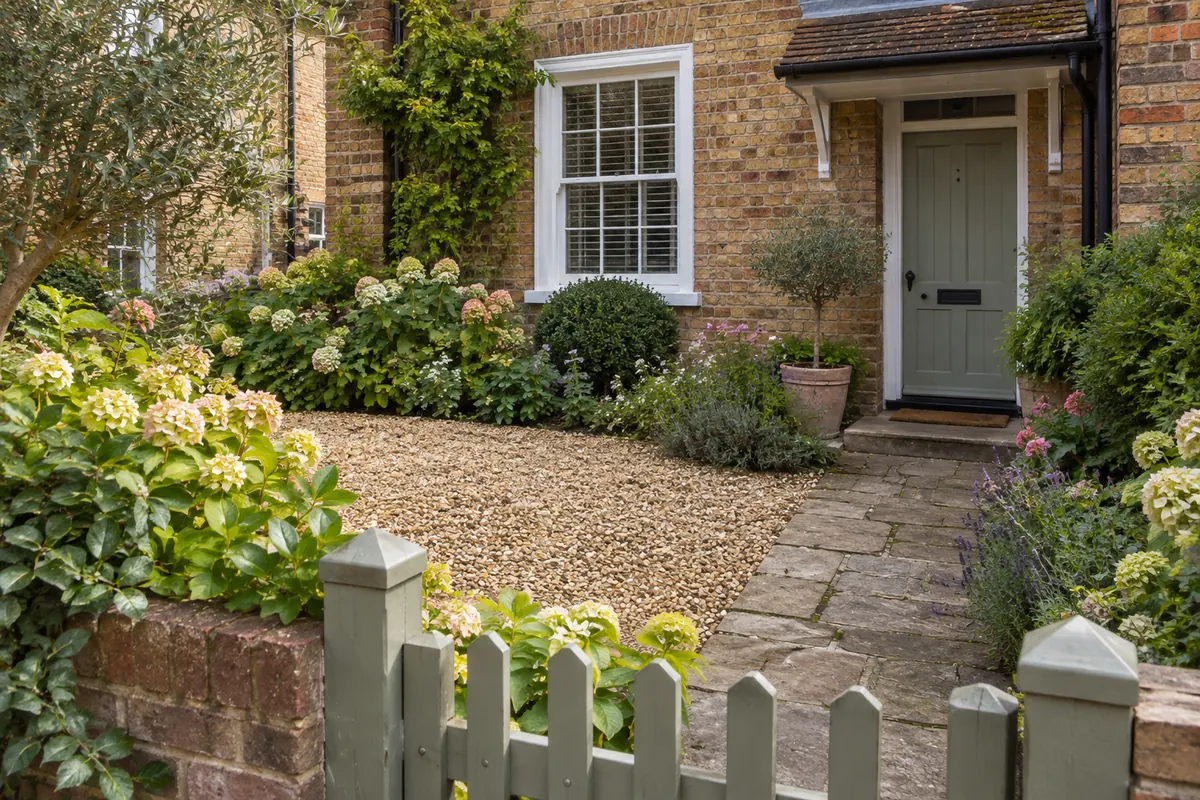
Warm gravel and softer planting complement a traditional brick frontage.
6. Use grey gravel and evergreen structure for a modern look
For a rendered house or a frontage with grey paving, try
grey gravel with a few repeated evergreen shrubs. A rectangular planted area
beside the path, echoed by a smaller group near the boundary, can provide
enough structure for a compact space.
Dove
Grey Derbyshire Peakstone 20mm is an angular stone with a pale grey
appearance when dry, becoming darker when wet. That change can make the same
design look noticeably different after rain.
Keep the planting palette limited, but consider how it will look throughout the year. Check the mature spread of each shrub so the arrangement remains manageable as it fills out.
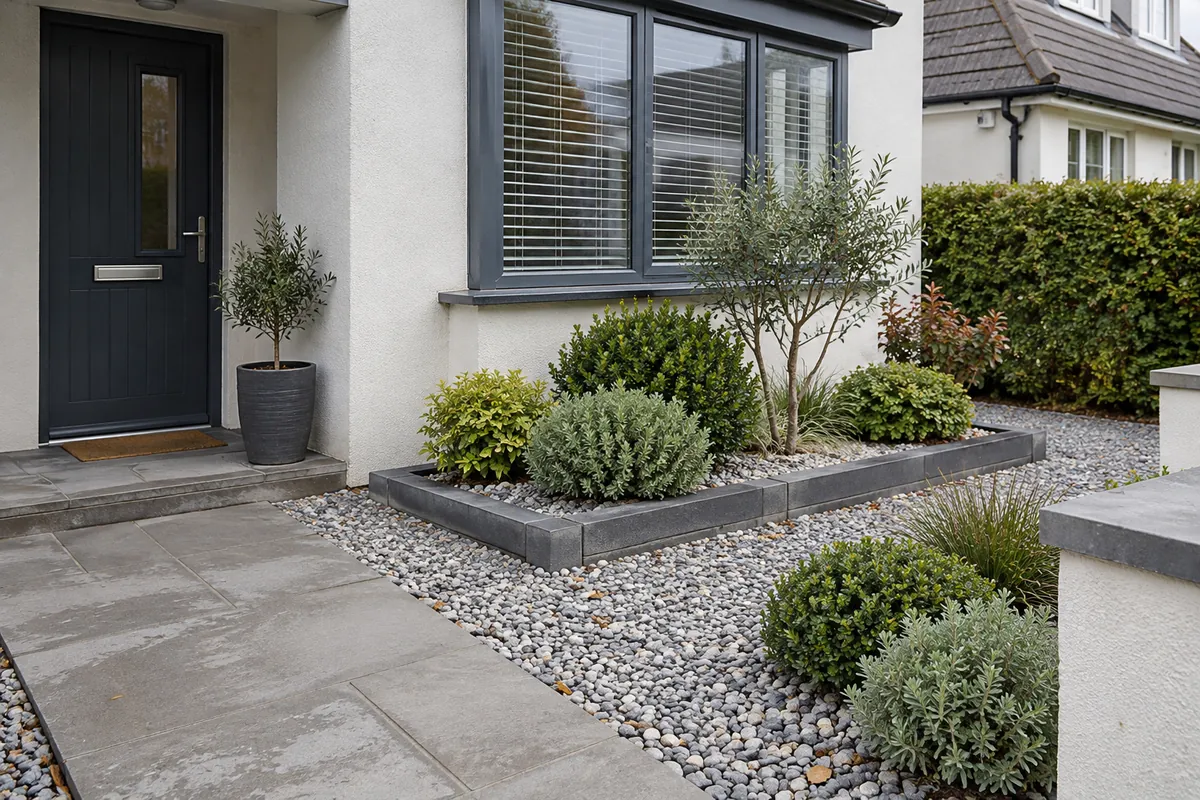
Grey gravel and repeated evergreens give a compact frontage a simple structure.
7. Create a Mediterranean-style entrance in a sunny spot
A sunny front garden with free-draining soil can suit warm
gravel, a few herbs and simple terracotta pots. Lavender and rosemary are
possibilities where the conditions meet their need for sun and good drainage.
Rather than filling every gap, leave some visible gravel
between plants. A small cluster near the gate and another beside the entrance
can carry the style through a narrow plot.
Be guided by your garden’s conditions. A cold, shaded frontage or ground that stays wet through winter needs a different approach. Our Mediterranean landscape guide offers more inspiration for adapting the style.
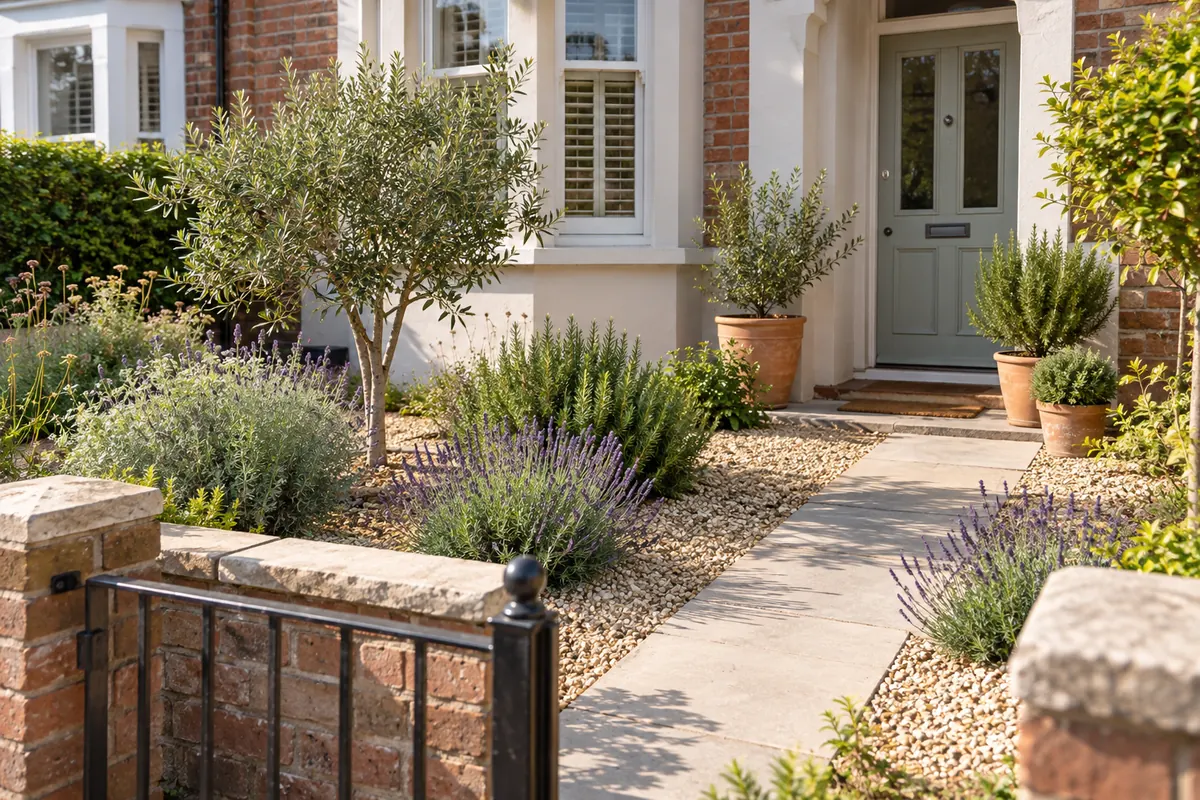
A sunny position and suitable drainage can support a Mediterranean-style planting scheme.
8. Soften an existing driveway with gravel and planting
Some front garden gravel driveway ideas only need a small
change beside the parking space. A narrow planted strip, finished with gravel,
can break up the hard surface and connect it visually with the entrance.
Try repeating the same gravel in a small area near the front
door. Keep plants back from car doors, mirrors and the route used for bins.
Avoid tall planting where it would obstruct visibility when leaving the drive.
A decorative strip and a vehicle-bearing surface have different requirements. If the project involves rebuilding the parking area, use our guide to laying a gravel driveway for the construction advice.
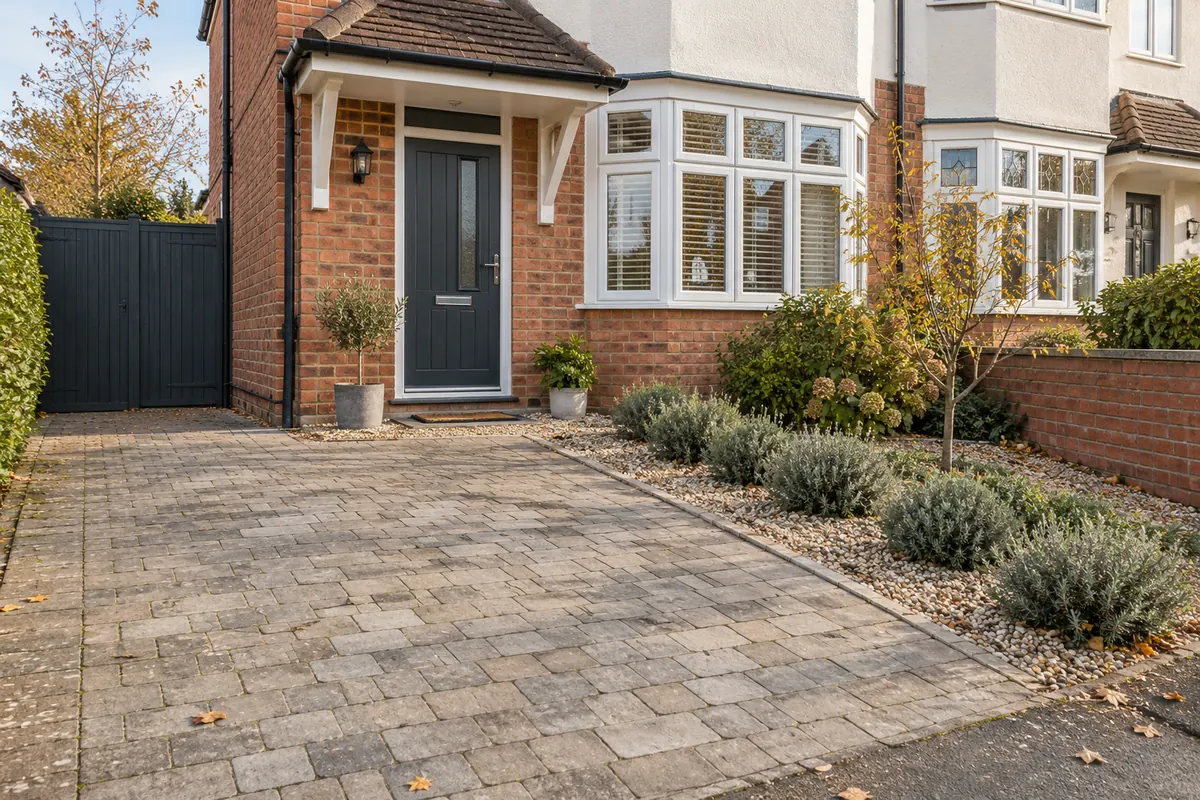
A planted gravel strip softens an existing driveway while keeping access clear.
Which Gravel Front Garden Design Suits Your Space?
| Front garden situation | Design to consider | Practical consideration |
|---|---|---|
| Narrow terraced-house frontage | One gravel colour with repeated planting | Check gate clearance and mature plant width |
| Little space for planting | A small group of coordinated pots | Allow for watering and access |
| Small lawn you want to replace | Gravel with substantial planting pockets | Choose plants for the existing conditions |
| Traditional brick house | Warm gravel with softer planting | Keep growth clear of the entrance |
| Modern rendered frontage | Grey gravel and evergreen structure | Compare colours in wet and dry weather |
| Space beside a driveway | A planted gravel strip | Leave room for car doors and visibility |
Choosing Gravel That Complements Your Home
Start with the materials already there: brickwork, render,
paving, boundary walls and the front door. Choose which you want the gravel to
echo. Matching one or two elements is often enough; the stone does not need to
match everything.
White gravel gives a stronger contrast than many buff or
grey blends. That can suit a simple frontage, but consider how fallen leaves
and everyday debris will look against it, particularly beneath trees.
Where samples are available, place one beside the house and
existing paving. View the stone wet and dry, and from the pavement as well as
close up.
Colour is only part of the choice. Angular chippings and rounded stones behave differently underfoot, and a product suited to a decorative bed may not suit parking. Choose for each area’s use, even if that means combining a firm entrance path with decorative gravel elsewhere.
Keeping Your Gravel Front Garden Manageable
Allow enough space between plants for maintenance. Reaching
a weed at the back of a narrow bed is much easier when you have somewhere to
stand without stepping on other plants.
Choose plants that suit the site and the amount of care you
want to give. Repeated compact plants can be easier to manage than a collection
with widely different watering and pruning needs.
Leaves and wind-blown debris will still need removing. Weeds
can germinate in material that collects on top of gravel, even where membrane
has been used underneath. Our weed
control membrane guide explains its role and the installation process.
A suitable boundary can help keep loose stone away from lawns and neighbouring surfaces. See our gravel edging guide for options, then allow for occasional raking where stones become displaced.
Frequently Asked Questions
What works best in a very small gravel front garden?
A simple layout with one main gravel colour, a clear
entrance and a few repeated plants is a useful starting point. Keep features
proportionate to the frontage. Check plants at their mature size before buying,
particularly where beds sit beneath windows or beside a narrow gate.
How can I combine gravel and pots in a front garden?
Group pots in a position that leaves doors, gates and paths
clear. Different heights can add interest, while a shared colour or material
keeps the arrangement connected. Make sure you can reach every container for
watering and allow surplus water to drain from the pots.
What colour gravel will suit my house?
Compare gravel with your brickwork, render and paving. Buff
and golden shades can complement warm materials, while grey can connect with
cooler finishes. These are starting points rather than rules. A sample viewed
outside your own house is more useful than judging colour from a screen alone.
Is a gravel front garden maintenance-free?
No. Gravel can remove the need to mow a small lawn, but
leaves, weeds and displaced stones still need attention. Plants and containers
have their own care requirements. A straightforward layout, suitable planting
and accessible areas will help keep the work manageable.
Find Gravel for Your Front Garden
Once you have chosen a layout, explore our gravels and chippings to compare finishes for your frontage. Measure the area to be covered and establish the appropriate depth for the chosen product and use, then use our gravel calculator to estimate the quantity you need.