




August Gardening Jobs: UK Checklist
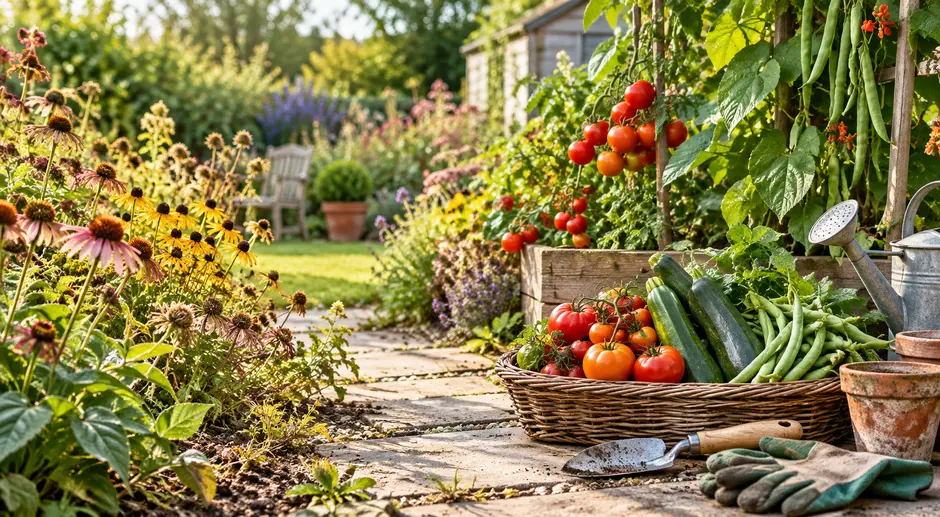
The main gardening jobs for August include watering during dry weather, harvesting fruit and vegetables, deadheading flowers, collecting seeds and sowing crops for autumn. Gardeners should also care for lawns, monitor plants for pests and diseases, maintain greenhouses and begin preparing beds and borders for the changing season.
August is still a productive summer month, but shorter days and cooler nights signal that autumn is approaching. Regular harvesting, watering and deadheading will keep the garden performing while you start planning bulbs, lawn repairs and autumn planting.
Use this August gardening checklist to keep your garden healthy and productive throughout late summer.
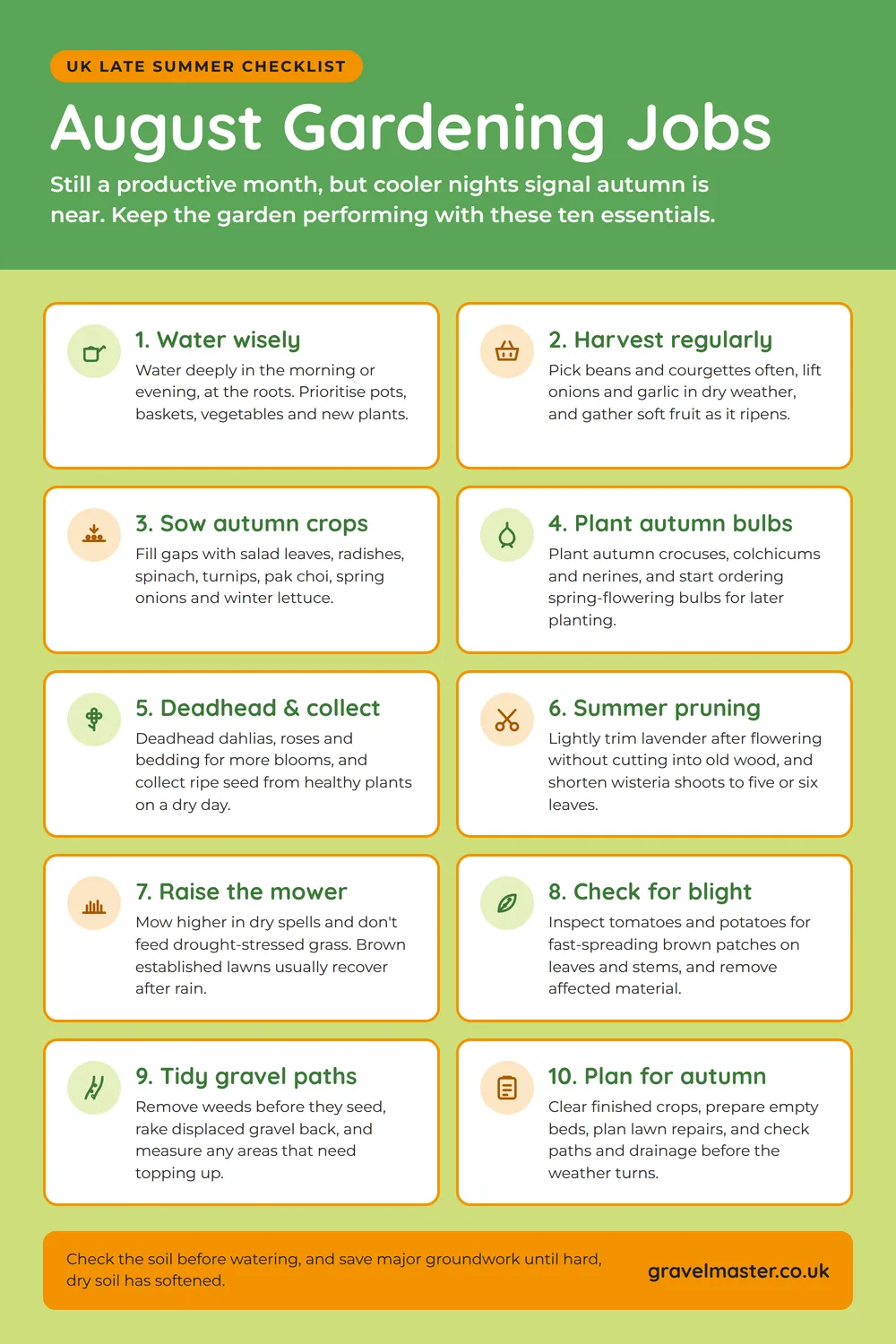
August gardening jobs checklist
The most important jobs to do in the garden in August are:
- Water containers, hanging baskets and newly planted areas
- Harvest vegetables and soft fruit regularly
- Sow salads and vegetables for autumn
- Plant suitable autumn-flowering bulbs
- Feed tomatoes and container plants
- Pick beans and courgettes regularly
- Harvest onions, garlic and potatoes
- Deadhead dahlias, roses and bedding plants
- Collect ripe seeds on a dry day
- Trim lavender after flowering
- Summer-prune wisteria where appropriate
- Raise the lawnmower blades during dry weather
- Shade and ventilate greenhouses
- Check tomatoes and potatoes for blight
- Remove weeds before they set seed
- Prepare lawns, beds and borders for autumn
- Inspect hedges for active bird nests before trimming
- Prepare vulnerable plants before going on holiday
The timing of individual tasks will depend on the weather, location and plants grown. Gardens in northern and exposed areas may develop several weeks later than sheltered gardens in southern England.
Water the garden during hot and dry weather
Watering remains one of the most important August gardening jobs. Containers, hanging baskets, vegetables and recently planted areas can dry out quickly during prolonged warm weather.
Water early in the morning or during the evening, when temperatures are lower and less moisture will be lost through evaporation. Apply water slowly around the base of each plant so it can reach the roots.
Give priority to:
- Hanging baskets and containers
- Greenhouse plants
- Recently planted flowers and shrubs
- Vegetable beds
- Fruit grown in containers
- Newly laid turf
- Newly sown lawns
Check the soil before watering rather than following a fixed schedule. A thorough soaking every few days is usually more effective than frequently applying a small amount of water to the surface.
Collecting rainwater and applying mulch can reduce demand for mains water. Mulch also helps suppress weeds and protects the soil from direct sunlight.
Explore GravelMaster’s range of topsoil, compost and mulches or improve existing ground with Soil Improver.
What can you sow and plant in August?
August is not too late to sow vegetables or add container-grown plants to the garden. Warm soil can help seeds germinate quickly, although young plants will need consistent moisture.
| Crop or plant | What to do in August |
|---|---|
| Salad leaves | Sow small batches for autumn harvesting |
| Radishes | Continue succession sowing |
| Spinach | Sow suitable varieties as temperatures begin to cool |
| Beetroot | Make final sowings of suitable varieties early in the month |
| Turnips | Sow for autumn crops |
| Pak choi | Sow as the risk of bolting begins to decrease |
| Swiss chard | Sow early in the month for young leaves |
| Spring cabbage | Sow or transplant according to the variety |
| Spring onions | Sow suitable overwintering varieties |
| Winter lettuce | Sow under suitable conditions |
| Container-grown perennials | Plant if they can be watered consistently |
| Autumn-flowering bulbs | Plant suitable varieties according to their instructions |
Always check the seed packet or plant label because sowing dates vary between varieties and different parts of the UK.
Is August too late to start a garden?
August is not too late to start a garden. Fast-growing salads, radishes, autumn vegetables and container-grown plants can still become established. The main challenges are keeping new plants watered and choosing varieties that can mature as temperatures and daylight levels begin to fall.
Prepare beds thoroughly before planting and remove established weeds. GravelMaster’s Fruit and Vegetable Soil, Beds and Borders Topsoil and Multi-Purpose Soil can support suitable garden projects.
Which bulbs can you plant in August?
Suitable autumn-flowering bulbs can be planted during August. Gardeners can also begin ordering and planning spring-flowering bulbs before the main autumn planting period.
Possible choices include:
- Autumn crocuses
- Colchicums
- Nerines
- Cyclamen suited to outdoor planting
- Other autumn-flowering bulbs recommended for late-summer planting
Spring-flowering bulbs such as daffodils, crocuses, alliums and tulips have different preferred planting times. Do not assume that every spring bulb should be planted in August. Follow the instructions for the particular species and variety.
Read our guide explaining how to plant bulbs this autumn or explore the available bulbs.
August allotment and vegetable-garden jobs
August is a productive month in vegetable gardens and allotments. Crops need regular harvesting, while empty spaces can be used for autumn and winter sowings.
Care for tomato plants
Water tomatoes consistently and continue feeding them according to the instructions supplied with a suitable fertiliser.
Tie cordon tomatoes to their supports and remove side shoots that form between the main stem and leaf joints. Bush tomato varieties have a naturally branching habit and should not normally have their side shoots removed.
Towards the end of summer, gardeners sometimes remove the growing tip or newly formed flowers that are unlikely to produce ripe fruit. The correct approach depends on the variety, growing conditions and number of established fruit trusses, so avoid applying the same rule to every tomato plant.
Remove damaged foliage and maintain good airflow, particularly in greenhouses.
Pick beans and courgettes regularly
Harvest runner beans and French beans while the pods are young and tender. Regular picking encourages the plants to continue flowering and producing new pods.
Check courgettes every few days because they can grow rapidly during warm weather. Harvesting them while young prevents them from becoming oversized and encourages further production.
Harvest potatoes, onions and garlic
Maincrop potatoes may still be developing, while earlier varieties may be ready to lift. Check beneath one plant before harvesting the entire crop.
Onions and garlic may be ready when their foliage yellows and falls over naturally. Lift them during a spell of dry weather and allow them to dry before storage.
Do not bend healthy foliage down artificially. Allow the plants to complete their natural growing process.
Sow crops for autumn
Use spaces left by harvested crops for suitable autumn sowings. Salad leaves, radishes, spinach, turnips, pak choi and spring onions may all be suitable, depending on the variety and local conditions.
Continue removing weeds because they compete with crops for water, light and nutrients. Preventing weeds from setting seed will also reduce future problems.
What can you harvest in August?
August can provide a wide range of fruit, vegetables and herbs. The exact harvest will depend on the variety, sowing date and local weather.
Possible August harvests include:
- Tomatoes
- Cucumbers
- Courgettes
- Runner beans
- French beans
- Peas
- Sweetcorn
- Potatoes
- Onions
- Garlic
- Beetroot
- Carrots
- Salad leaves
- Raspberries
- Blackberries
- Currants
- Plums
- Early apples and pears
- Herbs
Harvest crops regularly and remove damaged or overripe produce. Frequent picking encourages plants such as beans and courgettes to continue cropping.
Sweetcorn is usually ready when the tassels turn brown and the liquid released from a pierced kernel appears milky. Clear liquid can indicate that the cob needs more time, while thick or dough-like liquid may mean it has passed its best.
Look after fruit trees and soft fruit
Pick raspberries, blackberries, currants and other soft fruit regularly. Harvest during dry weather where possible and remove damaged or mouldy fruit promptly.
Suitable netting can protect ripening crops from birds, but it should be properly secured and checked frequently so wildlife cannot become trapped.
Other August fruit-garden jobs include:
- Watering fruit grown in containers
- Harvesting plums and early apples or pears
- Supporting branches carrying heavy crops
- Cutting out old summer-fruiting raspberry canes
- Tying in new raspberry and blackberry growth
- Pegging healthy strawberry runners into pots or prepared ground
- Removing runners that are not required
- Checking ripening fruit for wasp damage
- Removing fallen and damaged fruit
After harvesting summer raspberries, cut the old fruited canes down to ground level. Leave the new green canes because these will carry the following year’s crop.
Only pick apples and pears when they are ready. Cup the fruit in your hand and lift it gently. Ripe fruit should normally come away without force.
Care for flowers and borders
Regular deadheading can keep borders colourful through late summer and encourage repeat-flowering plants to produce more blooms.
Important flower-garden jobs include:
- Deadheading dahlias, roses and bedding plants
- Picking sweet peas regularly
- Supporting tall late-summer flowers
- Tying climbing plants to their supports
- Cutting back finished perennials where appropriate
- Removing damaged or diseased foliage
- Watering recently planted shrubs and perennials
- Collecting ripe seeds
- Identifying gaps for autumn planting
Leave selected seed heads in place if they provide structure, wildlife habitat or food for birds.
Our deadheading guide explains which plants benefit from having faded flowers removed.
Trim lavender after flowering
Lavender can be lightly trimmed after flowering to help maintain a compact shape. Remove faded flower stems and a small amount of the current season’s green growth.
Avoid cutting deeply into old, woody stems because many lavender plants will not regenerate successfully from bare wood.
Summer-prune wisteria
Long, whippy shoots on established wisteria can normally be shortened during summer. They are commonly cut back to around five or six leaves from the main framework.
This controls excessive growth, keeps the plant tidy and allows more light to reach developing wood. Young plants that are still forming their main framework may require a different approach.
Look after containers and hanging baskets
Containers and hanging baskets can dry out rapidly during August. Check them daily during warm weather and water when the compost begins to feel dry.
Water slowly until moisture reaches the entire root ball and begins to drain from the base. If the compost is extremely dry, apply a small amount first, allow it to soak in and then water more thoroughly.
Regularly:
- Remove faded flowers
- Remove yellow or damaged leaves
- Check for aphids and other pests
- Feed flowering plants with a suitable fertiliser
- Keep drainage holes clear
- Move vulnerable containers out of extreme heat
- Replace plants that have finished flowering
- Turn uneven plants towards the light
For future displays, follow our guide to planting flowers in pots and containers.
Horticultural Grit may be added to suitable growing mixes or used for appropriate garden applications where better drainage is required.
Lawn-care jobs for August
August lawn care should respond to the weather and the condition of the grass. During dry periods, raise the mower blades and allow the grass to remain slightly longer.
Longer grass shades the soil and is better able to tolerate drought. Avoid removing more than one-third of the grass height during a single cut.
Other August lawn jobs include:
- Tidying lawn edges
- Watering newly laid turf
- Watering newly sown grass
- Avoiding heavy use of new lawns
- Preparing for autumn aeration
- Planning repairs to thin or bare areas
- Cleaning mower blades and equipment
- Leaving selected areas longer for wildlife
Will a brown lawn recover after drought?
Established grass often turns brown and becomes dormant during prolonged dry weather. It will usually begin growing again after sufficient rainfall.
Avoid applying fertiliser to severely dry grass and do not mow it extremely short. Newly laid turf and newly sown lawns need more careful watering because their root systems are not fully established.
Can you lay turf in August?
Turf can be laid in August, but hot or dry weather makes establishment more difficult. The turf and prepared soil must be kept consistently moist.
If reliable watering is not available, it may be better to wait until early autumn, when cooler temperatures and more frequent rainfall create better conditions.
Read our guide to laying turf or explore GravelMaster’s turf and lawn seed products.
Should you aerate the lawn in August?
Avoid aerating ground that is extremely dry and hard. Late August may be suitable when rainfall has softened the soil, but more substantial aeration and renovation are often completed during early autumn.
Our guide to sowing a lawn covers the preparation and establishment of new grass.
When can you mow after top dressing?
There is no fixed number of days to wait after top dressing. Allow the material to settle and work into the grass, and mow only when the surface and grass are dry.
Make sure the grass blades stand above the dressing and set the mower high enough to avoid collecting or displacing the newly applied material.
Greenhouse jobs for August
Greenhouses can still become extremely hot during sunny August weather. Open doors and vents to increase airflow and continue using suitable shading when needed.
Check greenhouse plants daily because containers and grow bags can dry out quickly.
Other greenhouse jobs include:
- Supporting tomatoes, cucumbers and peppers
- Removing cordon tomato side shoots
- Feeding fruiting plants
- Harvesting crops regularly
- Removing damaged or diseased foliage
- Cleaning up fallen fruit and leaves
- Maintaining space between plants
- Monitoring aphids and whitefly
- Checking for red spider mites
- Watching tomatoes for signs of blight
Red spider mites thrive in hot, dry conditions. Signs can include pale or mottled leaves and fine webbing around the plant. Inspect the undersides of leaves regularly so problems can be identified early.
Control weeds, pests and diseases
Remove annual weeds before they flower and set seed. Hoeing can be effective during dry weather, while perennial weeds should be removed carefully with as much of their root system as possible.
Pests to watch for during August include:
- Aphids
- Slugs and snails
- Vine weevils
- Cabbage white butterfly caterpillars
- Carrot fly
- Greenhouse whitefly
- Red spider mites
- Wasps around ripe fruit
Inspect the undersides of leaves, plant stems and developing fruit. Encourage natural predators and use physical controls where appropriate before considering treatments.
Check for tomato and potato blight
Warm, wet weather can encourage tomato and potato blight. Symptoms may include rapidly spreading brown patches on leaves and stems, followed by damage to fruit or tubers.
Inspect plants regularly and remove clearly affected material. Avoid leaving infected debris around crops and follow current guidance for managing and disposing of affected plants.
Watch for powdery mildew
Powdery mildew appears as a white or grey coating on leaves and stems. It can become more noticeable when plants are crowded, roots are dry or airflow is poor.
Water plants consistently, improve airflow and remove badly affected material where appropriate.
Mulching beds can help suppress weeds and reduce moisture loss. Weed-control membrane can also be used beneath suitable gravel paths and landscaped areas.
Read our guide to laying weed-control membrane or view the available weed-control membrane products.
Can you cut hedges in August?
Hedges may still contain active bird nests during August. Inspect the entire hedge carefully before carrying out any work and postpone cutting if an occupied nest is present.
Never damage or disturb an active nest. If light trimming is necessary and no nests are present, use clean, sharp tools and avoid removing excessive growth during very hot or dry weather.
Wildlife and nesting activity should take priority over routine hedge maintenance.
Help wildlife during late summer
Natural food and water sources can become scarce during hot, dry weather. Keep bird baths clean and topped up, and provide shallow water that insects and smaller animals can access safely.
Other ways to help wildlife include:
- Leaving part of the lawn longer
- Growing late-summer flowers for pollinators
- Leaving selected seed heads
- Avoiding unnecessary pesticide use
- Maintaining ponds during dry weather
- Providing escape routes from deep water containers
- Checking fruit netting frequently
- Leaving sheltered areas for insects
Ponds can lose water quickly through evaporation. Top them up gradually where required and avoid sudden changes that could disturb wildlife.
Landscaping and gravel maintenance in August
August can be used to maintain existing landscaped areas and plan work for the cooler autumn months.
Inspect gravel paths, driveways and decorative areas for:
- Young weeds
- Thin or bare patches
- Exposed membrane
- Loose or damaged edging
- Gravel spreading onto lawns
- Blocked drainage areas
- Uneven surfaces
Remove weeds before they set seed and rake displaced gravel back into place. Additional material may be required in areas affected by frequent foot or vehicle traffic.
Major ground preparation can be difficult when soil is extremely hard and dry. Where conditions are unsuitable, plan the project and calculate the required materials so work can begin when the weather improves.
Browse GravelMaster’s range of gravels and chippings or use the Gravel Calculator to estimate the amount required for a new area or top-up.
Prepare the garden before going on holiday
Plants can deteriorate quickly during hot August weather, so make suitable arrangements before leaving home.
Before going away:
- Water vulnerable plants deeply
- Move suitable pots into partial shade
- Group containers together
- Harvest ripe fruit and vegetables
- Pick beans and courgettes
- Deadhead flowering plants
- Remove diseased foliage
- Make sure the greenhouse remains safely ventilated
- Top up ponds and wildlife water sources
- Test irrigation equipment
- Ask someone to check plants during a longer absence
For more detailed advice, read our guide to garden care whilst on holiday.
Start preparing the garden for autumn
August is a useful time to begin planning autumn work while continuing with summer maintenance.
Start by:
- Collecting ripe seeds
- Clearing finished vegetable crops
- Adding healthy plant material to the compost heap
- Preparing empty beds for autumn planting
- Ordering spring-flowering bulbs
- Planning lawn repairs
- Checking garden drainage
- Identifying gravel and path repairs
- Preparing areas for new plants
- Continuing to water and harvest while warm weather lasts
Complete major lawn renovation and perennial division when weather and soil conditions become more suitable.
For more seasonal guidance, read our July Gardening Jobs, continue with the planned September Gardening Jobs and explore our Autumn Gardening Tips. You can also visit the Gardening by Season hub for advice throughout the year.
Frequently asked questions
What are the main gardening jobs for August?
The main August gardening jobs are watering, harvesting fruit and vegetables, sowing autumn crops, deadheading flowers, collecting seeds, caring for lawns, planting suitable bulbs and preparing beds and borders for autumn.
What should I do in the garden in August?
Continue summer maintenance while beginning autumn preparations. Water vulnerable plants, harvest crops, deadhead flowers, remove weeds, collect seeds, monitor pests and diseases and plan bulb planting and lawn repairs.
What can I plant in August in the UK?
Container-grown perennials and suitable autumn-flowering bulbs can be planted during August if they can be watered consistently. Gardeners can also sow salad leaves, radishes, spinach, turnips, pak choi, spring onions and winter lettuce.
Is August too late to start a garden?
August is not too late to start a garden. Choose fast-growing vegetables, autumn salads and container-grown plants. Prepare the soil properly and keep new plants watered as their roots become established.
Which vegetables can I sow in August?
Vegetables that can be sown during August include salad leaves, radishes, spinach, turnips, pak choi, spring onions, winter lettuce and suitable spring cabbage varieties.
Which bulbs can I plant in August?
Autumn-flowering bulbs such as colchicums, autumn crocuses and suitable nerines can be planted during August. Planting times for spring-flowering bulbs vary, so follow the instructions for each variety.
What can I harvest in August?
August harvests may include tomatoes, cucumbers, courgettes, beans, sweetcorn, potatoes, onions, garlic, beetroot, carrots, salad leaves, raspberries, blackberries, plums and early apples or pears.
Which flowers should I deadhead in August?
Dahlias, roses, sweet peas, summer bedding and many repeat-flowering perennials benefit from regular deadheading. Leave selected seed heads for structure, seed collection or wildlife.
How often should I water the garden in August?
Check the soil and water when required rather than following a fixed schedule. Prioritise containers, hanging baskets, vegetables, greenhouses and newly planted areas. Water deeply around the roots during the morning or evening.
Can I lay turf in August?
Turf can be laid in August if the soil and turf can be kept consistently moist. During very hot or dry weather, waiting until early autumn may provide better establishment conditions.
Will a brown lawn recover after drought?
Established grass often turns brown and becomes dormant during drought. It will usually begin growing again after sufficient rainfall. Avoid cutting it very short or applying fertiliser while it is severely dry.
When can I mow after top dressing?
Mow once the dressing has settled into the grass and the surface is dry. Make sure the grass blades stand above the material and raise the mower sufficiently to avoid collecting or displacing the dressing.
Should I aerate my lawn in August?
Avoid aerating extremely dry or hard ground. Late August may be suitable after rainfall has softened the soil, although more substantial lawn renovation is often completed during early autumn.
Which plants can be pruned in August?
Suitable August pruning can include established wisteria, lavender after flowering, summer-fruiting raspberries and selected trained fruit trees. Identify the plant and correct method before pruning.
Can I cut my hedge in August?
Only trim a hedge after checking carefully for active bird nests. Postpone work if an occupied nest is present and do not damage or disturb it.
How do I care for a greenhouse in August?
Ventilate and shade the greenhouse during warm weather, check watering needs daily and harvest crops regularly. Support productive plants and monitor for whitefly, red spider mites and disease.
How should I prepare the garden for autumn?
Collect ripe seeds, clear finished crops, prepare empty beds, order bulbs, plan lawn repairs and check paths and drainage. Continue watering, harvesting and deadheading while summer conditions remain.